Did Trump Know the Iran War Would Raise Gas Prices? What Chris Wright Actually Said

Did Trump know Americans could end up paying more at the pump when he decided to attack Iran?
According to Energy Secretary Chris Wright, yes—at least in the broad sense that the president knew the war could disrupt Persian Gulf energy flows and push energy prices higher in the short term.
But that answer needs an important qualifier.
Wright did not say Trump had been handed a forecast showing exactly how high gasoline would go. He did not say every dollar Americans are now paying at the pump can be traced to one presidential decision, either.
What Wright described was a choice: accept the short-term economic risk of higher energy prices in pursuit of what the administration viewed as a larger national-security goal.
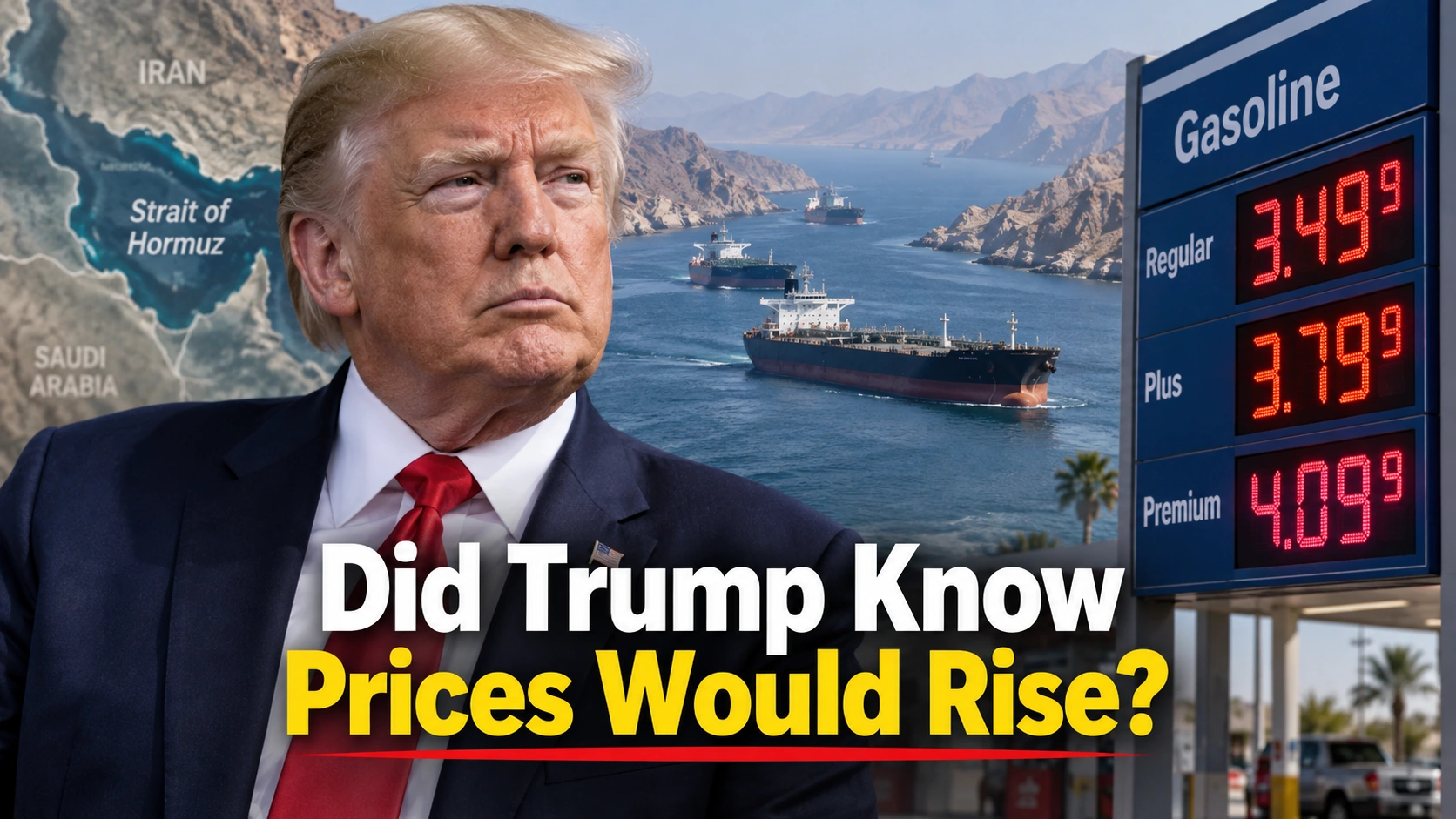
※ Images in this article are AI-generated illustrations created to help explain the story. They are not actual photographs, and depictions of people, places, or events may differ slightly from reality.
That distinction matters now because gasoline prices have climbed dramatically since the war began—and because those prices have become part of the political debate heading into the November midterms.
What Did Chris Wright Actually Say?
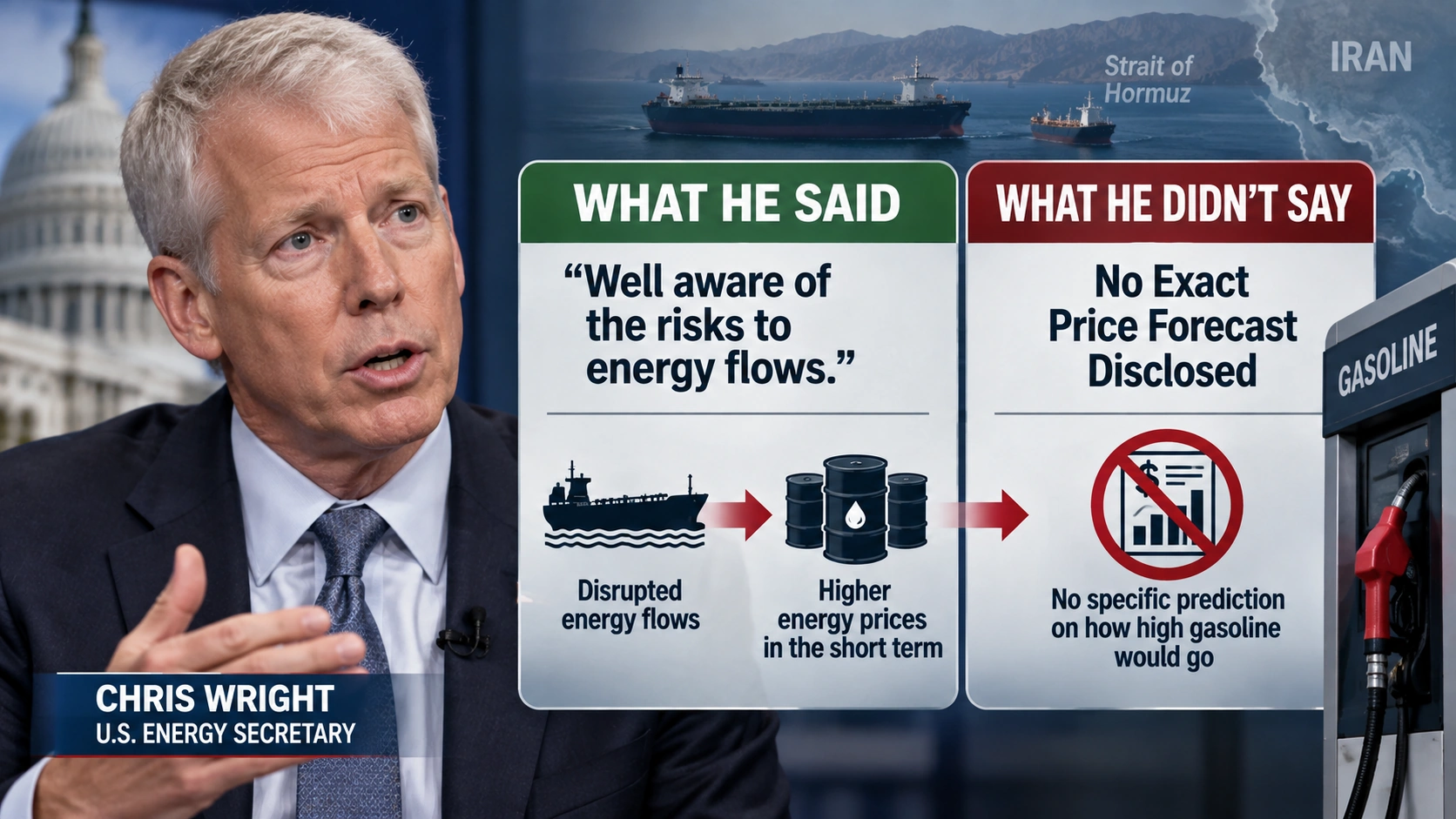
On October 4, Wright told CBS’s Face the Nation that Trump had been “well aware of the risks to energy flows” before launching the Iran war.
Wright went further. He said Trump knew the decision would raise energy prices in the short run and was willing to accept the political consequences because he believed preventing a nuclear-armed Iran was more important. That was Wright’s account of the president’s reasoning. (CBS News · CBS transcript)
The careful wording matters.
Wright said Trump knew there was a risk to energy flows and short-term prices. He did not disclose a specific forecast saying gasoline would rise by a certain number of cents or dollars per gallon.
So the strongest conclusion supported by the interview is not “Trump knew exactly what gas would cost.”
It is this: Wright says Trump knowingly accepted a foreseeable risk of higher energy prices when he chose military action.
How Much Have Gas Prices Risen Since the War Began?
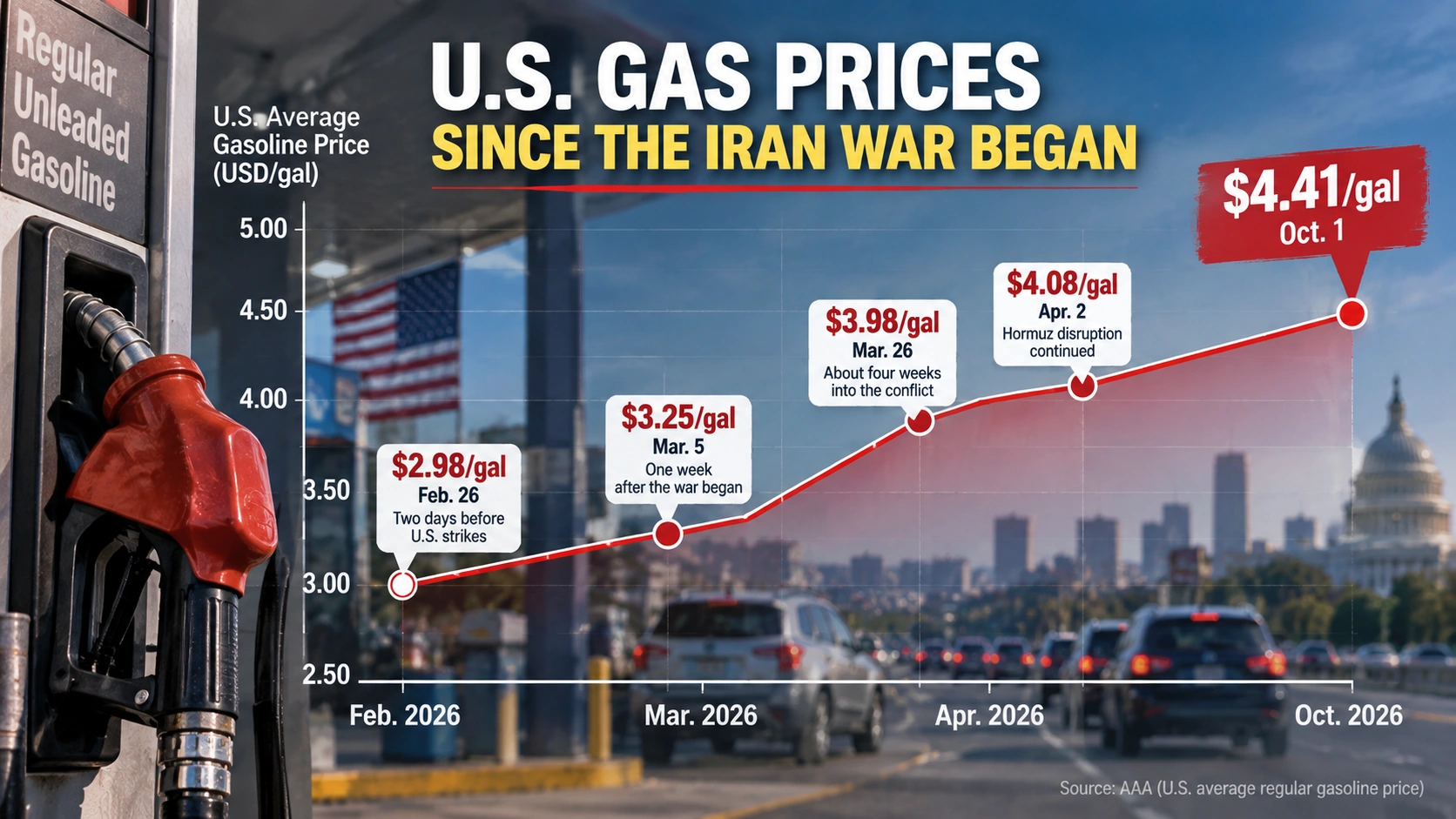
The change is large enough that Americans do not need an economics chart to notice it.
AAA reported that regular gasoline averaged $2.98 per gallon on February 26, two days before U.S. strikes began. (AAA)
President Trump gave the final approval for Operation Epic Fury on February 27, and major U.S. military strikes began on February 28. (AP · Reuters)
The pump-price rise followed quickly.
| Date | What was happening | U.S. regular gasoline average |
|---|---|---|
| Feb. 26 | Two days before U.S. strikes began | $2.98/gal |
| Mar. 5 | First week after the conflict began | $3.25/gal |
| Mar. 26 | Roughly four weeks into the conflict | $3.98/gal |
| Apr. 2 | Hormuz disruption continued | $4.08/gal |
| Oct. 1 | After a record-setting September | $4.41/gal |
AAA explicitly connected the early-March jump to higher crude prices after the Middle East conflict began. By late March, the national average had climbed about a dollar in one month. (AAA · AAA)
By October 1, AAA said the national average was $4.41 and described September as a record-setting month for pump prices. (AAA)
That timeline makes the connection easy to see.
It still does not prove that the Iran war explains every part of the increase.
To understand that, you have to look at where the world’s oil moves.
Why Does the Strait of Hormuz Matter If the U.S. Produces So Much Oil?
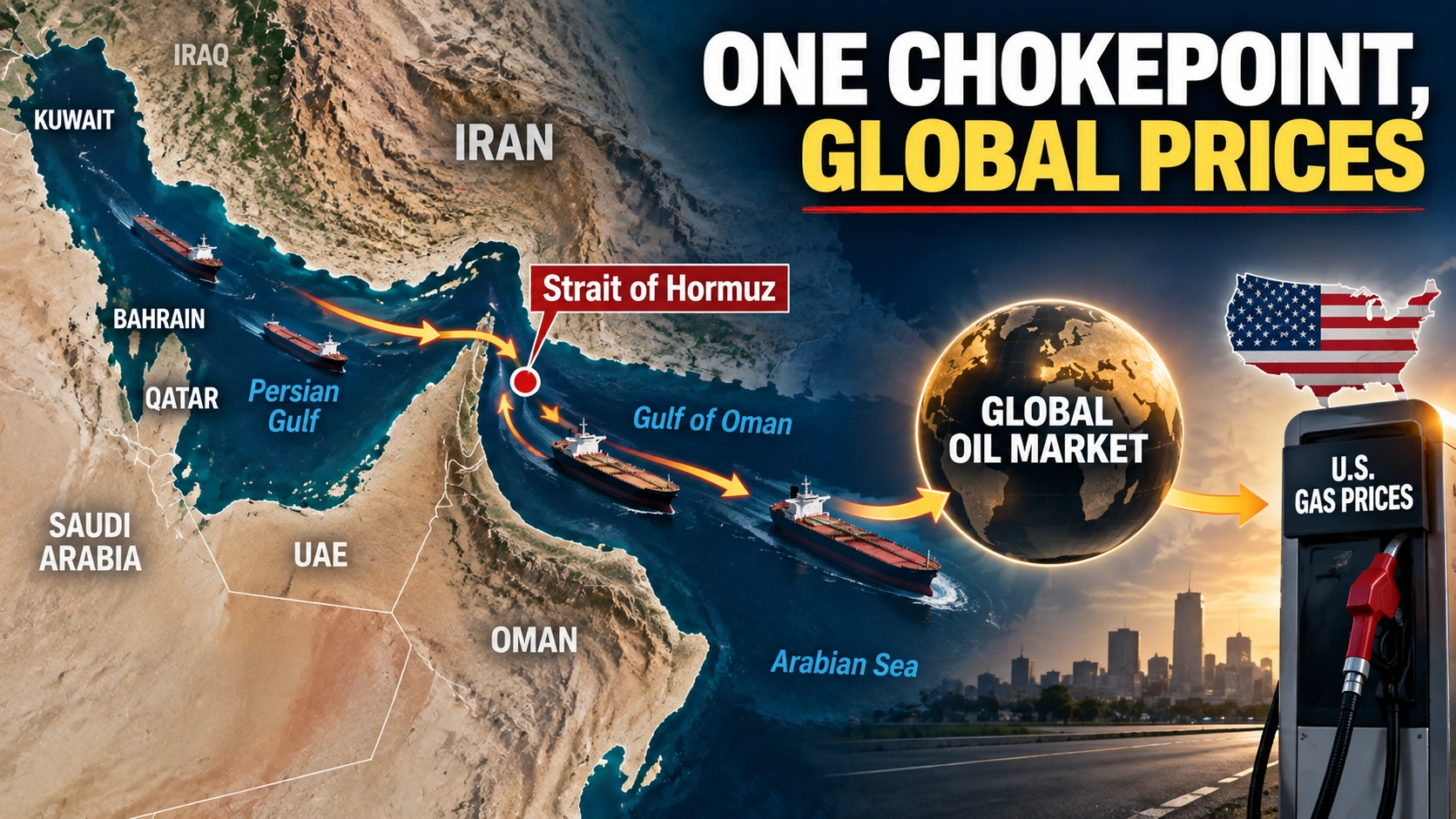
Because oil is priced in a global market.
The United States does not need to import most of its oil through Hormuz for a Hormuz disruption to affect American drivers.
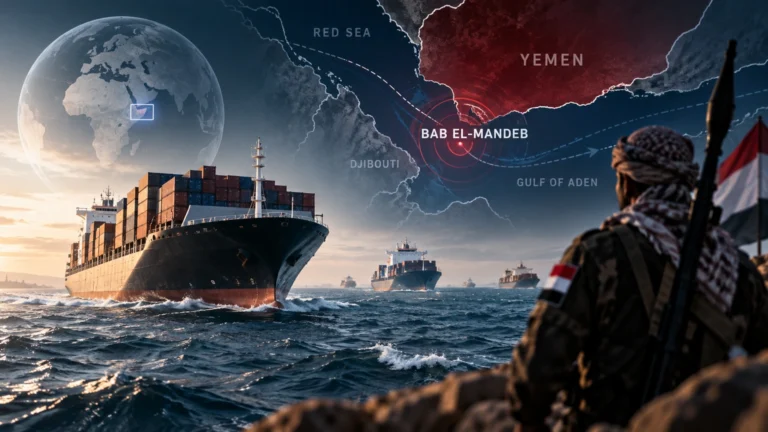
The U.S. Energy Information Administration says about 20.9 million barrels per day of oil moved through the Strait of Hormuz in the first half of 2025, equivalent to roughly 20% of global petroleum-liquids consumption. The available pipelines that can bypass the strait can replace only part of that volume. (EIA)
At the same time, only about 2% of U.S. petroleum-liquids consumption in that period came from crude oil and condensate imported from Persian Gulf countries through Hormuz. (EIA)
That may sound contradictory, but it is not.
Think of oil less like electricity from one local power plant and more like wheat traded around the world. If a major source of global wheat becomes harder to ship, buyers elsewhere may bid more for the remaining supply even if their own wheat did not come from that region.
Oil works similarly.
Hormuz matters to Americans because it can change the world price of crude—not because every gallon of U.S. gasoline started as Persian Gulf oil.
Is the Iran War the Only Reason Gas Prices Are High?
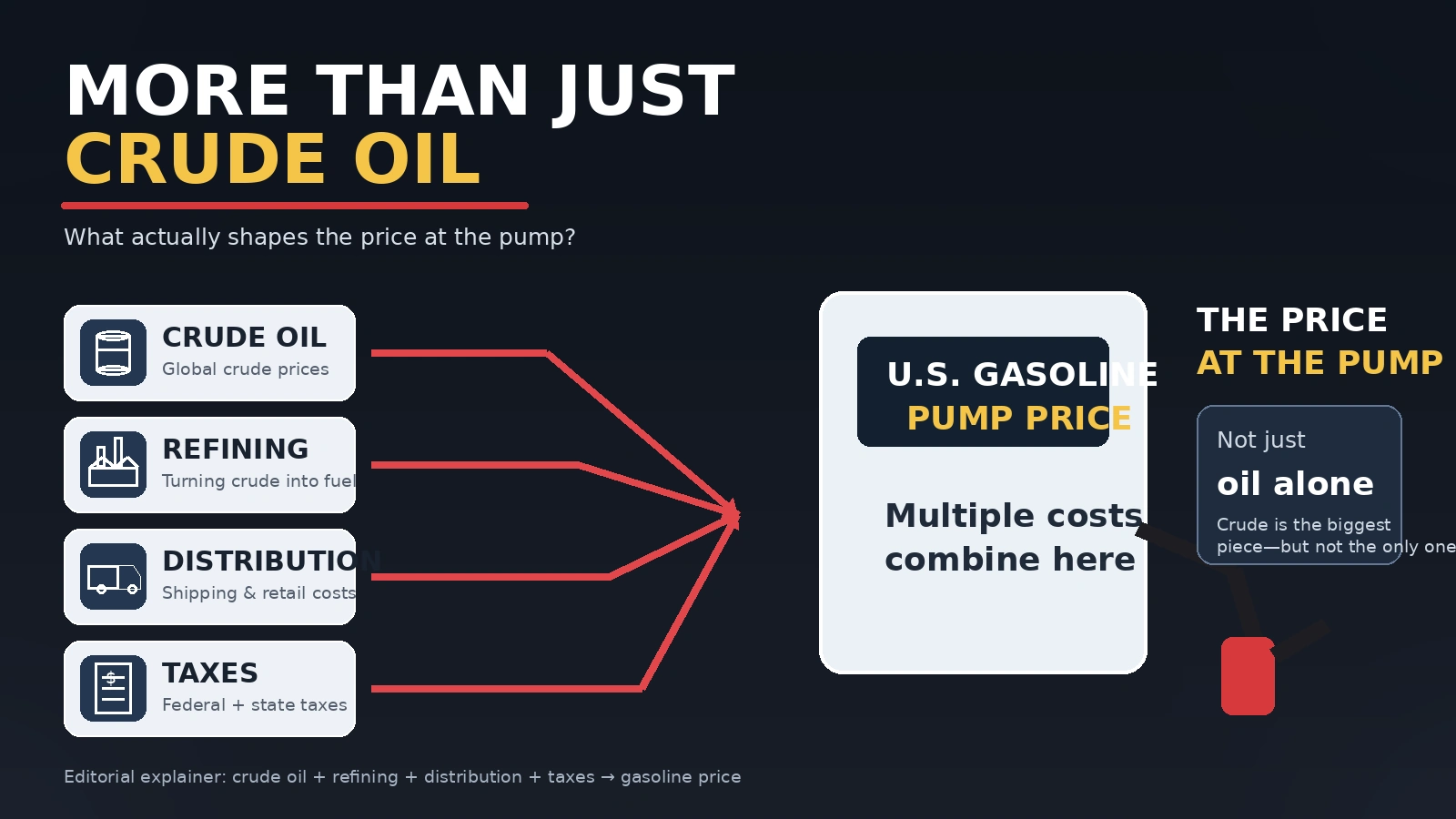
No.
The Iran conflict is a major part of the story, but gasoline prices are not set by one event.
The EIA breaks pump prices into four broad pieces: crude oil, refining, distribution and marketing, and taxes. Crude oil is usually the largest component, while refining costs can swing sharply when refinery capacity becomes tight. (EIA)
That means several problems can happen at once.
| Pressure on prices | How it reaches the pump |
|---|---|
| Iran war and Hormuz disruption | Raises crude-oil and shipping risk |
| Tanker and insurance costs | Makes moving oil more expensive |
| Refinery constraints | Makes turning crude into gasoline and diesel more expensive |
| Russia-Ukraine energy disruptions | Tightens global fuel supplies, especially diesel |
| Seasonal and regional refinery issues | Can raise prices even when crude stabilizes |
On October 5, Trump himself argued that the current fuel-price problem cannot be blamed on Iran alone. He also pointed to Ukrainian attacks on Russian energy infrastructure and U.S. refinery closures. (Reuters)
Some of those explanations are politically contested, particularly claims assigning responsibility for U.S. refinery closures.
But the broader economic point is sound: a high pump price can reflect several bottlenecks at the same time.
That is also why ending one disruption does not necessarily send prices immediately back to where they started.
If Trump Knew Prices Could Rise, Why Go Ahead Anyway?
Wright’s answer was essentially that Trump treated the decision as a national-security tradeoff.
The administration’s argument is that allowing Iran to become a nuclear-armed state would create a much larger long-term threat—to regional security and, in Wright’s framing, to energy markets as well. Wright said Trump chose to accept near-term economic pain rather than postpone that risk. (CBS News)
That is the administration’s justification, not an independently established conclusion that military action was the only available way to prevent an Iranian nuclear weapon.
The narrower point from Wright’s interview is simpler: the White House was not presenting higher energy prices as an unforeseeable side effect that no one considered beforehand.
Wright says the risk was known.
Why Haven’t Prices Fallen Even as More Oil Moves Through Hormuz?
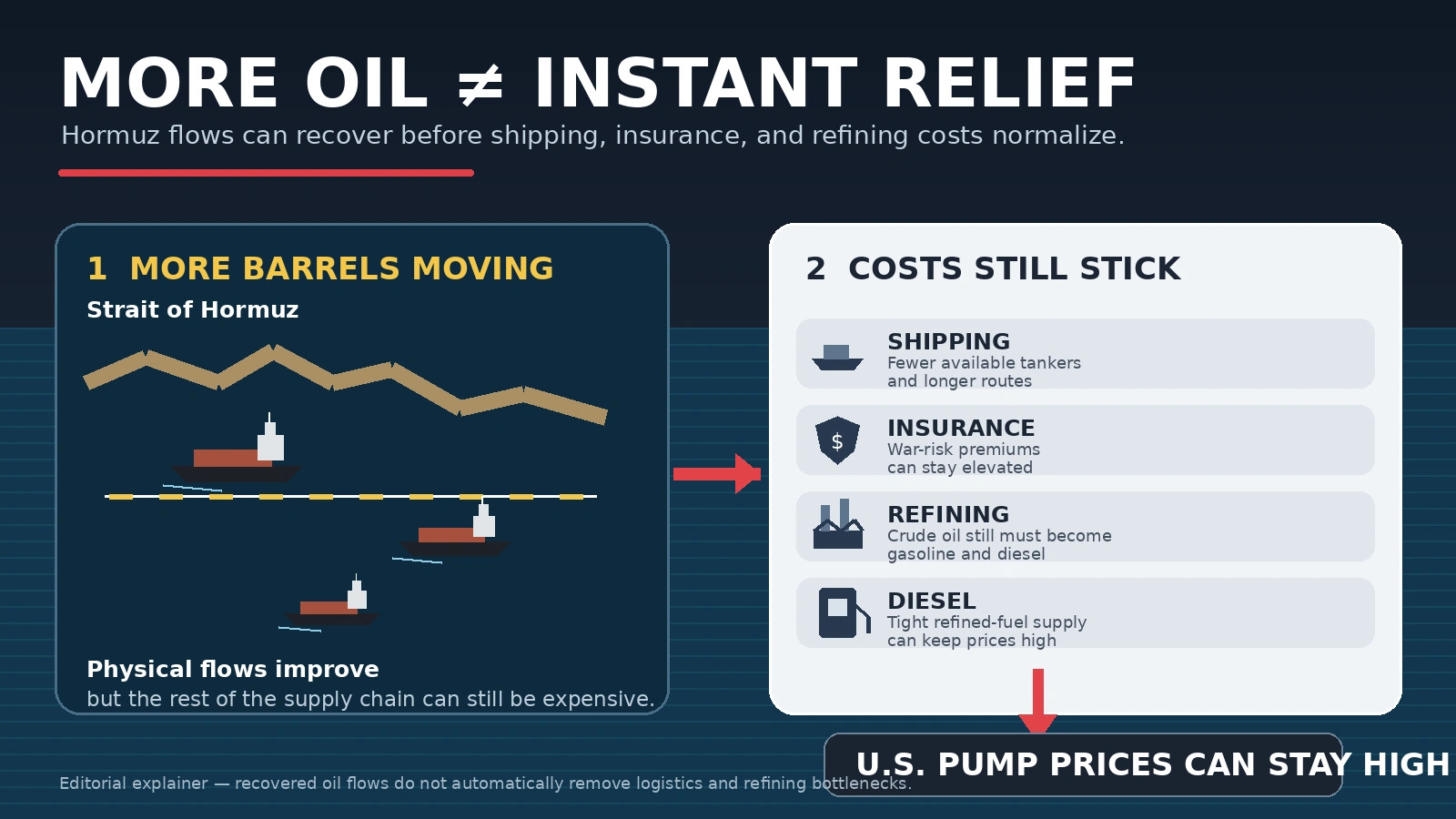
Because moving more barrels is not the same thing as restoring the entire prewar energy system.
Reuters reported on October 5 that flows through Hormuz had recovered to roughly 14.2 million barrels per day, about 80% of prewar levels. Yet tanker availability, insurance, shipping costs and refining constraints remained serious problems. (Reuters)
That creates an important distinction:
The quantity of oil moving can improve before the cost of moving, insuring and refining that oil returns to normal.
Imagine a highway reopening after a major closure, but only with fewer lanes, expensive detours, higher tolls and a shortage of trucks.
Traffic is moving again.
That does not mean transportation costs are back to normal.
The same idea helps explain why gasoline and especially diesel can remain expensive even when headlines say oil exports are recovering.
What Is the Administration Doing to Bring Prices Down?
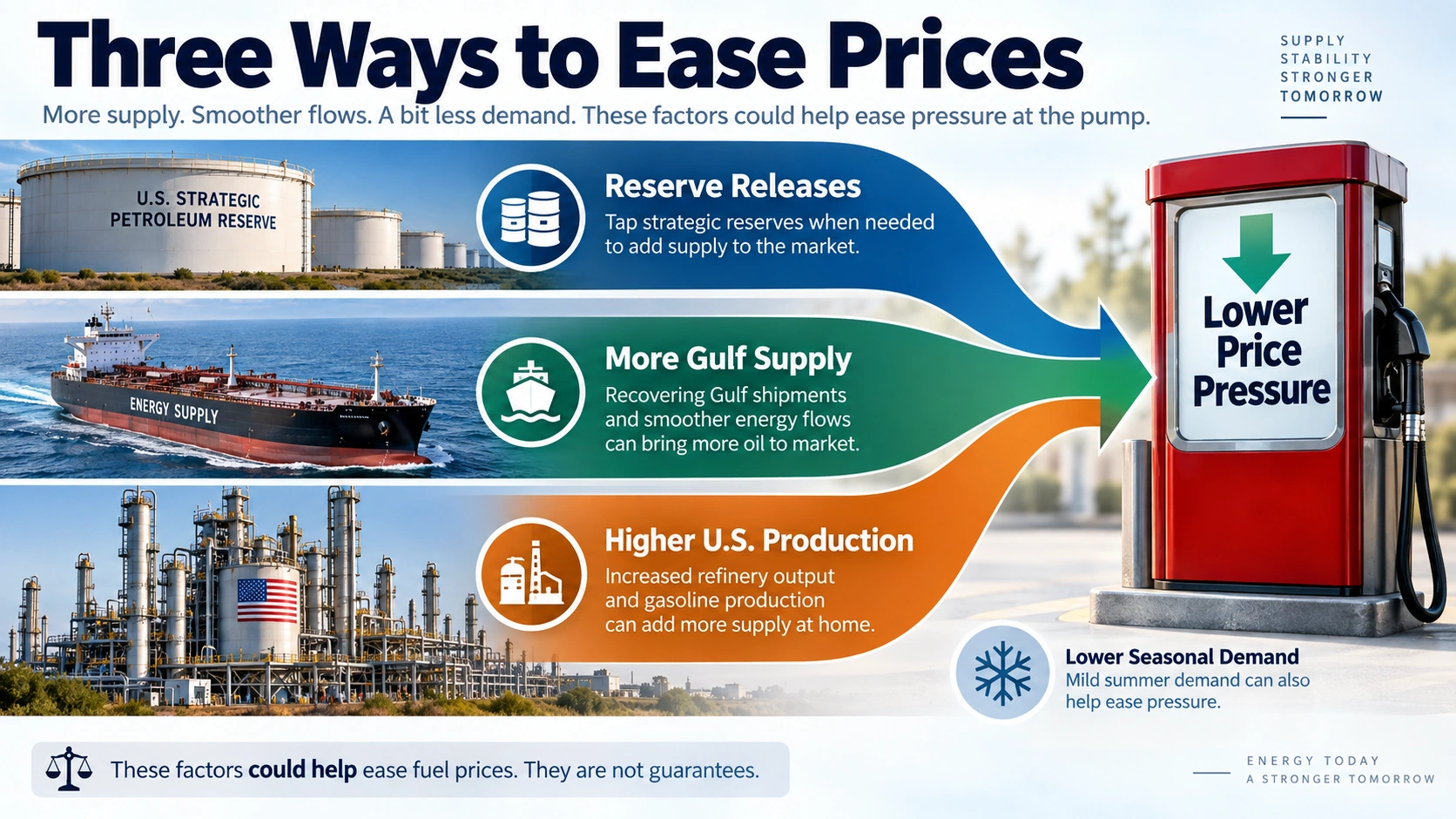
Wright says he expects gasoline and diesel prices to fall.
His argument rests on several things happening together: more oil moving out of the Persian Gulf, high U.S. gasoline production, lower gasoline demand after the summer driving season and emergency fuel releases. (CBS transcript)
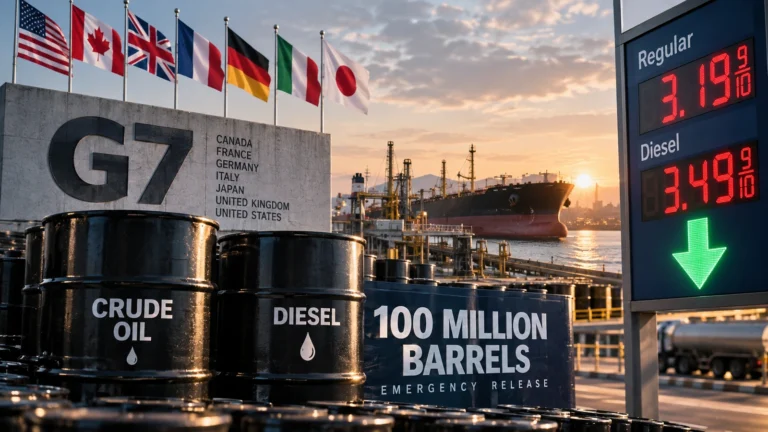
The Group of Seven has also announced a coordinated release of 100 million barrels of oil and refined fuels as governments try to relieve pressure on global fuel markets. (AP)
Wright told CBS he expected prices to continue falling toward Election Day.
But he also gave the reason that prediction should not be treated as a guarantee: war is unpredictable.
A new tanker attack, refinery outage, pipeline strike or escalation involving Iran could change the market quickly.
Why Has This Become a Midterm Election Issue?
Because energy policy has turned into a household-budget issue.
CBS’s October 4 Battleground Tracker found that voters were evaluating the economy overwhelmingly through the prices they encounter in everyday life. The survey also found that most voters believed the Iran war had contributed to higher U.S. gas prices. (CBS News)
That creates an uncomfortable political equation for the White House.
The administration wants voters to see the Iran campaign as a necessary security decision.
Drivers see a gasoline sign every few days.
Those two experiences meet at the pump.
Wright’s October 4 comments are therefore politically important not because they prove the president personally set gasoline prices, but because they undercut a simpler argument that the fuel-price risk was completely unexpected.
According to his own energy secretary, Trump knew higher prices were one possible cost of the decision.
What Should Drivers Watch Next?
Three things matter more than any campaign promise about where gasoline will be a few weeks from now.
First, watch the Strait of Hormuz. More stable shipping with fewer attacks and lower insurance costs would reduce one major source of risk.
Second, watch refining, especially diesel. The market can have enough crude oil and still face high fuel prices if there is not enough capacity to convert that crude into the products people and businesses actually use.
Third, watch whether the Iran conflict moves toward a durable settlement rather than another temporary pause.
Oil markets react not only to what is happening today but also to what traders believe could happen next.
That is why prices can move before a tanker is blocked—or before a peace agreement physically adds a single barrel of supply.
Bottom Line: What This Story Really Means
Chris Wright’s October 4 interview answers the headline question more clearly than earlier White House messaging did.
According to Wright, Trump knew the Iran war could disrupt Persian Gulf energy flows and raise energy prices in the short term, and he chose to accept that risk because he believed the national-security objective was more important.
That does not mean Trump knew exactly how high gasoline would rise.
It also does not mean the Iran war explains every cent Americans are paying today. Crude prices, the Strait of Hormuz, tanker costs, refinery capacity, Ukraine-related energy disruptions and regional U.S. supply constraints all affect the final number on a gas-station sign.
But the war is not disconnected from the pump.
The clearest way to understand the story is this: the White House faced a security decision with a foreseeable economic cost. Wright now says that cost was understood before the decision was made.
Trump, Iran, and Gas Prices: Key Questions Explained
Q. Did Trump know the Iran war could raise gas prices?
According to Energy Secretary Chris Wright, yes. Wright said Trump understood that the war could disrupt Persian Gulf energy flows and raise energy prices in the short term.
Q. Did Chris Wright say Trump knew exactly how expensive gasoline would become?
No. Wright described the general risk of higher energy prices but did not disclose a specific gasoline-price forecast presented to Trump.
Q. How much was gasoline before the Iran war began?
AAA reported a national average of about $2.98 per gallon on February 26, 2026, two days before major U.S. strikes began.
Q. Why can Hormuz raise U.S. gas prices if America produces so much oil?
Because oil trades in a global market. A disruption to one of the world’s largest oil-shipping chokepoints can raise global crude prices even if relatively little of the affected oil was headed directly to the United States.
Q. How much oil normally moves through the Strait of Hormuz?
EIA data show about 20.9 million barrels per day moved through Hormuz in the first half of 2025, roughly 20% of global petroleum-liquids consumption.
Q. Is the Iran war the only reason U.S. gasoline prices are high?
No. Crude-oil prices, refinery capacity, shipping and insurance costs, inventories, distribution, taxes and other international supply disruptions also affect pump prices.
Q. Why can gas stay expensive after oil shipments begin recovering?
Because the energy supply chain can remain constrained even after more crude starts moving. Tanker costs, insurance, refinery shortages and distribution bottlenecks can keep refined-fuel prices elevated.
Q. Does Chris Wright expect gasoline prices to fall?
Yes. Wright said he expected gasoline and diesel prices to decline as supply improves and seasonal gasoline demand falls, although he acknowledged there are no guarantees during a conflict.
Q. Why is this becoming a midterm election issue?
Fuel prices are highly visible household expenses. Recent polling shows voters connect the Iran conflict with higher gasoline prices, making energy costs part of the broader affordability debate before the November elections.
Did this help make the story clearer? 🙂 WIN keeps unpacking the “why” behind the news—clearly and simply!
Sources
Wright’s October 4 Comments and the White House Rationale
CBS News — Energy Secretary Chris Wright Says Trump Was Aware of Energy-Flow Risks
CBS News — Full Chris Wright Face the Nation Transcript, October 4, 2026
AP — What Led to Trump’s February Decision to Strike Iran
Reuters — Initial Timeline of Operation Epic Fury
Gasoline Prices and How Pump Prices Work
AAA — February 26 Gasoline Price Report
AAA — March 5 Gasoline Price Report
AAA — March 26 Gasoline Price Report
AAA — April 2 Gasoline Price Report
AAA — October 1 Gasoline Price Report
U.S. Energy Information Administration — Factors Affecting Gasoline Prices
Hormuz, Shipping and the Current Energy Market
U.S. Energy Information Administration — World Oil Transit Chokepoints and the Strait of Hormuz
Reuters — Iran War, U.S. Gasoline Prices and Trump’s October 5 Response
Reuters — Why Logistics Are Keeping Oil Prices High
Political and Emergency-Supply Response
CBS News — Battleground Tracker: Prices, Iran and the Midterm Election
AP — G7 Announces 100 Million-Barrel Oil and Fuel Release
Keep Reading
If Hormuz Is the Problem, Can Saudi Arabia Just Send Its Oil Another Way?
Saudi Arabia does have a major pipeline that can bypass the Strait of Hormuz. But the alternative route has its own vulnerabilities, which helps explain why one damaged shipping lane can still affect global energy prices even when bypass infrastructure exists.
Saudi Arabia Built a Pipeline to Bypass Hormuz—So Why Is Its Oil Route Still at Risk?