Can a 1988 Video Rental Law Protect Your Online Viewing Data? The Supreme Court Takes Up the Question

You sign up for a sports newsletter. Later, you watch a few videos on the website.
Could Facebook learn exactly which videos you watched?
And if the site shared that information without your permission, could you sue under a federal law written when people rented movies on VHS tapes?
That unlikely combination is now at the center of a U.S. Supreme Court case.
On October 14, 2026, the justices heard arguments in Salazar v. Paramount Global, a dispute over whether the Video Privacy Protection Act of 1988 can protect certain internet users whose viewing histories are allegedly shared through tracking technology. (U.S. Supreme Court · AP)
The surprising part is that the Court is not being asked to decide whether every tracking pixel violates federal law. It faces a narrower question: Does subscribing to a non-video email newsletter make someone a protected consumer under a law designed for video customers?
That distinction could shape how a range of online privacy lawsuits proceed.
※ Images in this article are AI-generated illustrations created to help explain the story. They are not actual photographs, and depictions of people, places, or events may differ slightly from reality.
How Did a Sports Newsletter Become a Supreme Court Case?
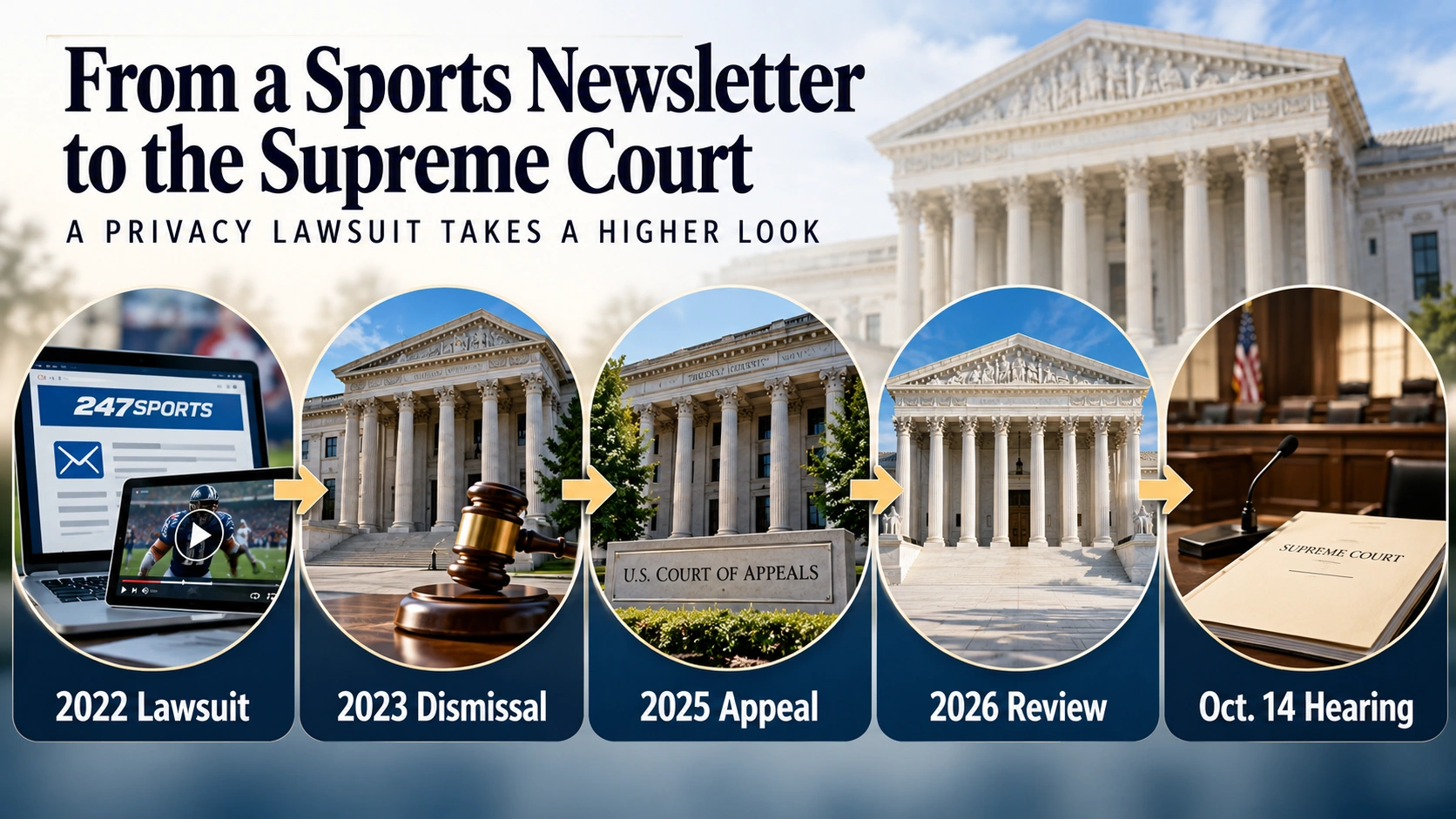
The case began with an ordinary online activity: signing up for a college sports newsletter.
In 2022, Michael Salazar subscribed to an email newsletter from 247Sports.com, a sports news website operated by Paramount Global. He also watched videos on the website while logged into his Facebook account.
Salazar alleged that Paramount had installed Facebook’s tracking pixel on 247Sports.com and that it transmitted his Facebook identifier and information about videos he watched to Facebook without his consent.
He filed a proposed class-action lawsuit in September 2022, alleging that Paramount violated the federal Video Privacy Protection Act, or VPPA. (Sixth Circuit)
The lawsuit ran into a threshold legal problem. The courts did not determine whether Paramount had unlawfully disclosed his viewing history. They held that Salazar had not adequately alleged that he qualified as a consumer protected by the statute.
He had subscribed to a newsletter, but the lower courts concluded that he had not pleaded a qualifying subscription to audiovisual goods or services.
| Date | What Happened |
|---|---|
| September 2022 | Salazar filed a proposed class-action lawsuit. |
| July 2023 | A federal district court dismissed the VPPA claim. |
| April 3, 2025 | The Sixth Circuit Court of Appeals affirmed the dismissal. |
| January 26, 2026 | The Supreme Court agreed to review the case. |
| October 14, 2026 | The justices heard oral arguments, without issuing a final decision. |
(Sixth Circuit · U.S. Supreme Court)
A dismissal for failing to establish protected consumer status is not a finding that the alleged information sharing never occurred. The Supreme Court is reviewing the meaning of that legal requirement.
Why Was a Video Privacy Law Created in 1988?
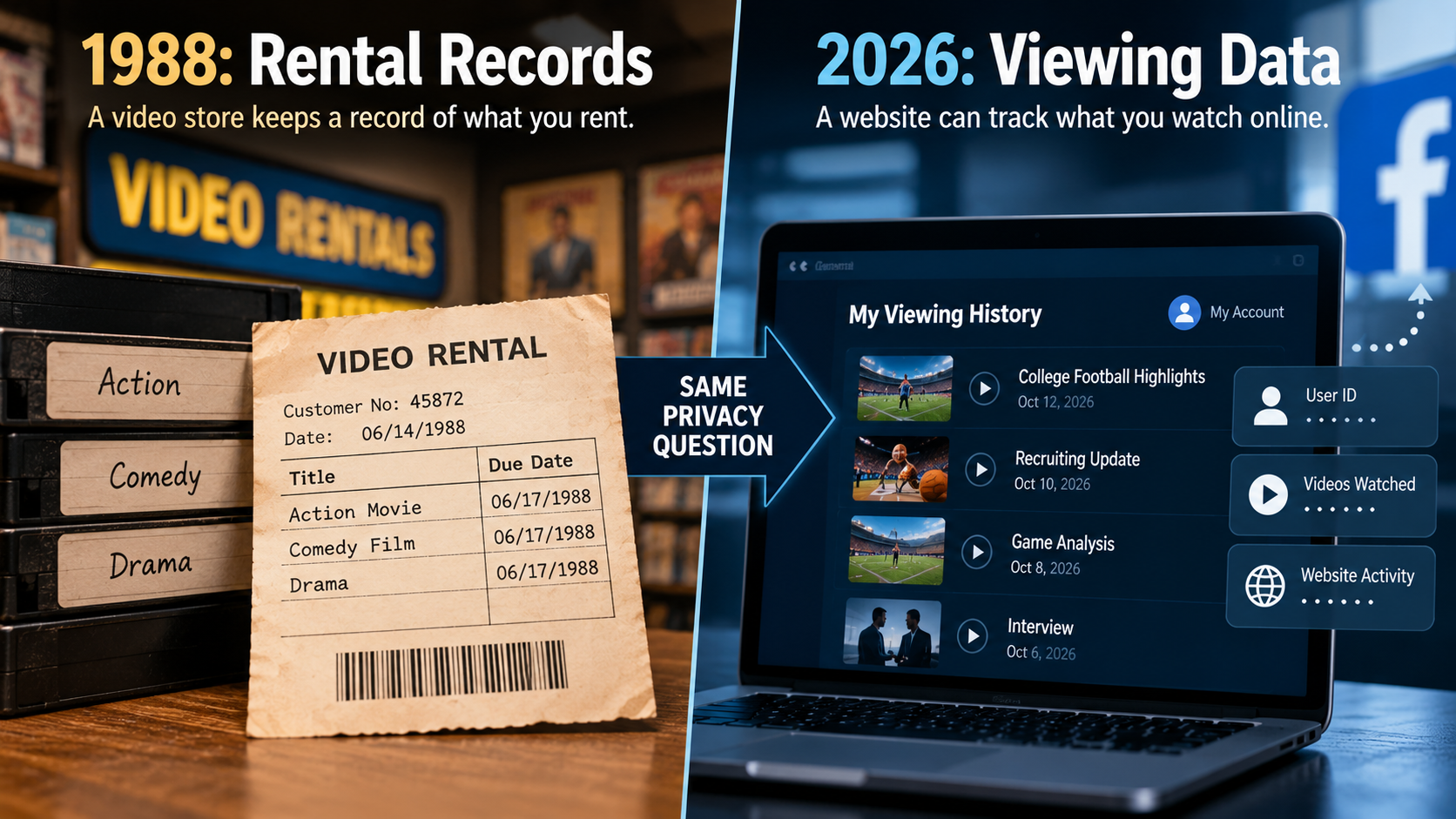
The Video Privacy Protection Act was created after a political controversy over the disclosure of someone’s movie rental history.
In 1987, a journalist obtained and published information about movies rented by Robert Bork, a federal appeals court judge nominated to the Supreme Court by President Ronald Reagan.
The disclosure raised a troubling question. If a store knows which movies a person rents, should the store be allowed to share that information with outsiders?
Congress responded with the VPPA in 1988, restricting the disclosure of identifiable viewing information by covered providers. (AP · U.S. Code)
What does the law actually protect?
The law restricts covered video service providers from knowingly disclosing personally identifiable information about covered consumers, subject to specific exceptions.
It addresses information that can connect an identifiable person to particular video materials or services.
Compare these two statements:
- Someone watched a college football video.
- An identifiable individual watched a particular college football video.
The second presents the kind of privacy concern the statute was written to address. A video store once might have recorded that connection on paper. A website can now represent it through identifiers and viewing events.
Congress also amended the VPPA in 2013 to allow certain forms of electronic consent, under specified conditions. The statute therefore has changed since its passage, although its core definitions still invite disagreement. (U.S. Code)
The technology can be modern and the underlying privacy concern familiar. But that does not answer who is entitled to the law’s protection.
How Could Facebook Learn Which Videos Someone Watched?
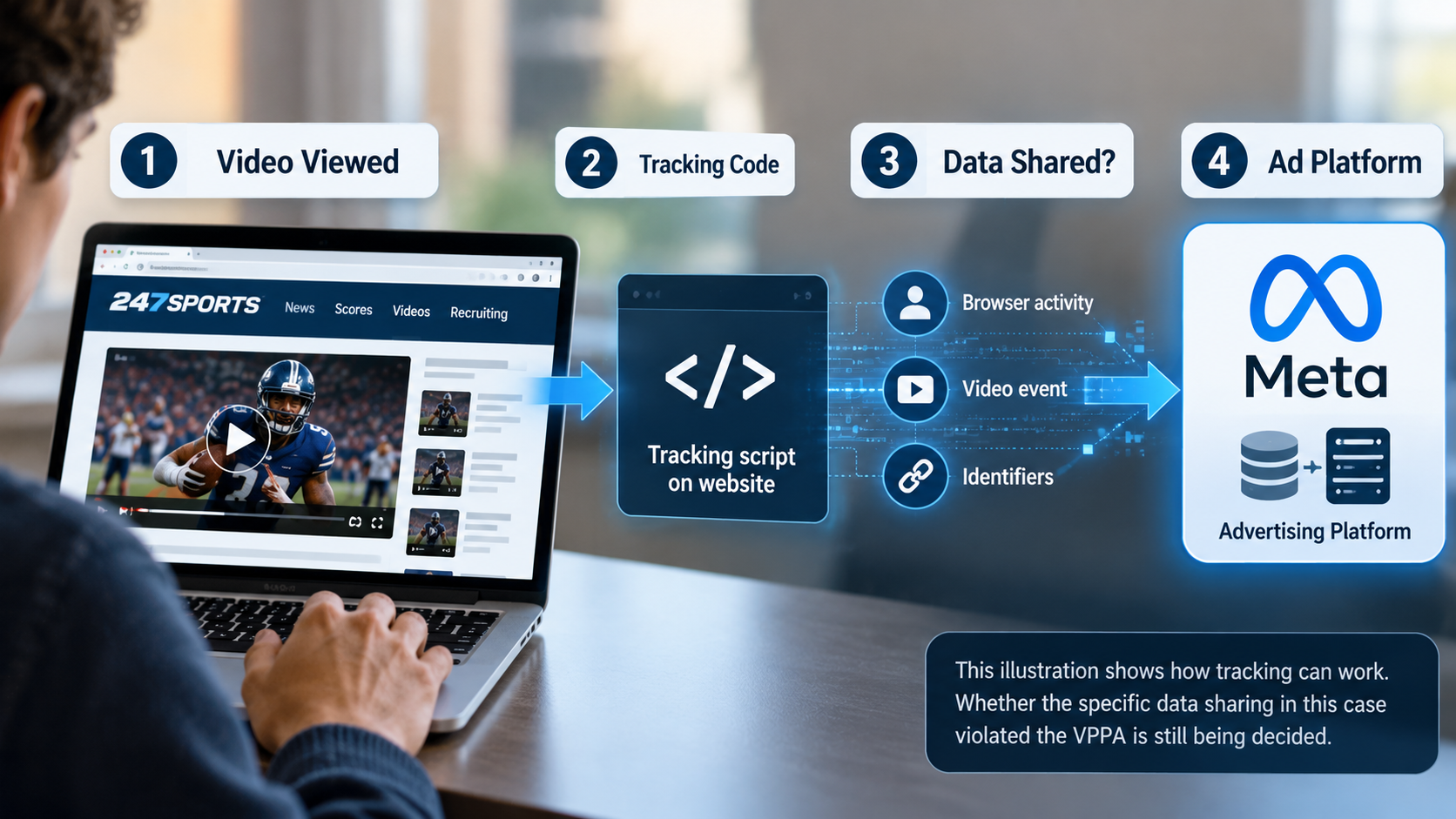
The technology at the center of Salazar’s lawsuit is the Meta Pixel, formerly known as the Facebook Pixel.
A tracking pixel is a small piece of code that a website operator can use to record certain visitor actions and transmit information to an advertising platform. It can help a business measure advertising results and build relevant audiences.
Meta has publicly explained that businesses can send it information about activity on their websites and apps through its business tools, including the pixel. (Meta)
Salazar alleges something more specific: that Paramount’s website disclosed his Facebook ID along with information about the videos he watched.
The combination is important because an identifier may allow a viewing event to be associated with a particular person. Those are allegations from the complaint, not a final judicial finding of unlawful disclosure. (Sixth Circuit)
| Step | How Tracking Can Work |
|---|---|
| 1. Video viewing | Someone watches a video on a website. |
| 2. Tracking event | Website code records information about the action. |
| 3. Transmission | The code may send event details and identifiers to a third party. |
| 4. Association | The receiving company may associate the activity with a user. |
Is a tracking pixel the same as hacking?
No. A tracking pixel is normally code that the website operator has deliberately installed. Its use is not automatically unlawful.
Whether a particular disclosure violates the VPPA depends on the statutory conditions, the data involved, any applicable exception, and the affected person’s legal status.
That last condition is precisely where this case becomes unusual.
Does Signing Up for a Free Newsletter Make You a Protected Consumer?
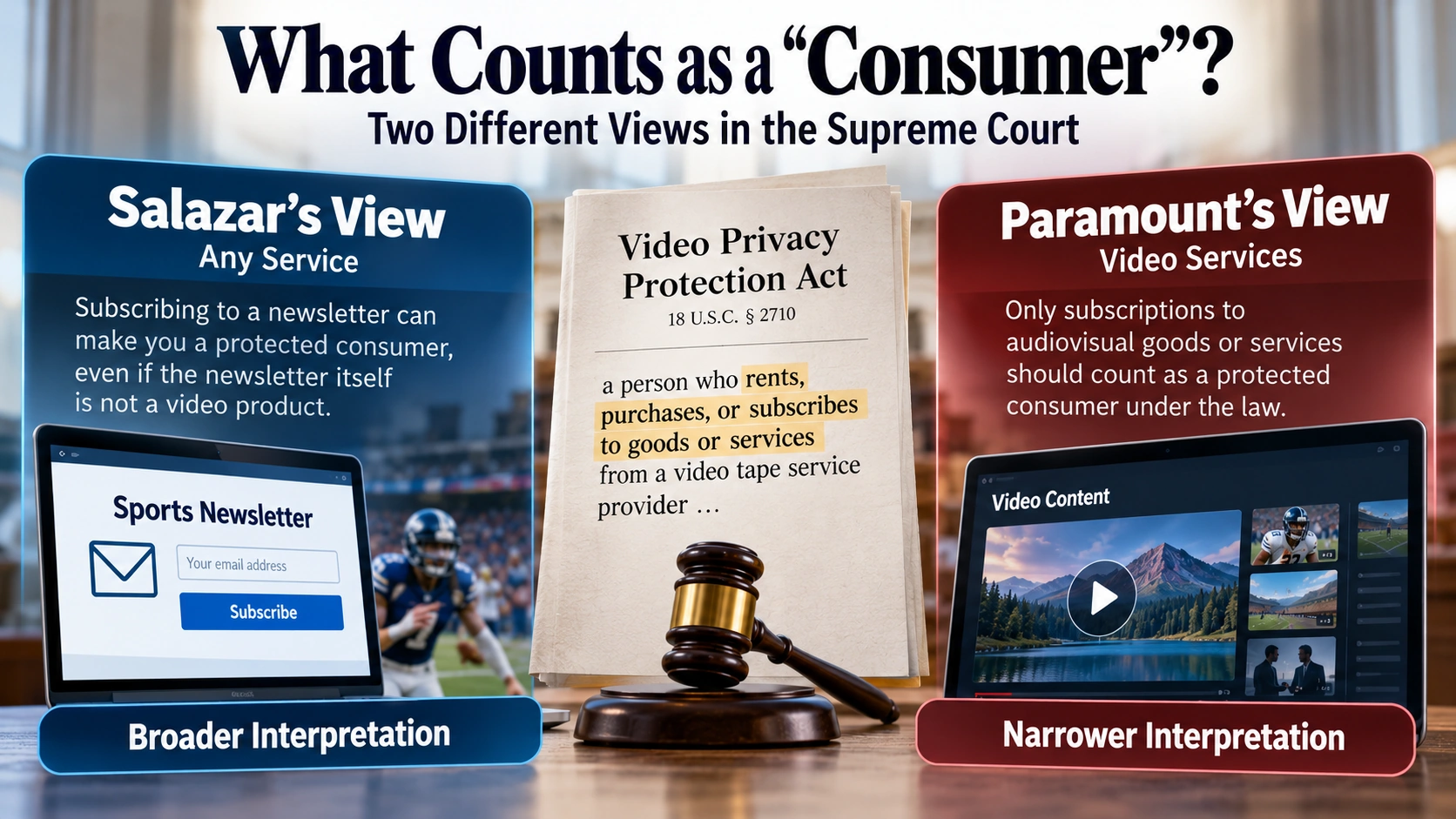
This is the central question in Salazar v. Paramount Global.
The VPPA defines a consumer to include a person who rents, buys, or subscribes to goods or services from a video tape service provider.
What does “goods or services” mean in that sentence? Does it include any service offered by a qualifying video company, or only audiovisual goods and services? (U.S. Code · Cornell Law School)
Salazar’s interpretation
Salazar argues that the statutory words are broad. A newsletter subscription, he says, can make a person a consumer of a covered video provider even if the newsletter itself is not an audiovisual product.
Under his reading, Congress could have expressly limited the definition to video subscriptions but did not do so.
Paramount’s interpretation
Paramount argues that those words must be read in the context of the entire statute.
Because the VPPA addresses video rental, purchase, and delivery, Paramount maintains that protected consumer status requires a qualifying relationship involving audiovisual goods or services.
Under that reading, signing up for an ordinary newsletter would not be enough.
| Question | Salazar’s Position | Paramount’s Position |
|---|---|---|
| What subscription qualifies? | Any goods or services from a covered video provider | Audiovisual goods or services |
| Could a non-video newsletter qualify? | Yes | Not by itself |
| Must the subscription be video-related? | No | Yes |
| Who could bring a VPPA claim? | A potentially broader subscriber group | A narrower group tied to video services |
These are competing interpretations, not established findings about liability.
Does it matter that the newsletter was free?
The disputed issue is not simply whether Salazar paid for a subscription. The statute expressly refers to subscribers. The disagreement is about the relationship that makes a subscription relevant to the law.
A person subscribing to a video service and a person signing up for an ordinary email newsletter may be in different legal positions. So may someone who visits a website only to watch a public video.
That difference is essential to understanding the Court’s task.
Why Did Federal Appeals Courts Disagree?
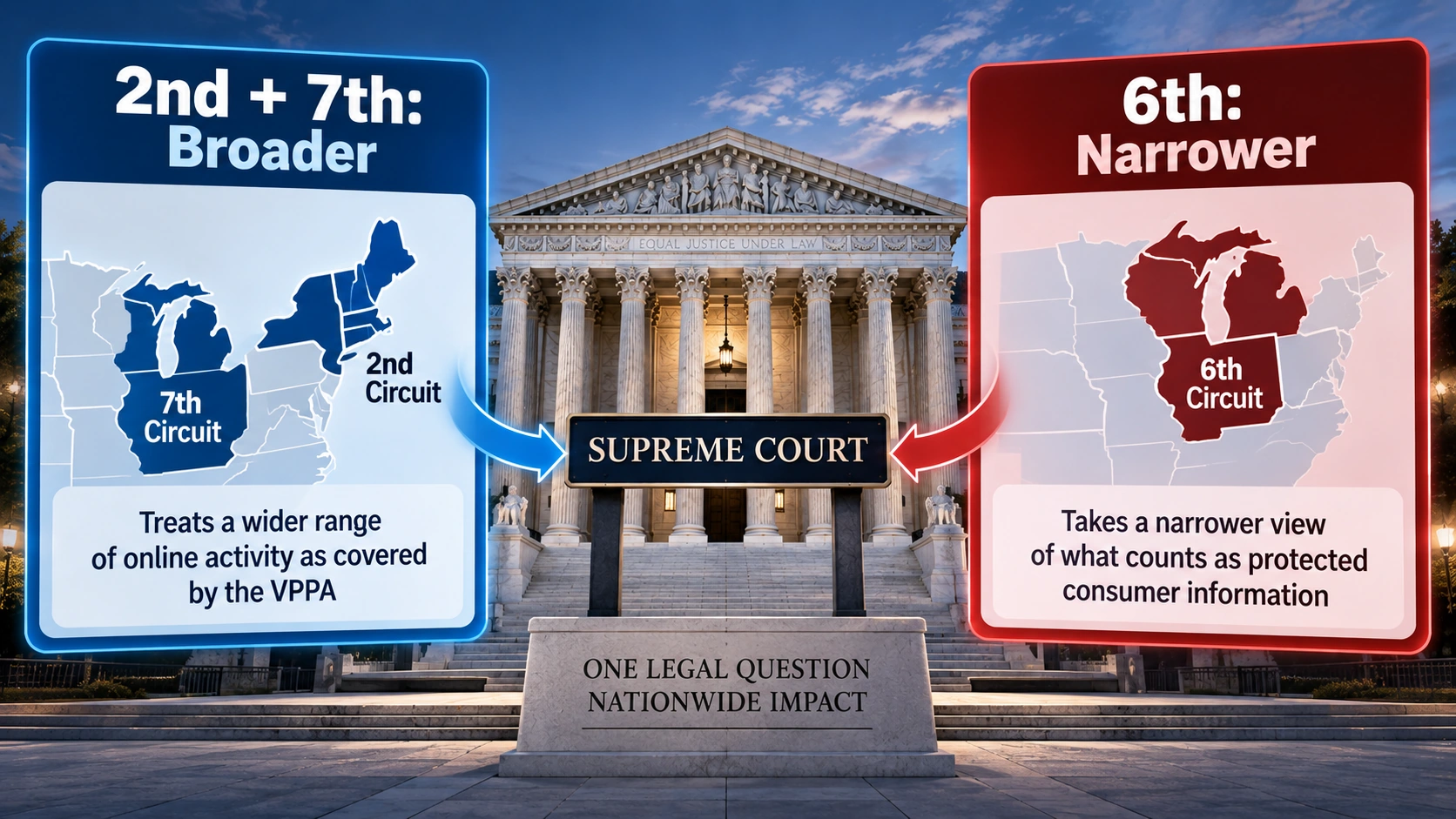
Federal appeals courts have reached different conclusions about which subscriptions qualify for VPPA protection.
The Sixth Circuit ruled against Salazar in April 2025. Judge John B. Nalbandian wrote the majority opinion, joined by Judge Alice M. Batchelder. Judge Rachel S. Bloomekatz dissented on the statutory question.
The majority held that the disputed phrase concerns audiovisual goods or services. The dissent favored the broader reading of the law’s text. (Sixth Circuit)
There is a remarkable twist: Salazar was also the plaintiff in a separate VPPA case against the NBA.
In that case, the Second Circuit adopted a broader reading that could protect subscribers to non-video offerings of qualifying video providers. The Seventh Circuit later took a similarly broad approach in a separate case.
The Sixth Circuit explicitly disagreed with those interpretations. (Sixth Circuit)
| Federal Appeals Court | Approach to Non-Video Subscriptions |
|---|---|
| Second Circuit | Broader interpretation, in a related Salazar lawsuit against the NBA |
| Seventh Circuit | Broader interpretation in a separate newsletter-related dispute |
| Sixth Circuit | Narrower interpretation, dismissing Salazar’s Paramount VPPA claim |
This conflict explains why Supreme Court review matters. A single federal law should not depend indefinitely on incompatible interpretations in different parts of the country.
The justices agreed to review the Paramount case on January 26, 2026. They must interpret the existing statute, not draft a new digital privacy law. (U.S. Supreme Court)
Would a Win for Salazar Make Online Tracking Illegal?
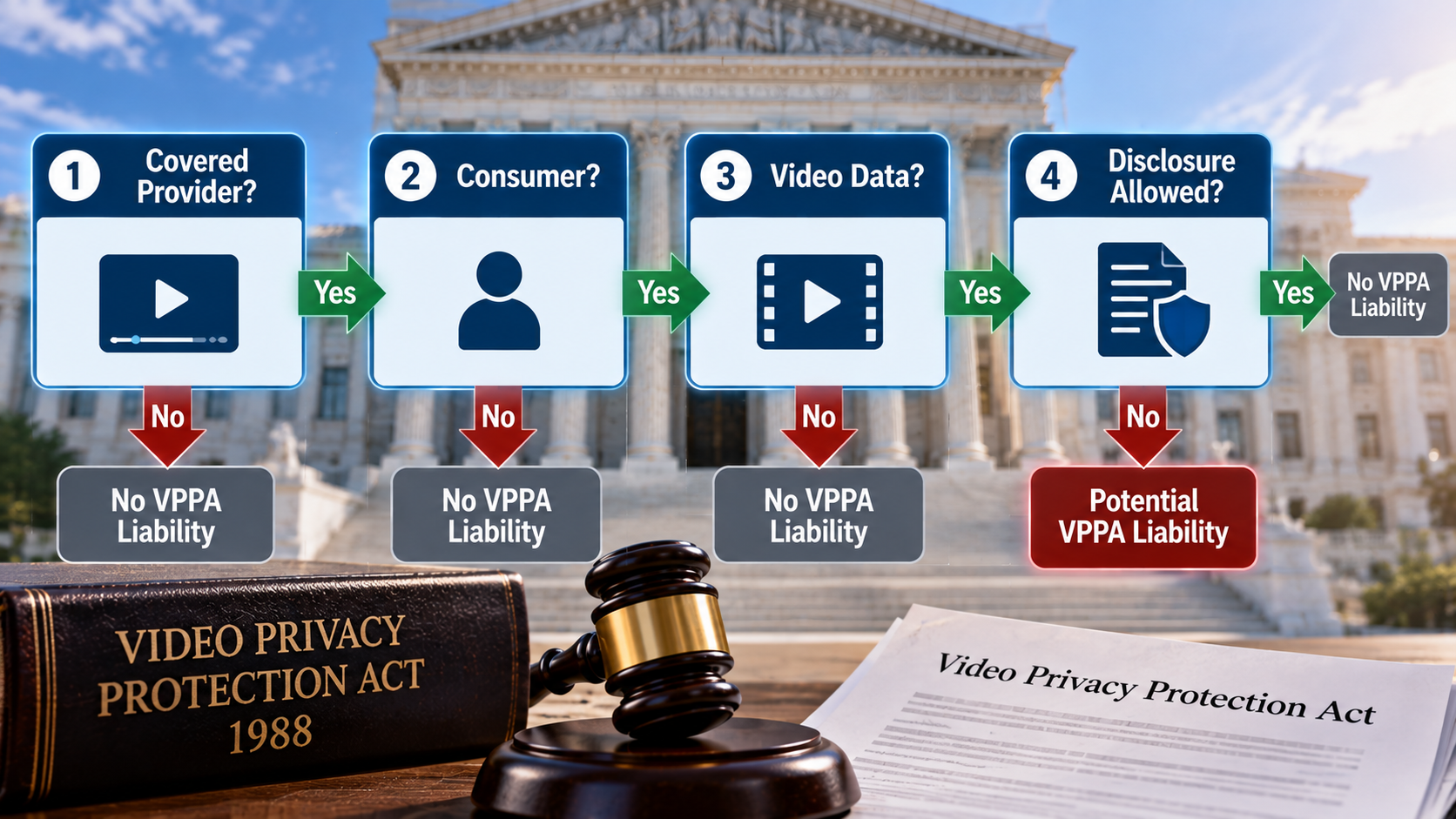
No. A decision favoring Salazar on the consumer definition would not turn every tracking pixel into an illegal tool.
It could mean more people are eligible to claim protection under the VPPA. But eligibility and a proven statutory violation are different questions.
A VPPA analysis also asks whether the company is a covered video service provider, whether personally identifiable information was knowingly disclosed, and whether a statutory exception applies.
One exception involves informed written consent, including electronic consent meeting specific requirements. (U.S. Code)
| Possible Ruling | What It Could Change | What It Would Not Decide |
|---|---|---|
| Broader consumer definition | More subscribers could potentially bring VPPA claims | Whether Paramount committed a violation |
| Narrower consumer definition | Some non-video subscribers could lack VPPA protection | Whether every other type of data sharing is lawful |
| Either interpretation | Guidance for other federal courts | The legality of every online tracking tool |
Why are businesses paying attention?
The law can carry significant civil remedies. Under 18 U.S.C. § 2710, a court may award actual damages, with liquidated damages of not less than $2,500, and other relief where appropriate. (U.S. Code)
That does not mean everyone who watches a tracked video automatically receives $2,500. A claimant must establish the legally required elements and entitlement to relief.
Potential exposure becomes especially important in proposed class actions involving many consumers.
Privacy advocates argue that identifiable viewing information deserves meaningful protection. Industry groups warn that expansive interpretations could create significant litigation risk for websites that use advertising-supported business models. (American Bar Association)
What Did the Justices Focus on During the October 14 Hearing?
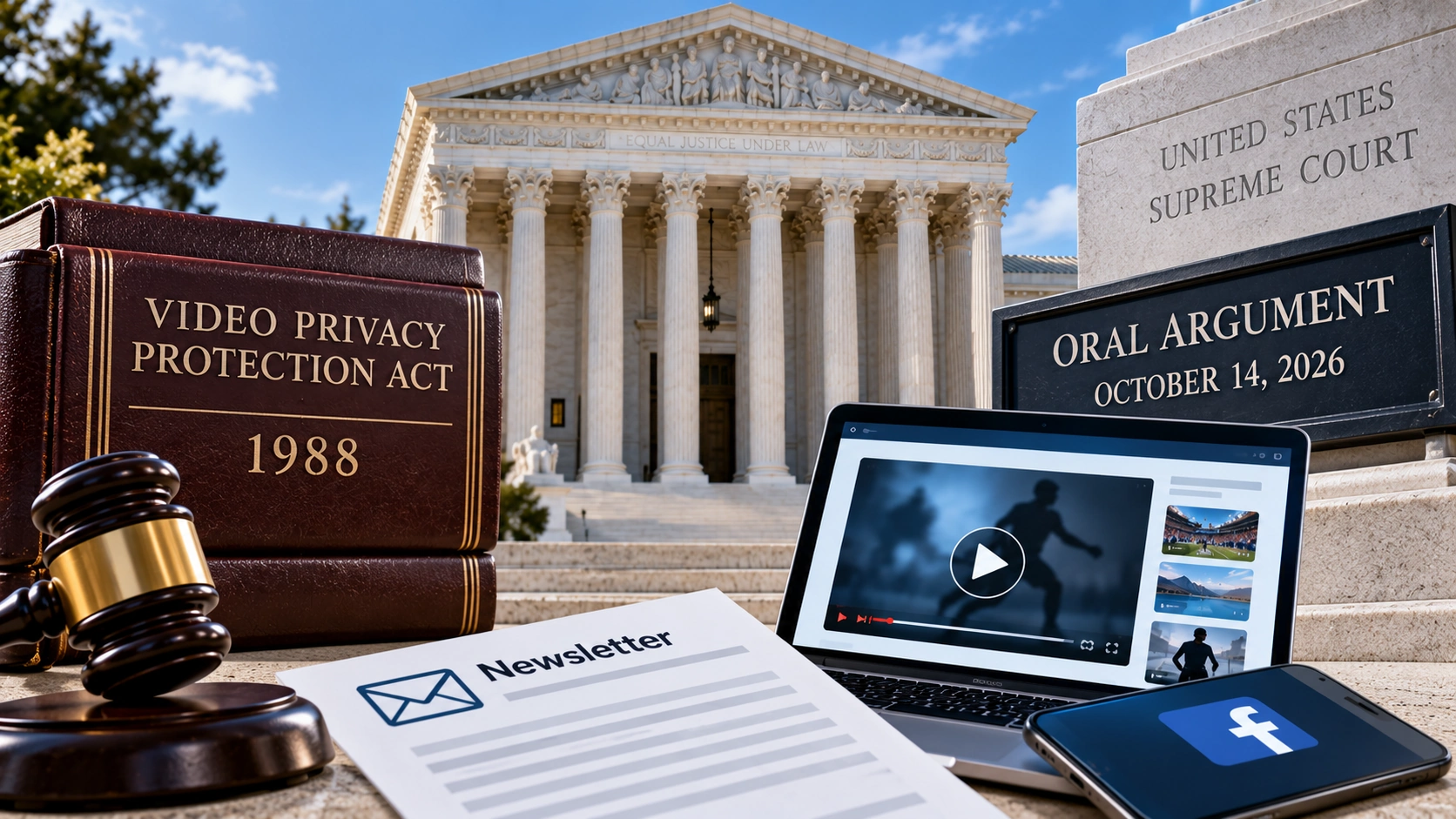
The October 14 argument centered on how far the law’s wording should reach when applied to today’s internet.
Justice Brett Kavanaugh raised concerns about using a video-rental privacy statute to regulate the data sharing behind targeted online advertising.
Justice Elena Kagan, among others, focused on the availability of consumer consent as a way for businesses to address privacy concerns. The arguments also explored what a sufficiently limited interpretation of the statute would look like. (Roll Call · AP)
That creates a genuine tension.
A broader interpretation could protect more consumers, but also expose more websites to VPPA litigation. A narrower reading could more closely limit the law to people with audiovisual-service relationships, potentially leaving newsletter-only subscribers outside its reach.
Questions during oral argument are not votes. As of October 15, 2026, the Supreme Court had not issued its final decision in Salazar v. Paramount Global. (U.S. Supreme Court)
What could happen next?
The Court could adopt the broader interpretation, accept the narrower one, or resolve the legal issue on more limited grounds.
If Salazar succeeds on consumer status, that would not automatically prove his full VPPA claim. Other legal questions may still need to be addressed as the case proceeds.
If Paramount succeeds, the narrower consumer definition could make similar newsletter-based claims harder to pursue.
No exact date for a Supreme Court decision has been announced.
What Can Internet Users Take Away From This Case Right Now?
Online viewing history can reveal information about a person’s interests and activities.
People often think of passwords or credit card numbers when they hear the words “personal data.” But a record connecting an identifiable individual to particular videos may also raise privacy concerns.
That is why this law exists, even if its original context involved physical rental receipts rather than advertising technology.
People who want more control over tracking can review website consent choices, browser privacy protections, and the data controls offered by digital platforms. Meta describes ways to manage information businesses send to it about activity outside Meta’s products. These measures may limit some data uses, but cannot be assumed to stop all tracking. (Meta · Meta Privacy and Security)
The Supreme Court’s ruling will not provide a universal answer to online privacy. It will clarify how one particular federal law defines the consumers entitled to its protections.
Bottom Line: What This Story Really Means
A 1988 law meant to protect people’s video rental histories now sits at the center of a modern dispute about online viewing data.
Michael Salazar says Paramount Global disclosed his 247Sports viewing information to Facebook without consent. Paramount disputes the legal basis for his claim, arguing that a newsletter subscription does not make him the kind of video consumer covered by the statute.
The Supreme Court’s immediate question is who counts as a protected consumer—not whether every online tracking tool is illegal.
The disagreement matters because federal appeals courts have read the statute differently, and because publishers now combine newsletters, public video clips, accounts, and advertising tools on the same websites.
A broader ruling could make VPPA protection available to more subscribers. A narrower ruling could leave some outside its reach.
Either way, the Court will be deciding how words written for an earlier era apply to relationships that barely existed when Congress enacted them.
Video Privacy Protection Act: Key Questions Explained
Q. What is the Video Privacy Protection Act?
The VPPA is a 1988 federal law limiting the disclosure of identifiable video-related information by covered video service providers, subject to specific statutory exceptions.
Q. Why is the Supreme Court hearing Salazar v. Paramount Global?
Federal appellate courts disagree about whether non-video subscriptions offered by covered video providers can establish protected consumer status under the law.
Q. Did Paramount Global share viewing information with Facebook?
Michael Salazar alleges that tracking technology on 247Sports.com sent his Facebook identifier and video-viewing information to Facebook without consent. That alleged unlawful disclosure has not been established in a final judgment.
Q. Does a free newsletter subscription qualify for VPPA protection?
That is the disputed question. Salazar argues that any qualifying subscription from a covered video provider can count; Paramount argues the relationship must involve audiovisual goods or services.
Q. Is Meta Pixel automatically illegal under federal video privacy law?
No. The VPPA applies to particular providers, consumers, information, and disclosures. Using a tracking tool does not by itself settle whether the law was violated.
Q. Can a plaintiff receive $2,500 under the VPPA?
The statute permits a court to award actual damages, but not less than $2,500 in liquidated damages, when the legal requirements are met. It is not an automatic payment to every tracked viewer.
Q. What happened to Salazar’s separate case against the NBA?
The Second Circuit adopted a broader reading of the VPPA’s consumer definition in Salazar’s related lawsuit against the NBA. The Sixth Circuit later disagreed in his Paramount case.
Q. Did the Supreme Court rule on October 14, 2026?
No. The Court heard oral arguments that day. As of October 15, 2026, a final decision had not been announced.
Q. Why do online publishers and advertisers care about the ruling?
A broader consumer definition could allow additional privacy claims over allegedly unlawful disclosures of identifiable viewing information. A narrower definition could restrict newsletter-based claims.
Q. When will the Supreme Court decide the case?
The Court has not announced a specific decision date. Its decision will follow the October 14 oral argument.
Did this help make the story clearer? 🙂
WIN keeps unpacking the “why” behind the news—clearly and simply!
Sources
Supreme Court Review and October 14 Oral Argument
U.S. Supreme Court — Salazar v. Paramount Global, No. 25-459, Official Docket
Associated Press — Blockbuster-Era Law Gets a Fresh Look From the Supreme Court
Roll Call — Justices Wrestle With Video Privacy Law From VHS Era
Legal Definition and Lower-Court Conflict
18 U.S.C. § 2710 — Video Privacy Protection Act
Sixth Circuit — Salazar v. Paramount Global, April 3, 2025
Cornell Law School — Supreme Court Case Preview
Tracking Technology and Industry Implications
Meta — United States Regional Privacy Notice