Why Did the Houthis Attack Yemen’s Presidential Palace—and Why Is Saudi Arabia Involved?

Why would Yemen’s Houthi rebels attack a presidential palace when they already control the country’s capital?
That question gets to the heart of a conflict that is much more complicated than it first appears.
The Houthis control Sana’a, Yemen’s capital, but they do not control the entire country. The internationally recognized government operates from the southern city of Aden, where it receives crucial backing from Saudi Arabia.
So when Houthi missiles struck Aden’s Al-Maashiq presidential palace complex on October 15, 2026, it was more than an attack on a government building. It brought the fighting to the seat of a rival government—and to a location the Houthis described as a Saudi military command center.
But was the real target Yemen’s leadership, Saudi military personnel, or both?
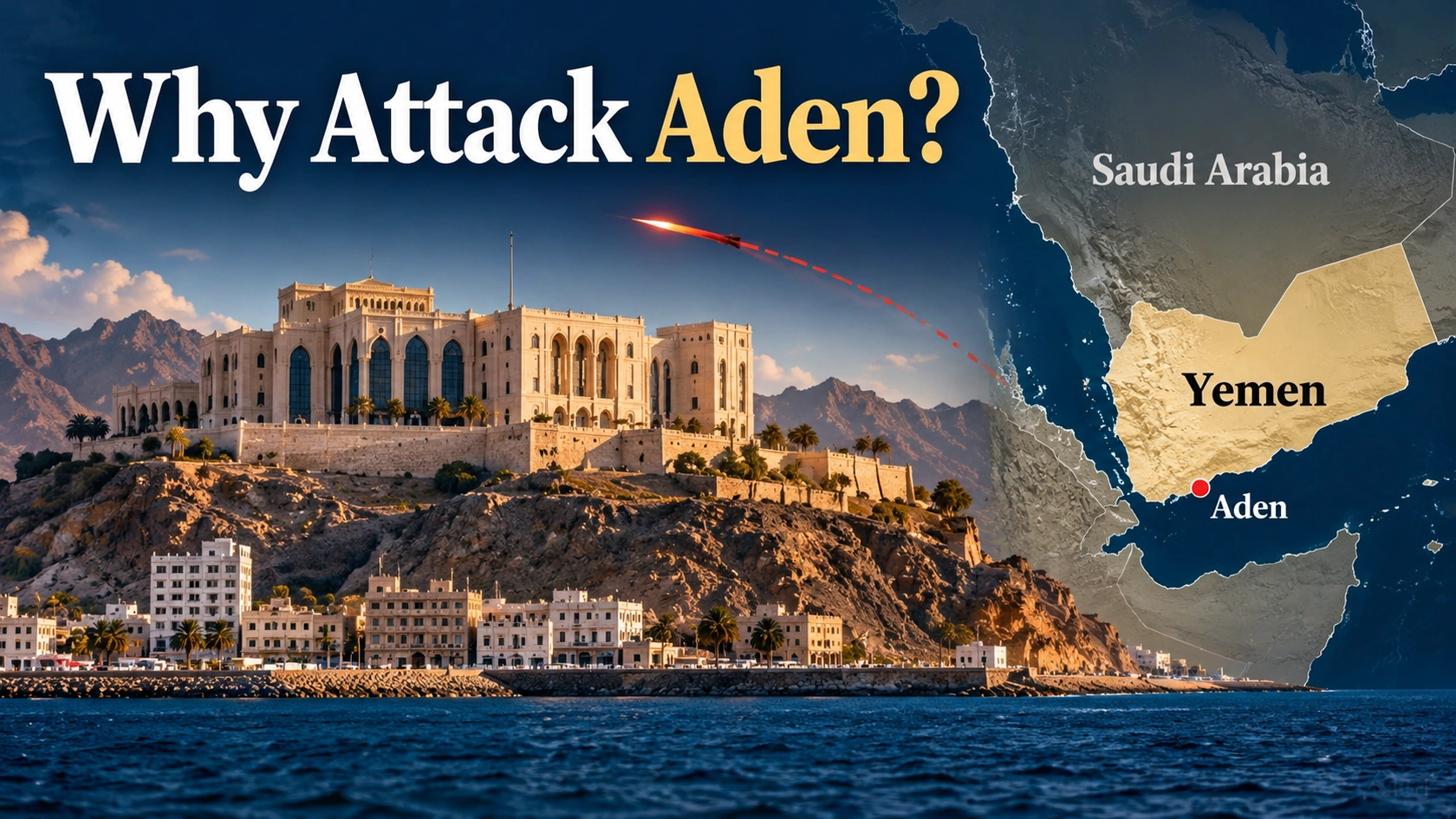
※ Images in this article are AI-generated illustrations created to help explain the story. They are not actual photographs, and depictions of people, places, or events may differ slightly from reality.
The attack also came amid a widening confrontation involving Yemen, Saudi Arabia, and Iran. Understanding why requires looking at who governs Yemen, how Saudi Arabia became involved, and why the conflict matters far beyond the Arabian Peninsula.
Who Actually Controls Yemen—and Why Is the Government in Aden?
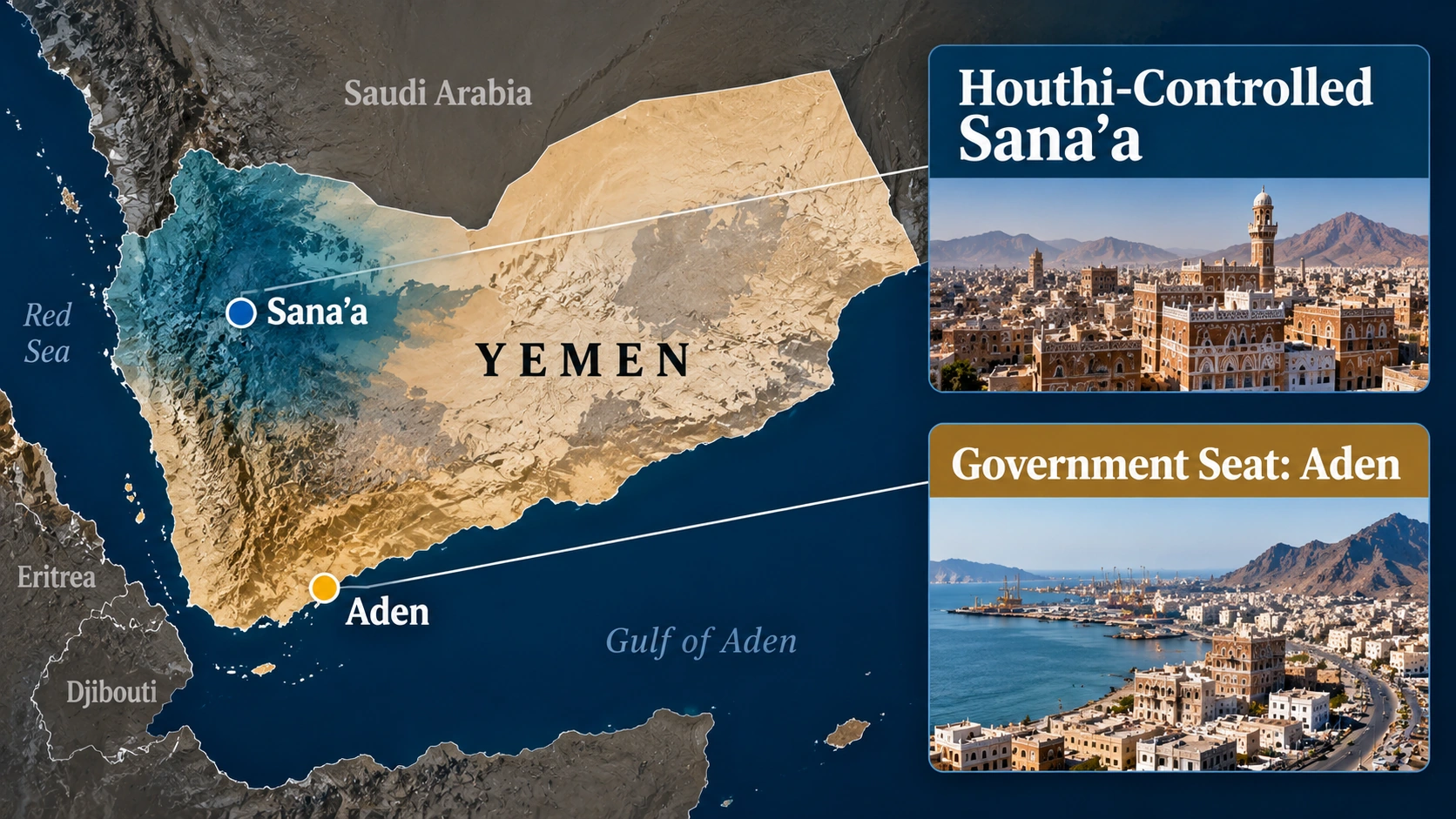
Yemen has competing centers of political and military power. The Houthis, formally known as Ansar Allah, control Sana’a and much of northwestern Yemen. The internationally recognized government, represented by the Presidential Leadership Council, holds authority in other areas, although its control is not uniform.
The Houthis seized Sana’a in 2014. Their takeover forced Yemen’s government to relocate its operations, eventually making Aden the country’s temporary seat of government.
The Presidential Leadership Council, headed by Rashad al-Alimi, leads the internationally recognized government. Prime Minister Shaya al-Zindani heads its cabinet.
The distinction between the country’s formal capital and the government’s working base is essential to understanding the attack. (UK House of Commons Library · Yemeni Government News Agency)
| Actor | Where it holds influence | Main role |
|---|---|---|
| Houthis (Ansar Allah) | Sana’a and much of northwestern Yemen | Armed movement exercising de facto governing authority |
| Presidential Leadership Council | Aden and government-aligned areas | Internationally recognized Yemeni leadership |
| Saudi Arabia | Neighboring country to the north | Principal regional backer of the recognized government |
| Iran | Regional power across the Persian Gulf | Political and military supporter of the Houthis |
This is a simplified picture. Yemen also has local armed groups and political factions whose interests do not always align with either major side.
Aden matters because it houses the institutions and officials that represent Yemen internationally. Attacking the city’s presidential compound therefore has political importance even if senior leaders survive.
And it raises the next question: Why does Saudi Arabia have such a prominent role in what began as Yemen’s internal conflict?
How Did Saudi Arabia Become Involved in Yemen’s Civil War?
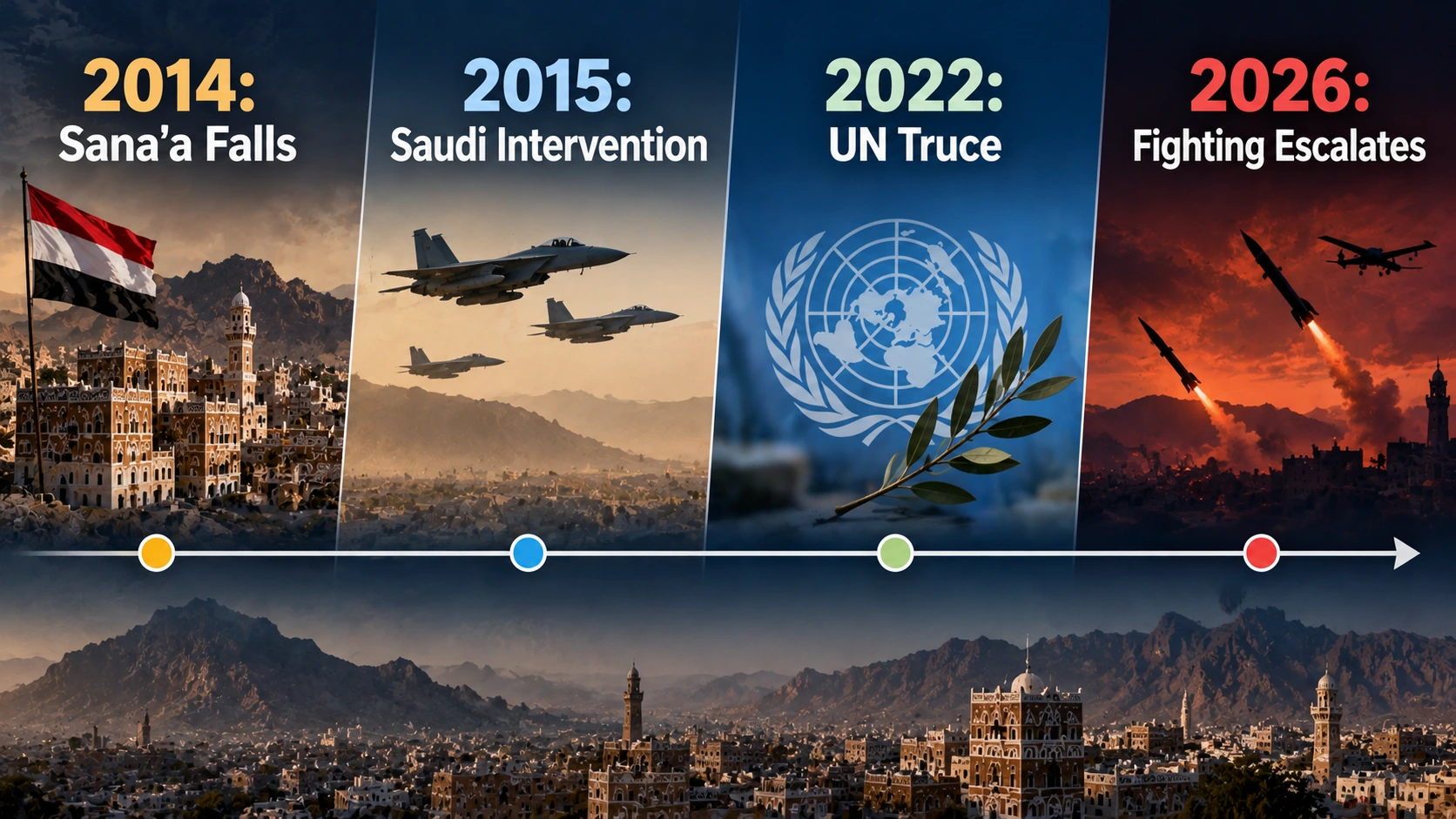
Saudi Arabia entered Yemen’s civil war in 2015, leading a military coalition that intervened in support of Yemen’s internationally recognized government after the Houthis captured Sana’a.
Riyadh viewed the Houthis’ growing military power as a security threat near its southern border, particularly because of the movement’s relationship with Iran.
The conflict gradually developed into both a domestic struggle over who governs Yemen and a regional confrontation involving Saudi Arabia and Iran.
The timeline helps explain how the fighting reached its current stage.
| Year | What happened | Why it matters |
|---|---|---|
| 2014 | Houthis seized Sana’a | Yemen’s government lost control of the capital |
| 2015 | Saudi-led coalition intervened | A domestic war became a major regional conflict |
| 2022 | UN-brokered truce reduced large-scale fighting | Frontlines became relatively quiet without a permanent peace agreement |
| 2026 | Major hostilities resumed and expanded | Saudi Arabia and the Yemeni government again faced extensive Houthi attacks |
The 2022 truce formally lasted six months, but the reduction in major frontline fighting continued well beyond its expiration.
That relative calm began unraveling during 2026. Fighting intensified around Yemen’s western coast and other contested areas, while Houthi missile and drone attacks increasingly threatened Saudi infrastructure. (UK House of Commons Library · Security Council Report)
There is another important development.
The renewed Yemen conflict has unfolded alongside the wider regional war that followed U.S. and Israeli strikes on Iran in February 2026. The Houthis have longstanding ties to Iran, which has provided military support and helped strengthen their weapons capabilities. (Reuters)
That does not mean every Houthi decision is directly ordered by Tehran. The movement has its own leadership, territorial ambitions, and demands concerning Yemen’s economy and political future.
For Saudi Arabia, however, the strategic problem is clear: a heavily armed movement along its southern border has demonstrated that it can strike important targets hundreds of miles away.
What Happened at Aden’s Presidential Palace on October 15?
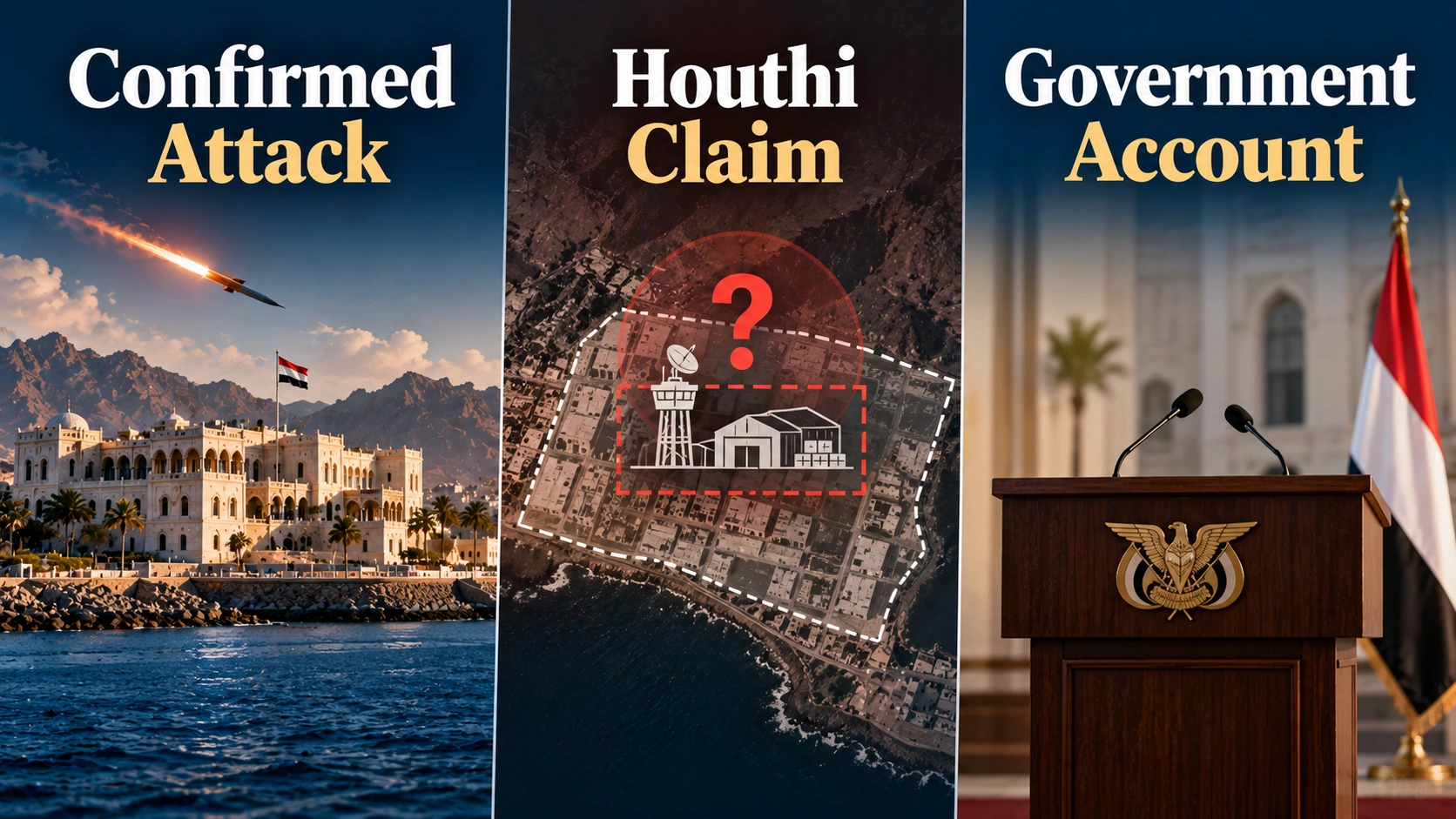
The Houthis attacked the Al-Maashiq presidential palace complex in Aden on October 15, 2026, using missiles, according to Yemeni officials. The government also reported that drones were involved.
Yemeni Information Minister Moammar al-Eryani said five missiles targeted the compound. Witnesses reported multiple explosions near the palace, while smoke was seen rising from the area.
Yemen’s Health Minister Qassem Buhaibeh subsequently reported five people killed and 16 injured, including guards and civilian employees. Earlier reports had cited at least two deaths and six injuries, reflecting initial casualty information.
Prime Minister Shaya al-Zindani and other government officials were reported to be unharmed. (Reuters · AP)
Was the Palace Itself the Intended Target?
The precise military objective is disputed.
The Houthis claimed they targeted a Saudi military operations headquarters and weapons depots inside the presidential complex. Houthi military spokesperson Yahya Saree presented the operation as part of the group’s campaign against Saudi military positions.
Yemen’s internationally recognized government condemned the strike on its presidential and government headquarters. Officials reported casualties and said the attack would not deter government operations.
Reuters reported that it could not independently verify the Houthis’ claims about the specific military facilities. (Reuters · Yemeni Government News Agency)
Here is how to separate the accounts:
| Question | What is established | What remains disputed or unverified |
|---|---|---|
| Did an attack occur? | The Houthis claimed the strike; witnesses reported explosions | The full physical damage assessment |
| Were people killed? | Yemen’s health minister reported five deaths and 16 injuries | Any subsequent changes to the toll |
| Were government leaders killed? | Officials reported the prime minister and cabinet members safe | The complete extent of injuries or damage within the compound |
| Was a Saudi military headquarters hit? | Houthis identified it as their target | Independent confirmation of the claimed facilities and damage |
The distinction matters because an attack on a presidential compound does not automatically establish that the attackers reached the specific military target they claimed to hit.
Nor does the survival of the prime minister mean the strike was insignificant. The compound is a central symbol of the internationally recognized government’s authority, and hitting it demonstrates the Houthis’ ability to threaten a heavily protected political location.
Why Are the Houthis Also Attacking Saudi Arabia?
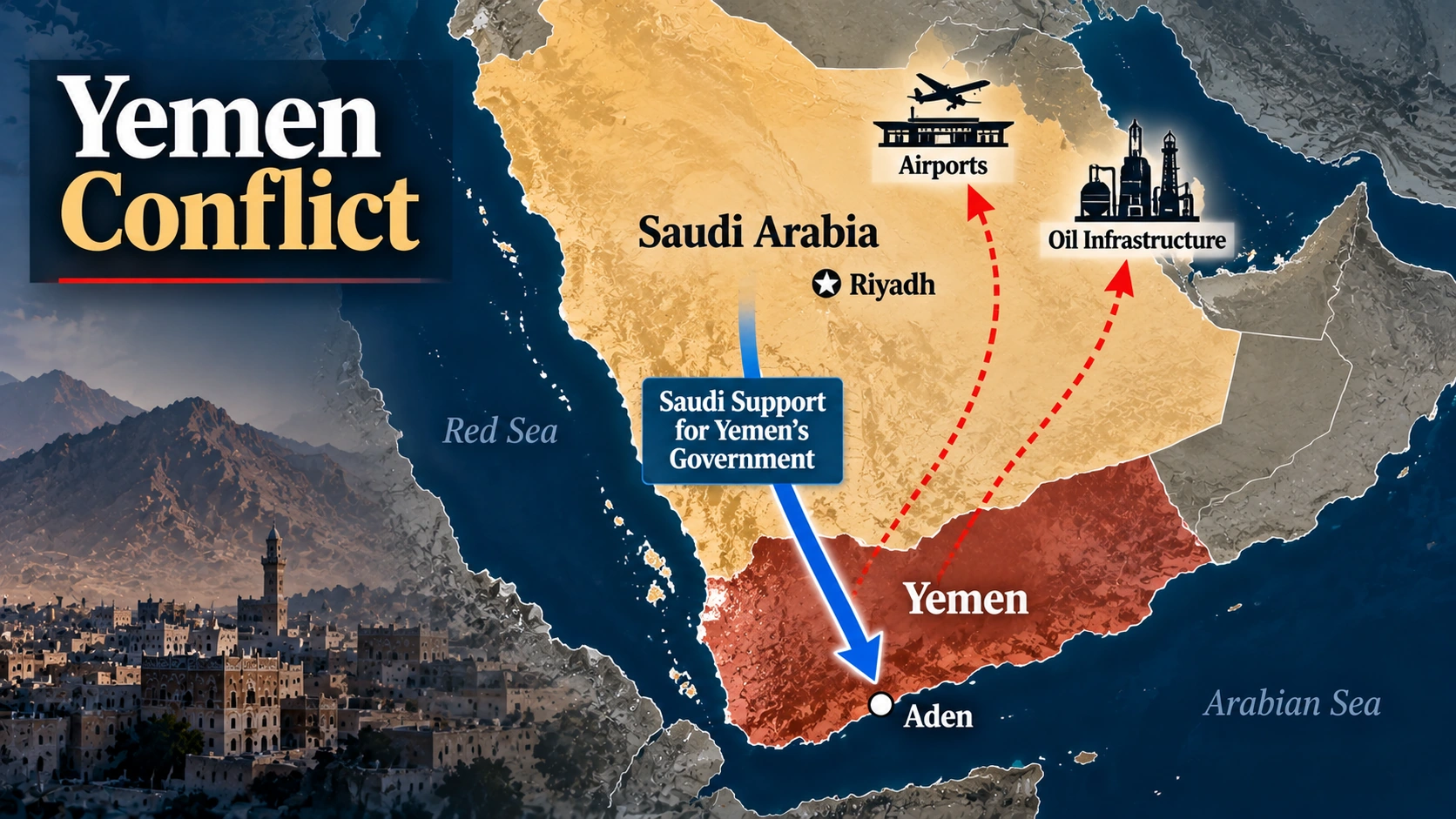
The Houthis are attacking Saudi Arabia partly because it is the principal regional backer of the Yemeni government they oppose.
But there is more to the strategy than the battlefield in Yemen.
Saudi Arabia depends on extensive civilian and economic infrastructure: international airports, oil production and processing facilities, ports, and transport networks.
These are important to the country’s security and its efforts to expand tourism, foreign investment, and industries beyond oil.
Disrupting them can impose economic and political costs even without achieving a decisive military victory.
Why Are Airports and Oil Facilities So Important?
In recent weeks, Houthi attacks have hit or threatened Saudi airports and energy installations.
On October 15, the Saudi-led coalition said the Houthis had launched 20 attacks against Riyadh’s King Khalid International Airport during October. Coalition spokesperson Turki al-Maliki reported 17 deaths and 333 injuries in those attacks.
The coalition also described attacks on Abha airport and said it had destroyed 127 Houthi weapons storage facilities and launch platforms in Yemen. Those operational and damage figures were presented by the coalition. (Reuters)
Saudi Arabia’s dilemma is difficult.
A forceful military response may degrade Houthi capabilities, but it can also contribute to another cycle of retaliation. Negotiations may reduce immediate attacks, yet they could require difficult concessions over territory, economic restrictions, or future security arrangements.
The Houthis, for their part, have demanded measures including changes to restrictions on ports and airports serving their areas, access to economic resources, and an end to military operations against them.
Saudi leaders and analysts see the attacks within a broader contest involving Iranian influence and Saudi security. (Reuters)
The palace strike adds a political dimension to that confrontation. Instead of hitting only infrastructure inside Saudi Arabia, the Houthis targeted the location where the Saudi-backed Yemeni government conducts its work.
Could the Aden Attack Affect Oil Prices and Global Shipping?
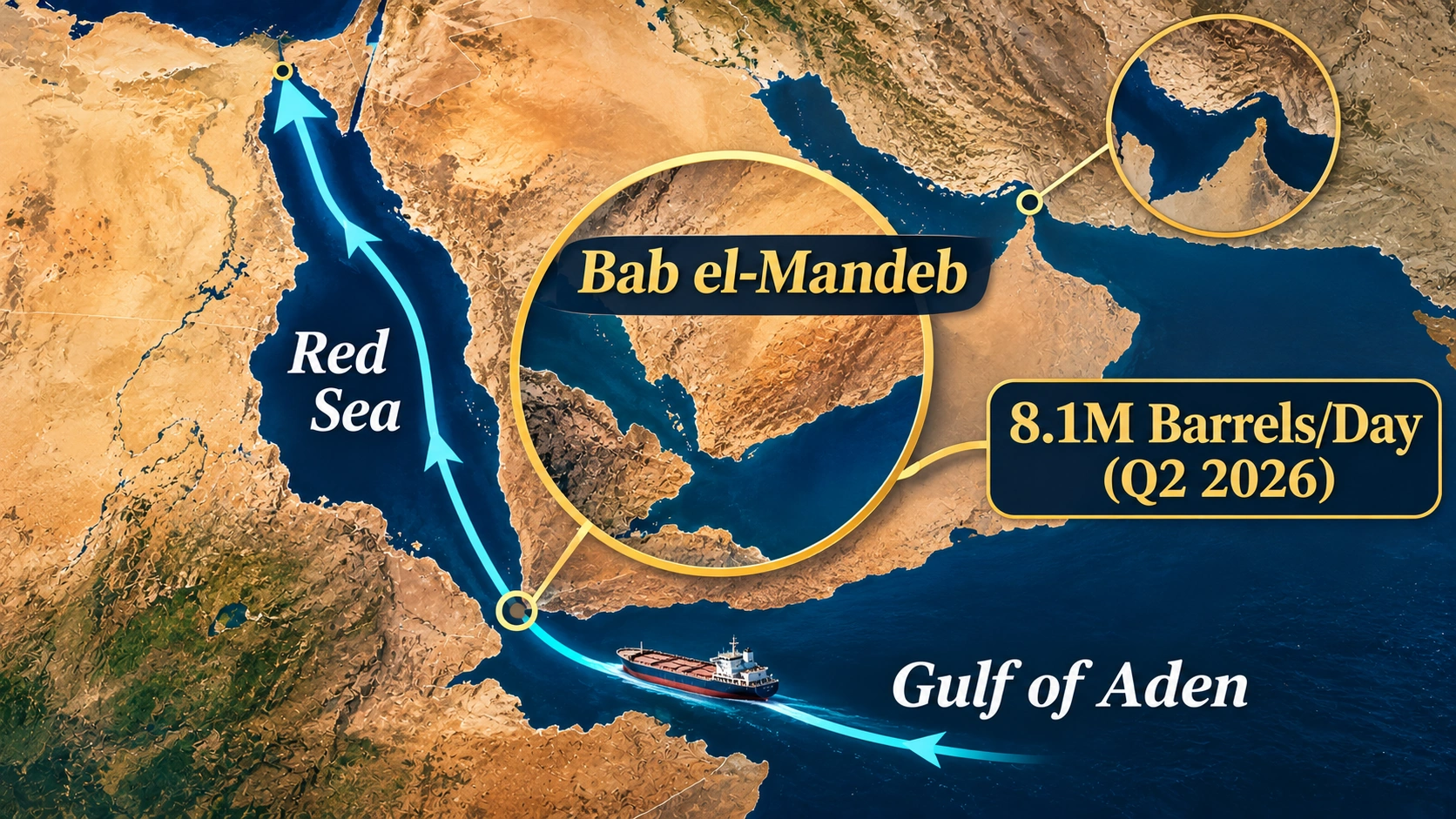
The Aden palace attack does not by itself mean oil supplies or international shipping have been disrupted.
The concern is that an expanding conflict could threaten the waterways around Yemen, particularly the Bab el-Mandeb Strait, one of the important connections between Asia, Europe, and the Middle East.
To understand the economic risk, it helps to distinguish two waterways that frequently appear in Middle East news.
| Waterway | Location | Why it matters |
|---|---|---|
| Strait of Hormuz | Between Iran and Oman | Connects the Persian Gulf to the Gulf of Oman |
| Bab el-Mandeb Strait | Between Yemen and the Horn of Africa | Connects the Red Sea to the Gulf of Aden and routes toward the Suez Canal |
Ships moving between the Indian Ocean and the Suez Canal normally pass through the Bab el-Mandeb Strait.
The U.S. Energy Information Administration estimated that approximately 8.1 million barrels per day of crude oil and petroleum products moved through the Bab el-Mandeb during the second quarter of 2026.
That figure describes historical shipping flows, not the volume interrupted by the October palace attack. (U.S. Energy Information Administration)
What Happens When Ships Avoid the Red Sea?
Shipping companies have already experienced the consequences of Houthi attacks on commercial vessels.
Beginning in late 2023, attacks in and around the Red Sea prompted some operators to redirect ships around Africa’s Cape of Good Hope rather than use the shorter Suez Canal route.
Longer voyages can mean more fuel consumption, additional operating costs, higher insurance expenses, and longer delivery times. (U.S. Energy Information Administration)
For American consumers, those costs can eventually matter.
An extended period of disruption could affect global energy prices and the cost of transporting imported goods. But the size of any increase depends on actual shipping interruptions, available alternative routes, worldwide supply, and market conditions.
A military escalation creates a risk of higher costs. It does not guarantee that gasoline or consumer prices will rise because of one attack.
The more consequential question is whether the fighting remains focused on military and government sites—or spreads further into maritime traffic and critical infrastructure.
What Does the Escalation Mean for Ordinary People in Yemen?
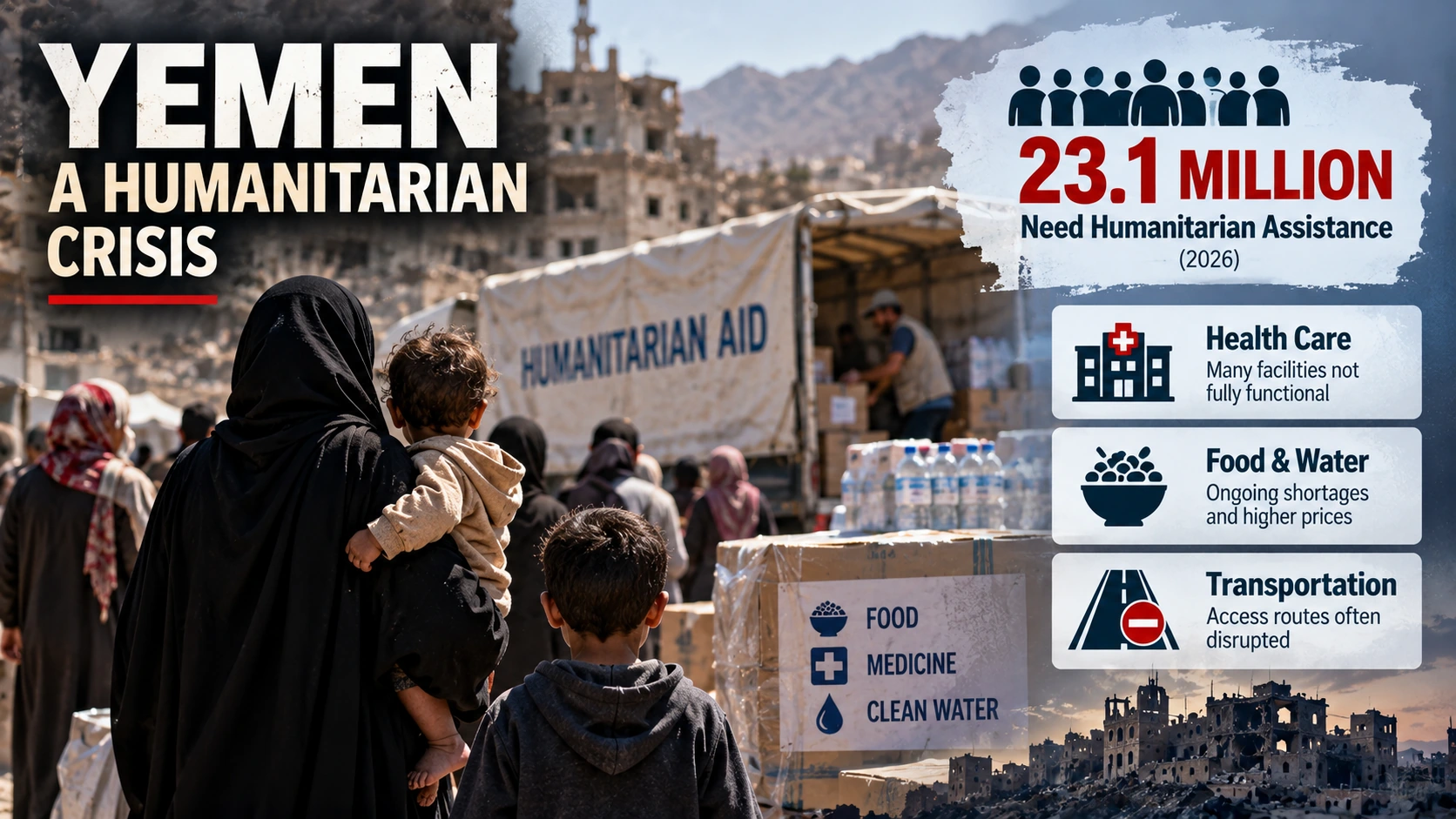
For millions of Yemenis, renewed fighting means more than another round of missiles and military announcements.
It can determine whether food reaches markets, whether families can travel safely, and whether hospitals have the supplies needed to treat the wounded.
The situation was already severe before the October attack.
The World Health Organization’s 2026 emergency appeal estimated that 23.1 million people in Yemen needed humanitarian assistance, while only about 60% of health facilities were fully functional.
Those are nationwide humanitarian estimates, not casualties or needs created solely by the latest strike. (World Health Organization)
Recent fighting around Taiz, a major city in southwestern Yemen, illustrates the danger.
As military operations intensified, access routes became more difficult to use and residents faced worsening shortages and rising prices. The broader fighting has also complicated humanitarian access. (Reuters)
A ceasefire can reduce immediate violence, but rebuilding hospitals, restoring transportation, and making essential goods affordable require much more than a temporary halt in fighting.
That is why the humanitarian consequences deserve attention alongside the military developments.
What Happens Next After the Presidential Palace Attack?
The next stage depends largely on whether the Houthis and the Saudi-backed coalition intensify their military operations or find a way to reduce hostilities.
There is no verified basis for treating either outcome as inevitable.
The violence continued on October 16. Two missiles struck Aden’s airport, though no casualties were reported in that incident. The Houthis said they were aiming at a nearby Saudi-linked military facility, a claimed target that should not be treated as independently established. (AP)
Several developments could show whether the situation is stabilizing or becoming more dangerous.
| What to watch | Why it matters |
|---|---|
| Further attacks on Aden | Could signal greater pressure on the recognized government’s ability to operate |
| Saudi airport and energy infrastructure | Continued strikes could disrupt transportation and major economic assets |
| Fighting around Taiz and the Red Sea coast | Territorial changes could increase threats to nearby shipping routes |
| Negotiations and international mediation | Could provide a path toward reduced hostilities |
| Humanitarian access | Shows whether civilians can receive food, medicine, and emergency assistance |
Diplomatic efforts involving the United Nations and regional mediators have sought a settlement to Yemen’s long-running conflict, but repeated military escalation has complicated those efforts. (Security Council Report)
The latest attack also creates a difficult question for Saudi Arabia: How can it protect its territory and support Yemen’s internationally recognized government without becoming trapped in a still larger war?
For the Houthis, the challenge is different. Military strikes may demonstrate their reach, but lasting political gains would depend on what follows on the battlefield and at the negotiating table.
The fate of the presidential palace itself is only one part of that larger struggle.
Bottom Line: What This Story Really Means
The Houthi attack on Yemen’s Al-Maashiq presidential palace matters because it connects three overlapping conflicts.
First, it is part of Yemen’s unresolved civil war between the Houthi movement and the internationally recognized government.
Second, it directly involves Saudi Arabia, which supports the Aden-based government and has itself suffered a recent wave of Houthi attacks.
Third, it is taking place within a wider Middle Eastern confrontation involving Iran, regional security, and international energy and shipping routes.
The Houthis’ control of Sana’a does not mean they govern all of Yemen, and Saudi Arabia is supporting Yemen’s recognized government—not fighting against it.
Those two facts explain much of the confusion surrounding the attack.
For Americans, the main concern is not the palace building itself. It is whether the renewed conflict further threatens Saudi infrastructure, international shipping, and regional stability.
For Yemenis, the stakes are even more immediate: whether the fighting continues to endanger communities already facing a severe humanitarian crisis.
With another strike reported at Aden’s airport on October 16, the next question is whether attacks continue to spread—or whether renewed diplomacy can reduce the fighting.
Houthi Attack on Aden: Key Questions Explained
Q. Why did the Houthis attack Yemen’s presidential palace in October 2026?
The Houthis said their October 15 strike targeted a Saudi military operations headquarters and weapons depots at the Al-Maashiq palace complex. Yemen’s internationally recognized government condemned the attack on its seat of power. The precise damage to the alleged military facilities has not been independently confirmed.
Q. How many people died in the Aden presidential palace attack?
Yemen’s health minister reported five people killed and 16 injured in the October 15 attack. Earlier reports cited lower preliminary casualty figures.
Q. Was Yemen’s prime minister killed in the attack?
No. Yemeni officials said Prime Minister Shaya al-Zindani and other government members were unharmed.
Q. Do the Houthis control all of Yemen?
No. The Houthis control Sana’a and much of northwestern Yemen, while the internationally recognized government and its allies exercise authority in other areas.
Q. Why is Saudi Arabia supporting Yemen’s government?
Saudi Arabia intervened in Yemen in 2015 and continues to back the internationally recognized government. Its involvement reflects concerns about border security, regional stability, and the influence of Iran-supported Houthi forces.
Q. Are the Houthis directly controlled by Iran?
The Houthis receive political and military support from Iran, but they also have their own leadership and objectives inside Yemen. Iranian backing does not by itself establish that Tehran orders every Houthi operation.
Q. Why is the Bab el-Mandeb Strait important to the United States?
The strait is a key passage for shipping between the Red Sea and Gulf of Aden. Disruptions can force longer shipping routes and increase transportation costs, potentially affecting global trade and energy prices.
Q. Has the Aden palace attack closed the Red Sea shipping route?
No such closure was established by the palace strike itself. Maritime risks depend on attacks against vessels, conditions along nearby coasts, and shipping companies’ decisions.
Q. Could the Yemen conflict become a wider regional war?
Further escalation is possible because the fighting involves attacks on Saudi Arabia and overlaps with broader regional tensions. But a wider war is not a confirmed outcome.
Q. What should people watch after the October 15 attack?
The key developments are further attacks on Aden or Saudi infrastructure, the fighting near Taiz and the Red Sea coast, diplomatic efforts, and conditions for humanitarian access.
Did this help make the story clearer? 🙂 WIN keeps unpacking the “why” behind the news—clearly and simply!
Sources
Palace Attack, Official Accounts, and Immediate Follow-Up
Yemeni Government News Agency — President al-Alimi Responds to the Attack on Al-Maashiq Palace
Reuters — Yemen’s Houthis Hit Palace in Aden as Coalition Details Attacks on Saudi Infrastructure
Associated Press — Explosions Near Yemen’s Government Palace in Aden
Associated Press — Missiles Strike Aden Airport After the Palace Attack
Yemen’s Political Divide and Saudi Involvement
Security Council Report — Yemen: October 2026 Monthly Forecast
Reuters — How the Houthis Are Helping Iran Turn Saudi Arabia Into a Pressure Point
Reuters — How Are Yemen’s Houthis Attacking Saudi Arabia So Effectively?
Shipping, Energy, and Humanitarian Consequences
U.S. Energy Information Administration — Global Oil Transit Chokepoints and Energy Security
World Health Organization — Yemen Health Emergency Appeal 2026
Reuters — In Yemen’s Taiz, Shelling Worsens and Prices Spiral
Keep Reading
Why Is Saudi Arabia’s Oil Route Vulnerable Even When It Bypasses Hormuz?
The palace attack is one part of the pressure on Saudi Arabia. An earlier WIN explainer traces how the East-West Pipeline, Red Sea shipping routes, and separate attacks by Iran-aligned groups create overlapping risks for oil exports and U.S. gas prices.
Saudi Arabia Built a Pipeline to Bypass Hormuz—So Why Is Its Oil Route Still at Risk?