Why Did Trump Waive New Russia Sanctions—and What Does Putin Gain?

Didn’t President Donald Trump just sign a law designed to put more pressure on Russia?
So why did he stop much of it from taking effect barely a month later?
That’s the question surrounding Trump’s October 16, 2026, executive order, which waived major new sanctions and tariffs targeting Russia, its energy business, and countries that continue buying Russian oil and gas.
The decision angered Ukrainian President Volodymyr Zelenskyy and drew criticism from American lawmakers in both parties. Russian officials, meanwhile, welcomed the unexpected relief. (Reuters · AP)
But there’s an important distinction that can get lost in the headlines.
Trump did not eliminate every U.S. sanction against Russia. He used a legal waiver to prevent much of a newly enacted sanctions package from being applied.
That distinction helps explain why the move was legally possible, why Ukraine considers it dangerous, and why the administration is connecting Russia policy to a very different problem: expensive fuel.
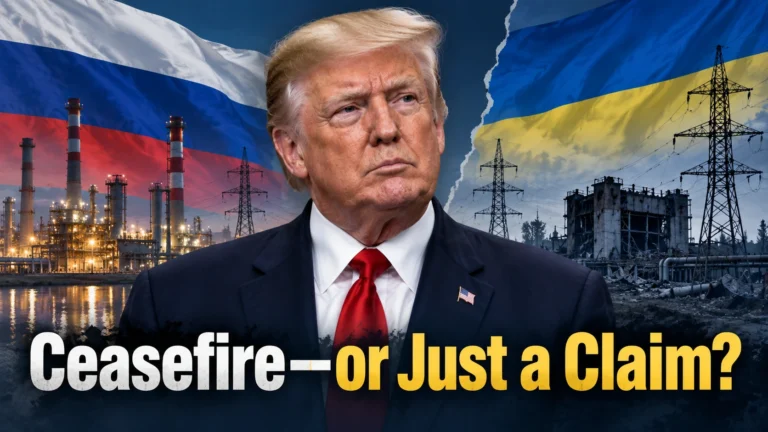
※ Images in this article are AI-generated illustrations created to help explain the story. They are not actual photographs, and depictions of people, places, or events may differ slightly from reality.
The deeper question is whether the United States can ease economic pressure on Moscow to address an energy crisis without also weakening its leverage over Russia’s war in Ukraine.
What Exactly Did Trump Put on Hold?
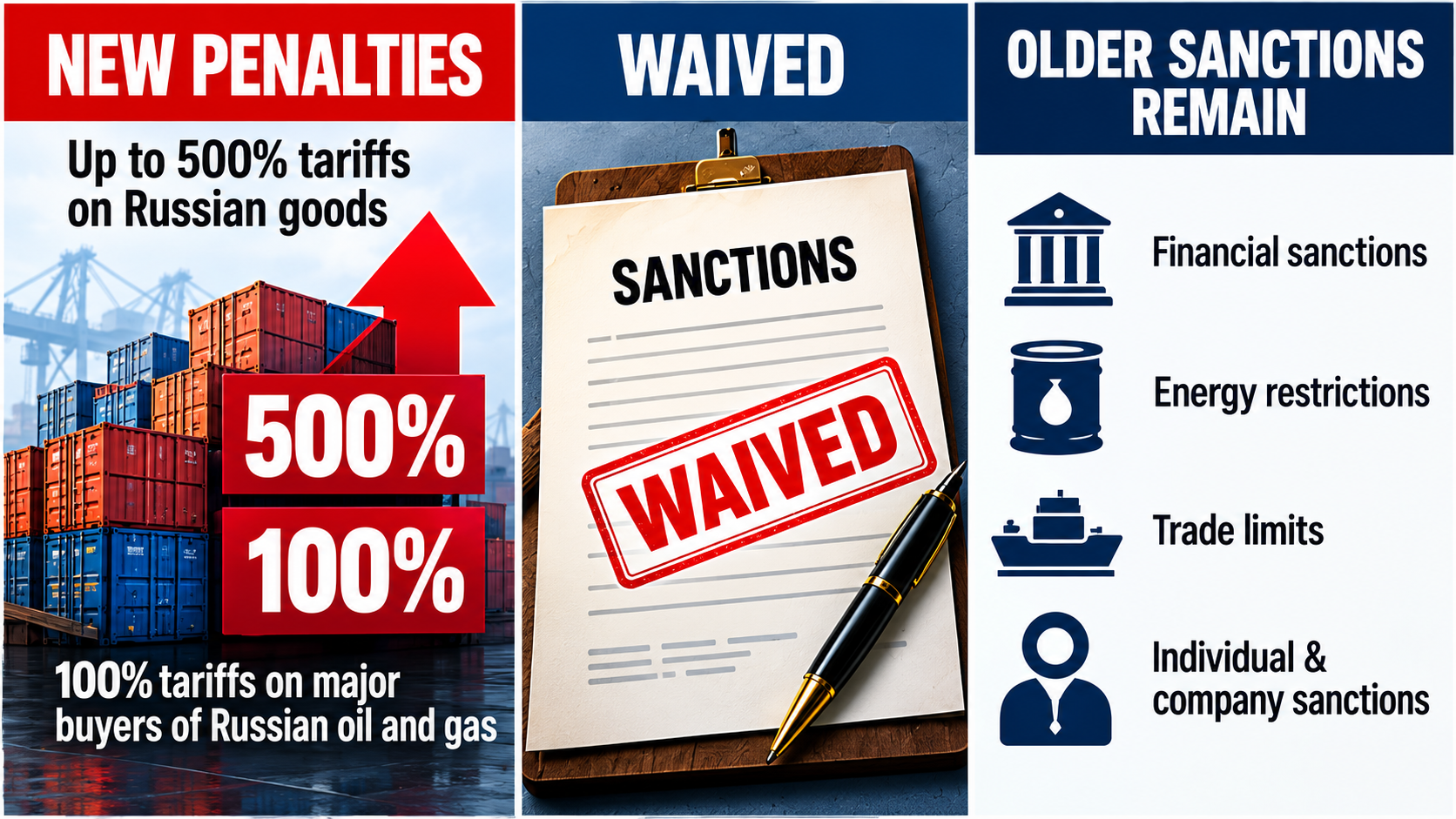
Trump waived much of the enforcement of the Lindsey O. Graham Sanctioning Russia and Iran Act of 2026, a law he had signed on September 18.
The legislation was intended to increase the economic cost of Russia’s continuing war against Ukraine. Its measures included additional penalties on Russian financial and energy interests and steep tariffs on certain international trade.
The October 16 executive order formally described the new tariff rates while simultaneously waiving their application. (White House)
Here’s what the decision actually changed.
| Measure | What the new law provided | What changed |
|---|---|---|
| Russian imports | 500% duty increase on goods from Russia | The newly ordered duties were waived |
| Major buyers of Russian oil and gas | 100% tariffs on goods from certain qualifying importing countries | Those additional duties were waived |
| Russian financial and energy interests | Additional sanctions and restrictions | Many were waived under the new law |
| Earlier U.S. sanctions | Existing restrictions imposed under separate authorities | Not automatically canceled by this order |
One particularly striking provision concerns countries that purchase Russian energy.
The new legislation allowed tariffs on goods imported into the United States from certain major buyers of Russian oil and gas, as well as countries facilitating sanctions evasion.
That means the potential impact was not limited to Russian companies.
A U.S. company importing products from a country targeted by those duties could also face much higher import costs. (U.S. Code)
The White House order, however, waived those duties before they were implemented.
The law still exists. Much of its newly authorized economic punishment is not currently being applied.
And that raises a natural question: How can a president sign a law and then decide not to enforce so much of it?
How Can Trump Waive Sanctions That Congress Approved?
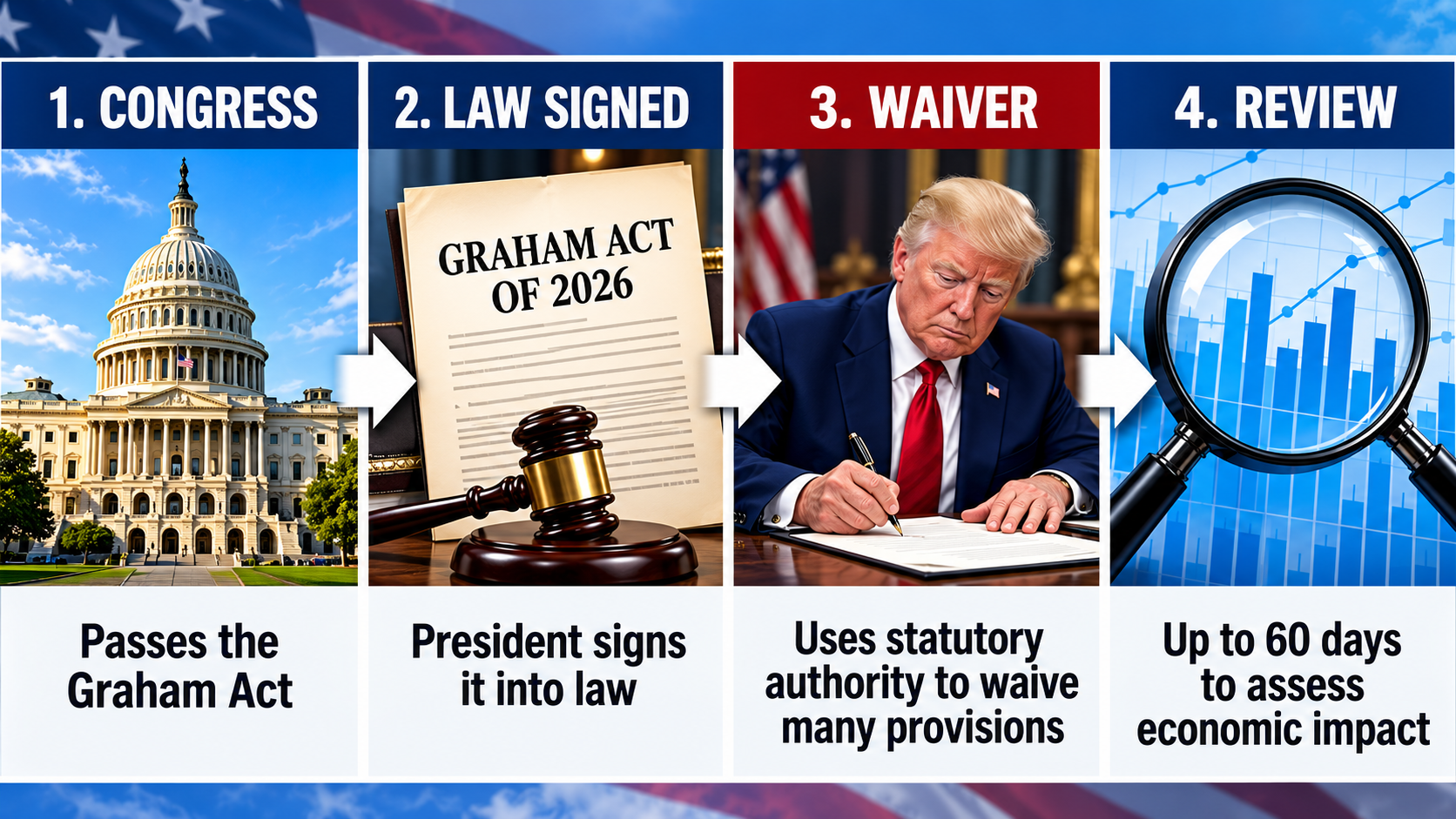
Trump could do this because Congress included a presidential waiver provision in the law itself.
Section 115 of the Graham Act permits the president to waive sanctions, restrictions, or duties if certain reporting requirements are satisfied.
The president must submit a written certification to Congress stating that the waiver serves the national interests of the United States, along with a report explaining the basis for that determination. (U.S. Code, 22 U.S.C. § 10815)
The administration invoked exactly that authority.
In his October 16 order, Trump stated that he had submitted the required certification and explanation to Congress.
The published order, however, did not provide a detailed public explanation of the economic and diplomatic trade-offs behind the decision.
A waiver is not the same as repealing a law
The difference matters.
Repealing a law generally requires new legislation. A statutory waiver allows the executive branch to suspend the application of specified requirements under conditions Congress already authorized.
Think of it as a rule that includes an exception.
Congress established the penalties and also created a mechanism for the president to decide that applying them would conflict with U.S. national interests.
| Action | Meaning |
|---|---|
| Repeal | The law itself is removed or changed through legislation |
| Waiver | Specified legal requirements are not applied under an authorized exception |
| Termination | A sanction or duty is ended under applicable legal conditions |
| Review | Officials reconsider whether or when to apply a measure |
The October 16 order also specifies that the waivers can remain in effect until the president or designated administration officials determine that further action is appropriate.
That is separate from the administration’s subsequent discussion of a 60-day review.
Secretary of State Marco Rubio said on October 17 that Trump wanted up to 60 days to assess the economic consequences of imposing the sanctions and tariffs. That review period is not an automatic expiration date written into the executive order. (Reuters)
So the legal mechanism is relatively clear.
What remains more controversial is why Trump chose to use it.
Why Is Trump Easing Pressure on Russia Now?
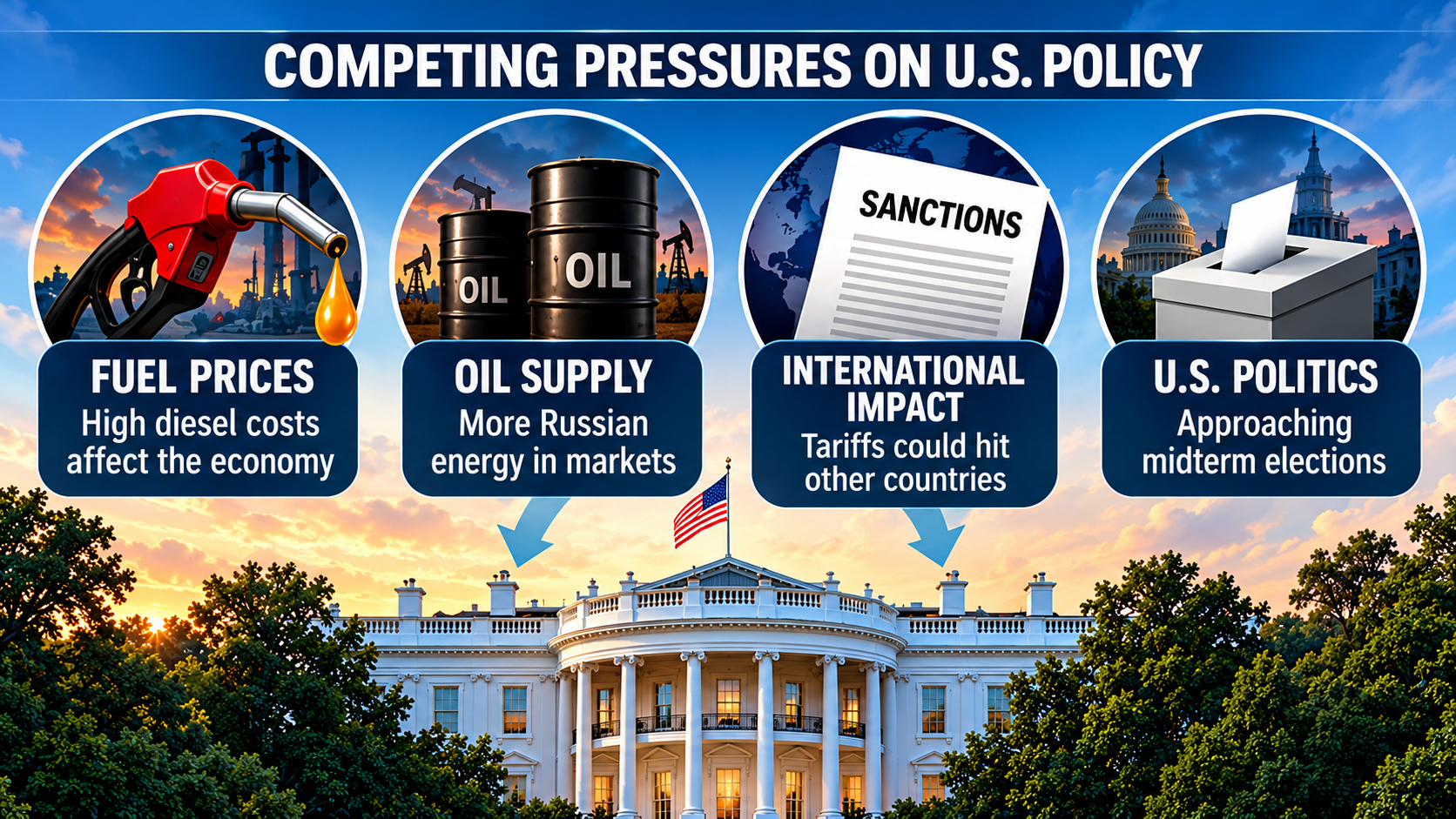
The clearest publicly stated reason is economic caution.
The Trump administration says it needs more time to evaluate how sweeping new sanctions and tariffs would affect the United States and the global economy.
That concern is particularly significant because oil and fuel markets are already under pressure from conflict in the Middle East.
But the timing also creates political questions.
The United States is approaching its November 3 midterm elections, and high energy prices have become a major domestic concern. (Reuters)
Three overlapping pressures help explain why the decision is attracting so much attention.
The administration wants relief from expensive fuel
Diesel prices affect much more than drivers who own diesel-powered vehicles.
Heavy trucks transport groceries, consumer goods, construction materials, and other products across the country. Farmers and rail operators also rely heavily on diesel.
When diesel becomes more expensive, transportation and operating costs can increase throughout the economy.
The U.S. Energy Information Administration has explained that tight fuel supplies and high refining margins have contributed to elevated diesel prices, which can raise freight costs. (EIA)
Increasing fuel supplies may help ease those pressures.
But the amount of relief depends on actual deliveries, refinery operations, shipping conditions, and demand.
Sanctions can affect countries besides Russia
The Graham Act’s proposed tariffs could have consequences for large economies that purchase Russian oil and gas.
India and China are important examples because of their energy trade with Russia.
Applying broad tariffs to major trading partners could raise costs for U.S. importers and create new diplomatic disputes.
The administration’s concern is that sanctions designed to punish Moscow could also produce economic consequences elsewhere. (Reuters)
Energy prices and electoral politics overlap
The approaching elections make consumer fuel costs especially politically sensitive.
That creates a potential incentive for the White House to prioritize additional energy supplies and avoid policies that might intensify price pressures.
But a plausible political incentive is not proof of Trump’s private motivation.
The documented justification is the national-interest waiver and the administration’s stated need to examine economic consequences.
The broader political interpretation comes from the timing, the preceding diesel agreement, and the criticism surrounding those decisions.
That diesel agreement is an important part of this story.
What Does the U.S.–Russia Diesel Deal Have to Do With It?
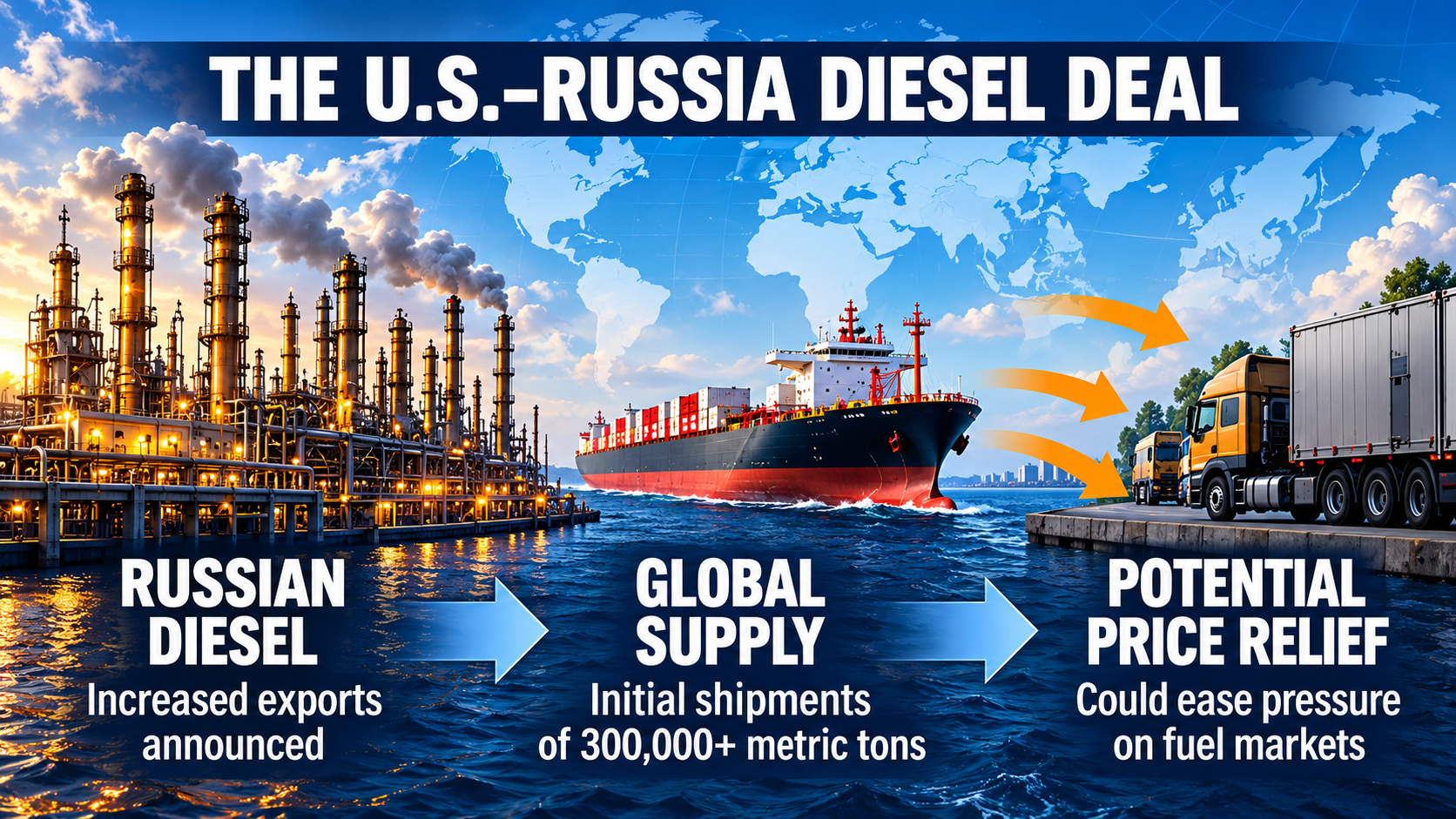
The diesel deal came before the October 16 sanctions waiver, and the two decisions have become closely connected in the debate over Trump’s Russia policy.
On October 9, Trump announced an agreement with Russia to increase diesel supplies to American and international markets.
The administration also eased certain restrictions affecting Russian diesel exports. (Reuters)
The agreement called for an initial supply of more than 300,000 metric tons, with additional volumes announced for later periods.
The goal was to increase available fuel and help reduce price pressure.
But the announcement did not establish that all those shipments had already reached buyers.
Nor did it guarantee that American diesel prices would immediately fall.
Reuters reported that the initial volume represented only a limited addition compared with the scale of U.S. diesel demand. Russia also faced refinery and export constraints that could limit its ability to deliver the promised supplies. (Reuters)
Why would Russia agree to supply more diesel?
Russia benefits economically when it can sell energy products into international markets.
Energy exports generate revenue, and restrictions on trade can make those sales more difficult or costly.
Easing some restrictions can therefore benefit Russian exporters even if the additional fuel provides limited price relief for American consumers.
That is why critics see a difficult trade-off.
The United States wants more fuel available to global markets, but allowing additional Russian energy sales may also provide revenue to a country continuing its war against Ukraine.
Does this mean cheaper gasoline at American pumps?
Not necessarily.
Diesel and gasoline are different refined petroleum products, although they are connected through crude oil markets and refinery operations.
Additional diesel supply could help relieve pressure in the diesel market, but gasoline prices also depend on other factors.
According to the Energy Information Administration, petroleum prices reflect crude oil costs, refining, distribution, taxes, and market conditions. (EIA)
A relatively small increase in diesel supply does not guarantee a corresponding reduction in the price of gasoline.
And the benefits of lower energy costs have to be weighed against the diplomatic consequences of easing pressure on Moscow.
For Ukraine, those consequences are the central concern.
Why Is Zelenskyy So Angry About the Decision?
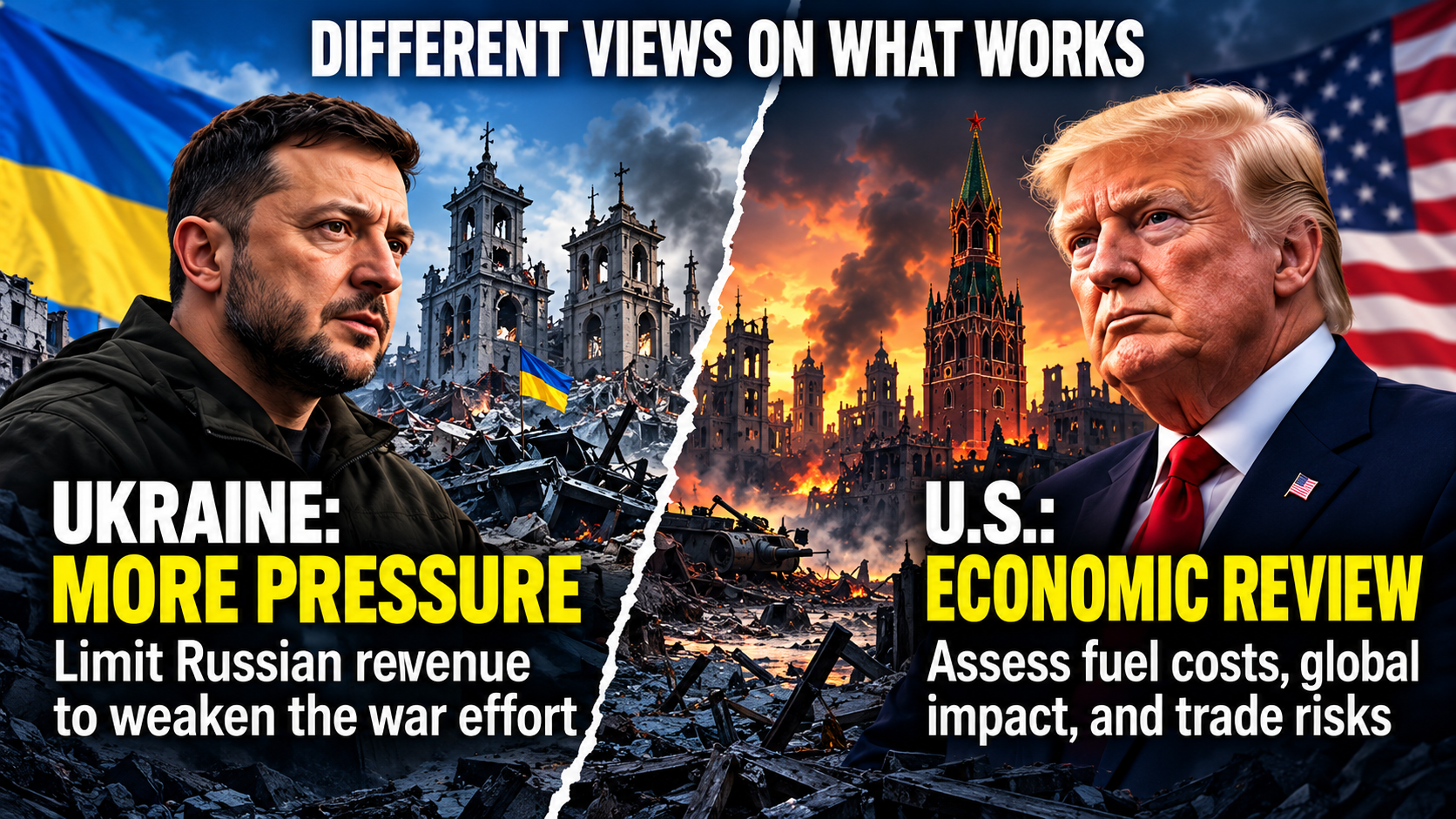
Zelenskyy’s objection is that reducing economic pressure gives Russia more room to continue the war.
Ukraine has long argued that limiting Russian energy revenue and access to international finance is essential to weakening Moscow’s ability to sustain its military operations.
That is why Kyiv supported the Graham Act.
On October 17, Zelenskyy publicly criticized the sanctions freeze, warning that easing pressure on Russia and providing financial benefits to Moscow could encourage further attacks.
He urged continued support for the legislation and its enforcement. (Reuters)
The disagreement is not simply about one trade measure.
It concerns what each side believes will influence Russian President Vladimir Putin.
Two different ideas about how to influence Moscow
| Ukraine’s position | Trump administration’s position |
|---|---|
| Stronger economic pressure can limit Russia’s ability to continue the war | Broad sanctions and tariffs can also harm U.S. and global economic interests |
| Russian energy revenue helps sustain Moscow’s finances | Additional energy supplies could relieve pressure on fuel markets |
| Relaxing pressure may encourage Russia to keep fighting | Officials want time to review the costs and consequences of additional measures |
| The new sanctions law should be used as a source of leverage | The law’s waiver authority allows the administration to reconsider enforcement |
These positions are not necessarily incompatible in every circumstance.
The United States could, in principle, pursue energy-market stability while maintaining other sanctions on Russia.
The argument is about whether the administration’s current balance of pressure and relief is likely to influence Moscow in the way Washington wants.
Russia’s response helps explain Ukraine’s concern.
Kirill Dmitriev, a Russian presidential investment envoy, publicly welcomed the waiver and characterized it as a historic development. (Euronews)
Moscow’s favorable reaction does not establish that Trump intended to benefit Putin.
But it does show that Russian officials viewed the decision as economically and diplomatically advantageous.
Does this mean the United States has abandoned Ukraine?
No formal abandonment of Ukraine was announced through the October 16 sanctions order.
The order concerns specific sanctions, tariffs, and legal authorities. It is not, by itself, a declaration ending U.S.–Ukraine relations or every form of American assistance.
However, the disagreement is part of a broader deterioration in relations between Trump and Zelenskyy.
Reuters reported growing friction over energy infrastructure attacks, sanctions, and support arrangements that are important to Ukraine’s defense. (Reuters)
A sanctions waiver is not the same as abandoning an ally. But it can change how that ally evaluates the reliability of U.S. support.
And the political dispute is not limited to Kyiv and Washington’s executive branch.
Members of Congress are also questioning the decision.
Why Are Republicans and Democrats Both Criticizing Trump?
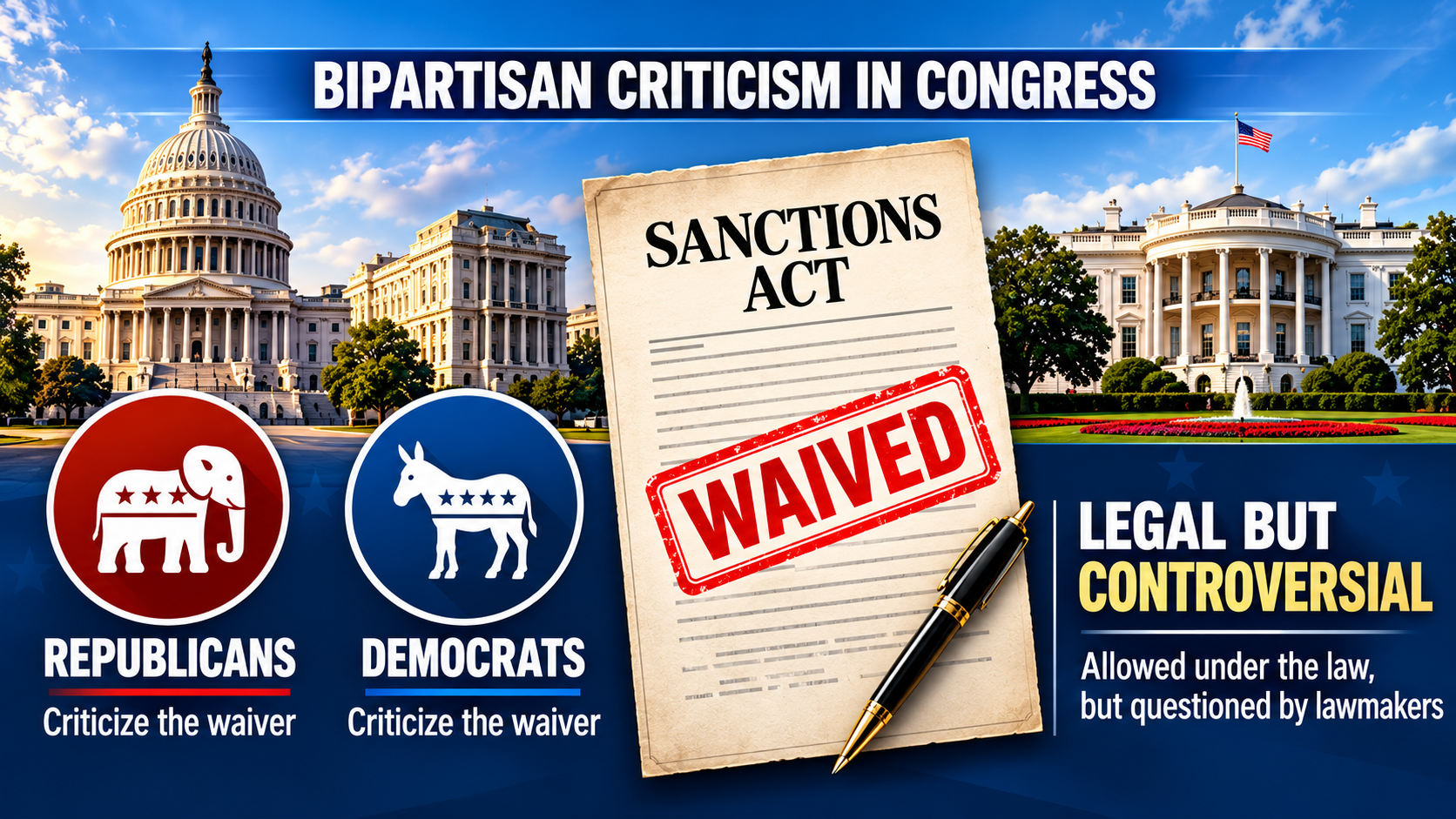
Lawmakers from both parties helped advance stronger sanctions against Russia, so Trump’s decision has angered Republicans as well as Democrats.
The Graham Act was designed to increase economic pressure on Moscow and on countries helping sustain its energy revenues.
Critics argue that waiving so much of the law undermines its central purpose.
They also question whether easing economic pressure can bring Russia closer to ending the war.
AP reported bipartisan criticism of the decision, although lawmakers had no immediate, straightforward mechanism to reverse the waiver. (AP)
There are two separate questions here.
The first is whether Trump acted within the authority Congress granted.
The law explicitly provides waiver authority, subject to specified requirements.
The second is whether exercising that authority was good policy.
That is the question dividing the administration from many lawmakers.
Can Congress force the sanctions back into effect?
Congress has several potential responses, including oversight hearings, requests for information, and new legislation.
It could also seek to amend the waiver authority through a subsequent law.
But criticism alone does not automatically cancel the executive order.
Passing legislation to restrict or override presidential discretion can be difficult, especially if the president opposes it.
This is why the disagreement may continue even though Congress had previously supported the sanctions law.
The October 16 decision has created a situation in which Congress’s stated objective of stronger sanctions and the administration’s decision to waive them point in different directions.
What Happens After Trump’s 60-Day Review?
The immediate issue is whether the administration eventually decides to enforce some of the penalties it has waived.
Rubio’s comments point to an economic review lasting up to 60 days, but the waiver does not automatically expire at the end of that period.
The order allows further action when the president or designated officials determine that it is appropriate. (White House · Reuters)
Several developments could shape that decision.
1. Whether Russian diesel shipments actually reach the market
The size and timing of deliveries matter more than an announced supply target.
If additional diesel fails to reach buyers in meaningful quantities, the expected price benefits may be limited.
2. Whether Russia changes its military behavior
One of the central questions is whether reduced economic pressure is accompanied by meaningful movement toward ending the war.
If Russian attacks continue without diplomatic progress, critics are likely to argue that Moscow is benefiting from concessions without making corresponding commitments.
3. Whether Congress increases pressure on the administration
Bipartisan criticism could lead to further oversight, legislative proposals, or public demands to reinstate the new measures.
The extent of that response may become clearer after the midterm elections.
4. Whether fuel prices actually improve
A central economic argument for the administration’s approach is that increasing fuel supplies and avoiding sweeping tariffs could help stabilize markets.
If energy prices remain elevated, that justification may face additional scrutiny.
None of these developments guarantees a particular outcome.
The important point is that the waiver leaves the administration with choices rather than setting an automatic date on which every penalty must return.
Bottom Line: What This Story Really Means
Trump’s Russia sanctions decision is not a complete removal of U.S. economic restrictions on Moscow.
It is a broad waiver of additional sanctions and tariffs authorized under a law he signed just one month earlier.
The Trump administration says it needs time to examine the potential economic consequences, particularly when global energy markets are under stress.
Ukraine sees the decision differently. Zelenskyy argues that reducing pressure rewards Russia and weakens efforts to make Putin end the war.
For Americans, the issue connects two concerns that rarely appear together in a single headline: the price of fuel at home and the economic pressure the United States places on Russia abroad.
Easing sanctions may create room for additional energy trade. Whether that trade meaningfully reduces consumer costs remains uncertain.
At the same time, allowing Russia greater access to energy revenue can reduce the economic pressure that Ukraine wants Washington to maintain.
The decision therefore leaves a difficult question unresolved.
Can the United States obtain meaningful economic benefits from easing pressure on Russia without weakening its ability to influence Moscow’s conduct in Ukraine?
That is the trade-off to watch as the administration reviews its options.
Trump Russia Sanctions Waiver: Key Questions Explained
Q. Did Trump lift all U.S. sanctions against Russia?
No. Trump waived many provisions of a new sanctions law, but the October 16 order did not automatically eliminate existing sanctions imposed under separate authorities.
Q. What is the Lindsey Graham Act of 2026?
It is a U.S. law signed on September 18, 2026, intended to increase economic pressure on Russia through additional sanctions, financial restrictions, and tariffs.
Q. How high could the new Russia tariffs have been?
The law provided for a 500% duty increase on goods imported from Russia. It also provided for 100% tariffs on goods from certain countries involved in purchasing Russian oil and gas or facilitating sanctions evasion.
Q. Was Trump’s sanctions waiver legal?
The Graham Act expressly allows presidential waivers subject to specified reporting requirements. The administration invoked that authority, although the policy decision itself remains controversial.
Q. Why did Trump waive the new sanctions?
The administration cited U.S. national interests and the need to assess economic consequences. High fuel prices, international energy supply, and the approaching midterm elections provide important context, but they do not prove a single private motivation.
Q. What is the connection between the waiver and Russian diesel?
The waiver followed a separate U.S.–Russia agreement intended to increase Russian diesel supplies to international markets. Both decisions are part of the administration’s effort to address energy-market pressures.
Q. Did Russia already deliver all the diesel it promised?
The announced agreement included planned shipments, but announcing supply is not the same as verifying delivery. The actual volumes and their market impact require further confirmation.
Q. Why does Ukraine oppose the decision?
Ukraine argues that weaker sanctions reduce pressure on Moscow and may give Russia additional revenue and encouragement to continue its war.
Q. Does the waiver expire automatically after 60 days?
No. Rubio described a review lasting up to 60 days, but the executive order allows the waivers to remain in effect until further action is determined to be appropriate.
Q. Can Congress reverse Trump’s decision?
Congress can conduct oversight and pursue new legislation, but lawmakers’ objections do not automatically invalidate the statutory waiver. Reversing the policy may require further executive action or a change in law.
Did this help make the story clearer? 🙂 WIN keeps unpacking the “why” behind the news—clearly and simply!
Sources
Executive Order and Legal Authority
U.S. Code — Presidential Waiver Authority, 22 U.S.C. § 10815
U.S. Code — Duties on Russian Energy Buyers and Sanctions Evasion Facilitators, 22 U.S.C. § 10813
Sanctions Decision and Diplomatic Reactions
Reuters — Zelenskiy Criticizes Trump’s Waiver of Sanctions on Russia, October 17, 2026
AP — Trump Puts New Russia Sanctions on Hold, October 17, 2026
Reuters — Trump–Zelenskiy Rift Threatens Support for Kyiv, October 17, 2026
AP — Congressional Reaction to the Russia Sanctions Waiver, October 18, 2026
Euronews — Trump Signs Executive Order Waiving New Russia Sanctions Package, October 17, 2026
Diesel Agreement and U.S. Energy Costs
Reuters — What Is the Diesel Deal Between Putin and Trump?, October 12, 2026
U.S. Energy Information Administration — What Goes Into Diesel Prices?, September 18, 2026
Economic Review and Next Steps
Reuters — Rubio Says Trump Will Take Up to 60 Days to Weigh Russia Sanctions, October 18, 2026
Keep Reading
Why Are International Oil Disruptions Still Affecting U.S. Fuel Prices?
The Russian diesel decision comes amid broader disruptions to global energy supplies. Saudi Arabia’s damaged pipeline and the Red Sea shipping risks explain why moving oil around the Middle East has become so difficult.
Saudi Arabia Built a Pipeline to Bypass Hormuz—So Why Is Its Oil Route Still at Risk?