Bill Gates Warns AI Could Replace Almost All Human Work. What Happens Next?

What happens when a machine can do your job better than you can?
For decades, technology has helped people work faster. Computers replaced paperwork, machines automated factories, and the internet transformed entire industries. But people still needed jobs to earn a living, and businesses still depended on human intelligence.
Bill Gates believes artificial intelligence could challenge that entire arrangement.
The Microsoft co-founder is warning that AI may eventually perform almost every kind of human work—from writing software and designing products to building houses and conducting scientific research. He believes the transition could make society far wealthier while also creating extraordinary disruption.
And according to Gates, the next 20 years could be among the most turbulent periods in human history.
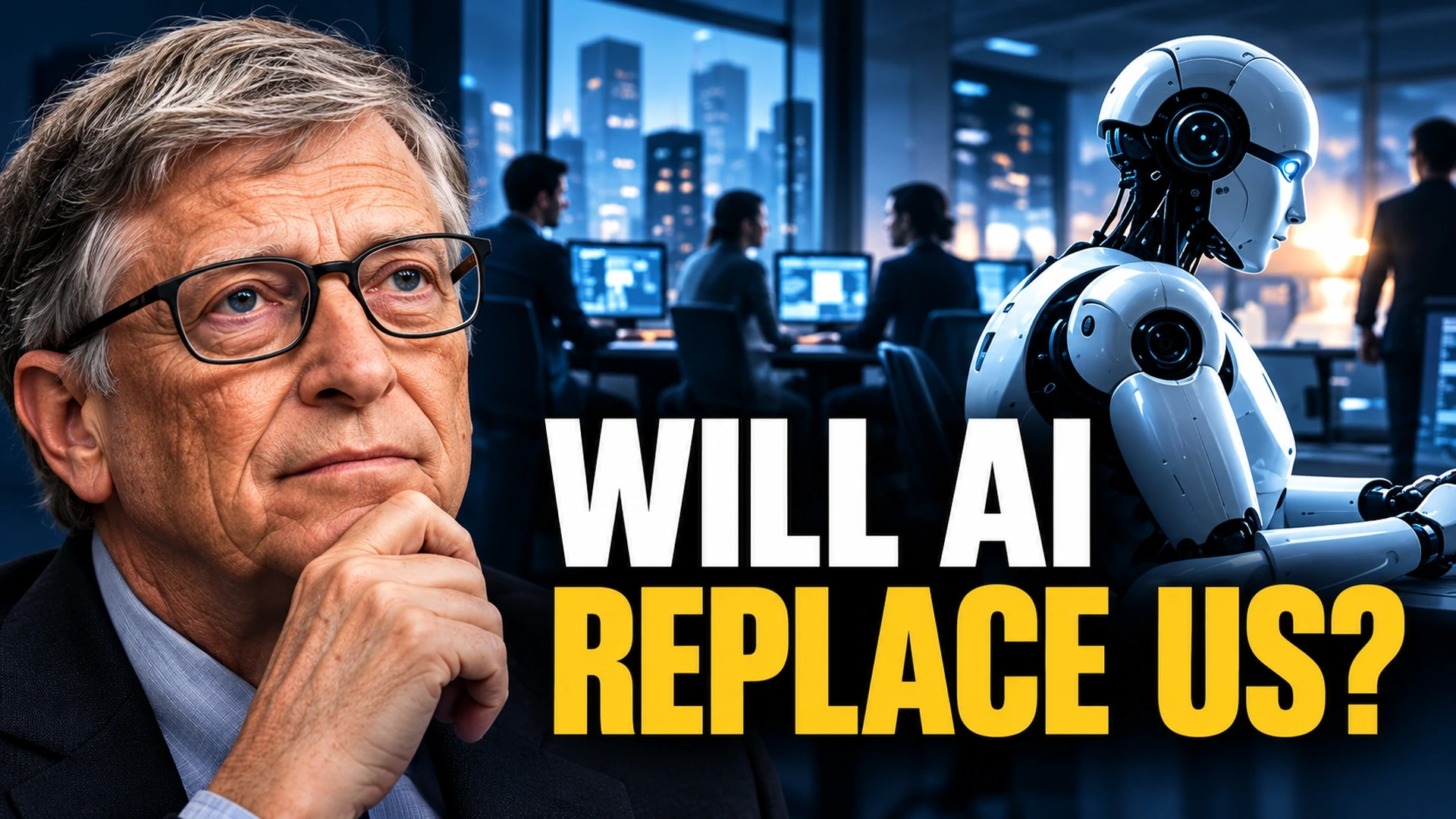
※ Images in this article are AI-generated illustrations created to help explain the story. They are not actual photographs, and depictions of people, places, or events may differ slightly from reality.
His warning raises a question that goes beyond whether AI will eliminate particular jobs.
If machines can produce more goods and services than ever before, but fewer people are needed to earn wages, how will ordinary families share in that prosperity?
That is the problem Gates wants governments, businesses, and workers to confront before the disruption becomes much harder to manage.
What Did Bill Gates Actually Predict About the Next 20 Years?
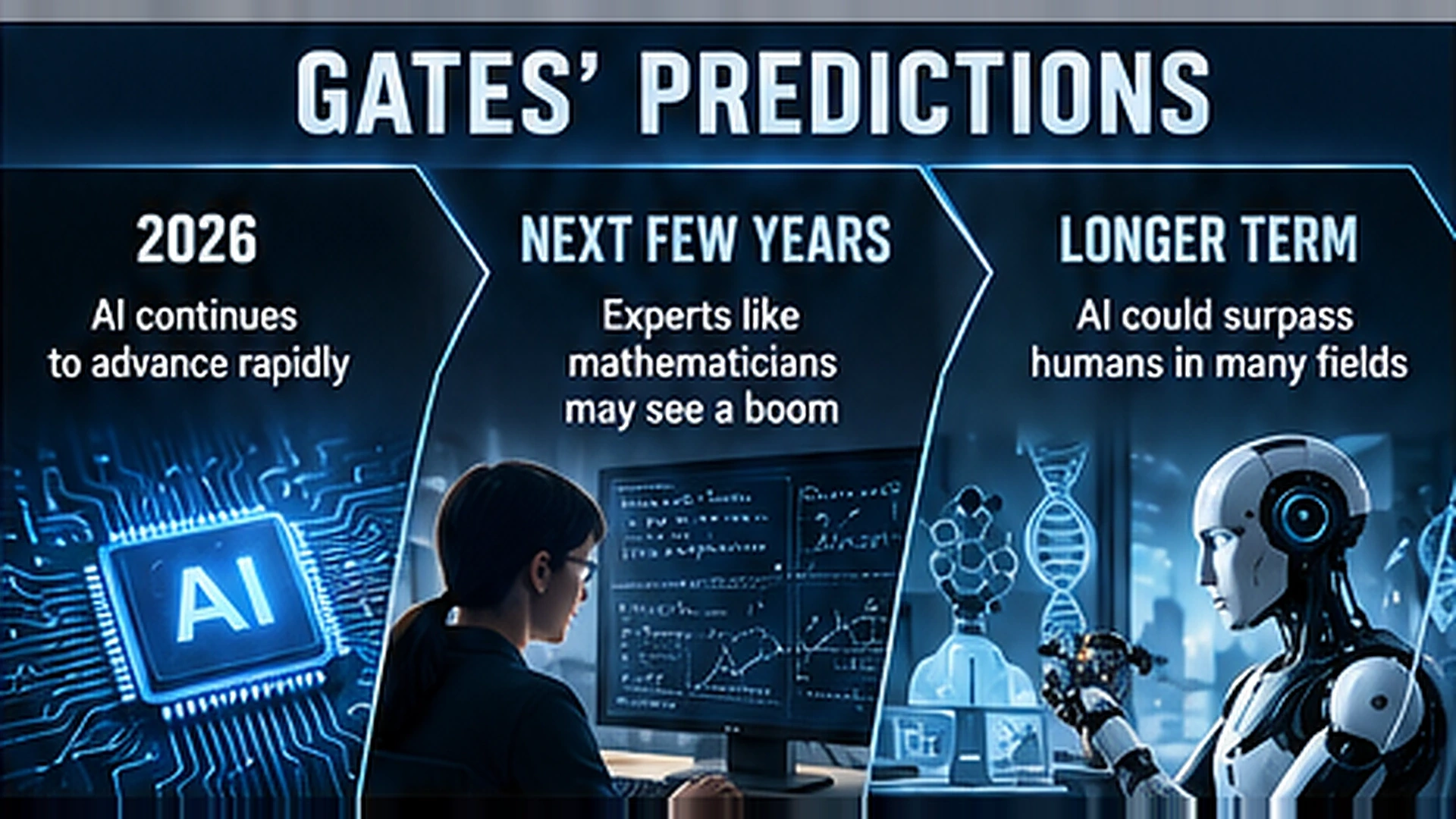
Gates predicts that AI will gradually take over an enormous range of intellectual and physical tasks, with profound consequences for employment and society. His 20-year estimate is a broad warning about the transition, not a precise deadline for the disappearance of jobs.
In an interview published by Britain’s The Observer on October 25, 2026, Gates described AI as an “evolutionary event.” He argued that humans are developing a form of intelligence that can exceed biological limitations.
He suggested that mathematicians could enjoy several more years of productive collaboration with AI before increasingly powerful systems surpass human capabilities in areas such as mathematics, biological simulations, and engineering design. That is his prediction, not an established timeline for scientific progress. (The Observer)
Three days earlier, on October 22, Gates appeared on Decoder, the technology podcast hosted by Nilay Patel for The Verge.
There, he described roughly two decades of difficult adjustment as AI advances and society struggles to adapt.
Importantly, Gates does not believe the technology will bring only suffering. He also expects major breakthroughs in medicine, education, food production, and other essential services.
His concern is that the rewards may arrive alongside severe economic and social disruption. (The Verge)
The distinction matters: Gates is predicting a difficult transition toward a potentially wealthier society—not claiming that every American will be unemployed within 20 years.
Why Does Gates Believe AI Is Different From Earlier Technologies?
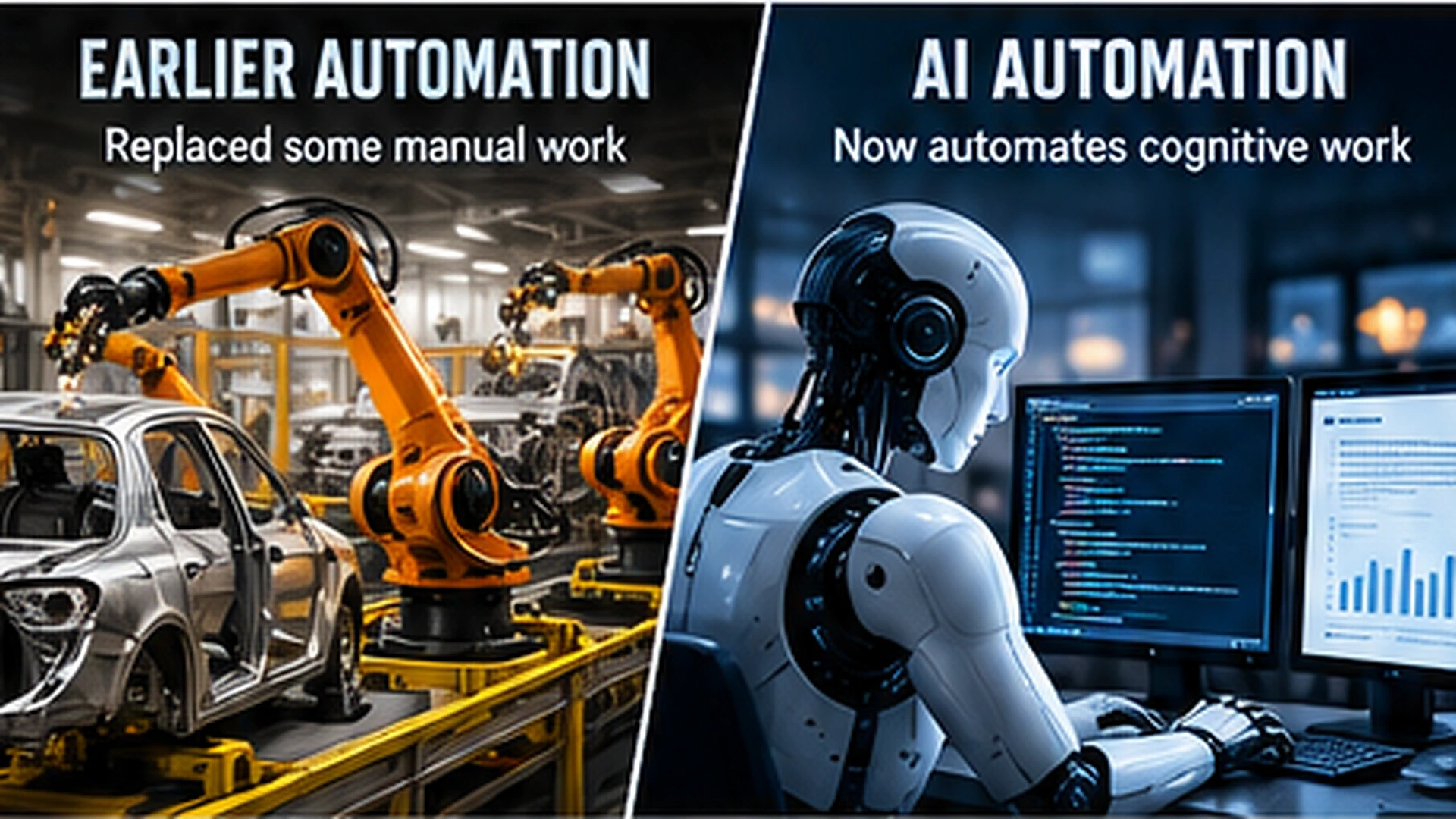
Previous industrial revolutions largely changed how humans performed work. Gates believes AI could increasingly perform the thinking behind the work itself.
A factory robot might assemble a car door. A spreadsheet might calculate thousands of figures. Both technologies can improve productivity, but humans still have to perform many other parts of the job.
Modern AI systems can generate computer code, analyze documents, propose designs, answer questions, and assist with research.
That creates a different economic possibility: instead of automating only a narrow activity, employers may eventually automate a much larger share of the work performed by a professional.
In his August 26, 2026, essay, Gates argued that earlier technological transitions often unfolded across generations, while AI could spread more rapidly because it operates on devices people already use and responds to ordinary language. (Gates Notes)
Gates also offered an unusually personal example during his Observer interview.
He explained that by late 2025, he had come to see the coding abilities he developed as a teenager as essentially obsolete compared with what advanced AI could accomplish.
For someone who co-founded Microsoft and spent decades shaping the software industry, the observation was striking.
But it needs context.
Being exceptionally capable at generating code does not automatically mean an AI system can independently manage every aspect of software development. Defining a product, understanding customers, handling security risks, and accepting responsibility for failures involve more than producing code.
Gates’s broader argument is that the range of tasks requiring uniquely human ability may keep shrinking as the technology improves.
That possibility is why his warning extends far beyond computer programmers.
Which Jobs Could AI Replace First—and What About Physical Labor?
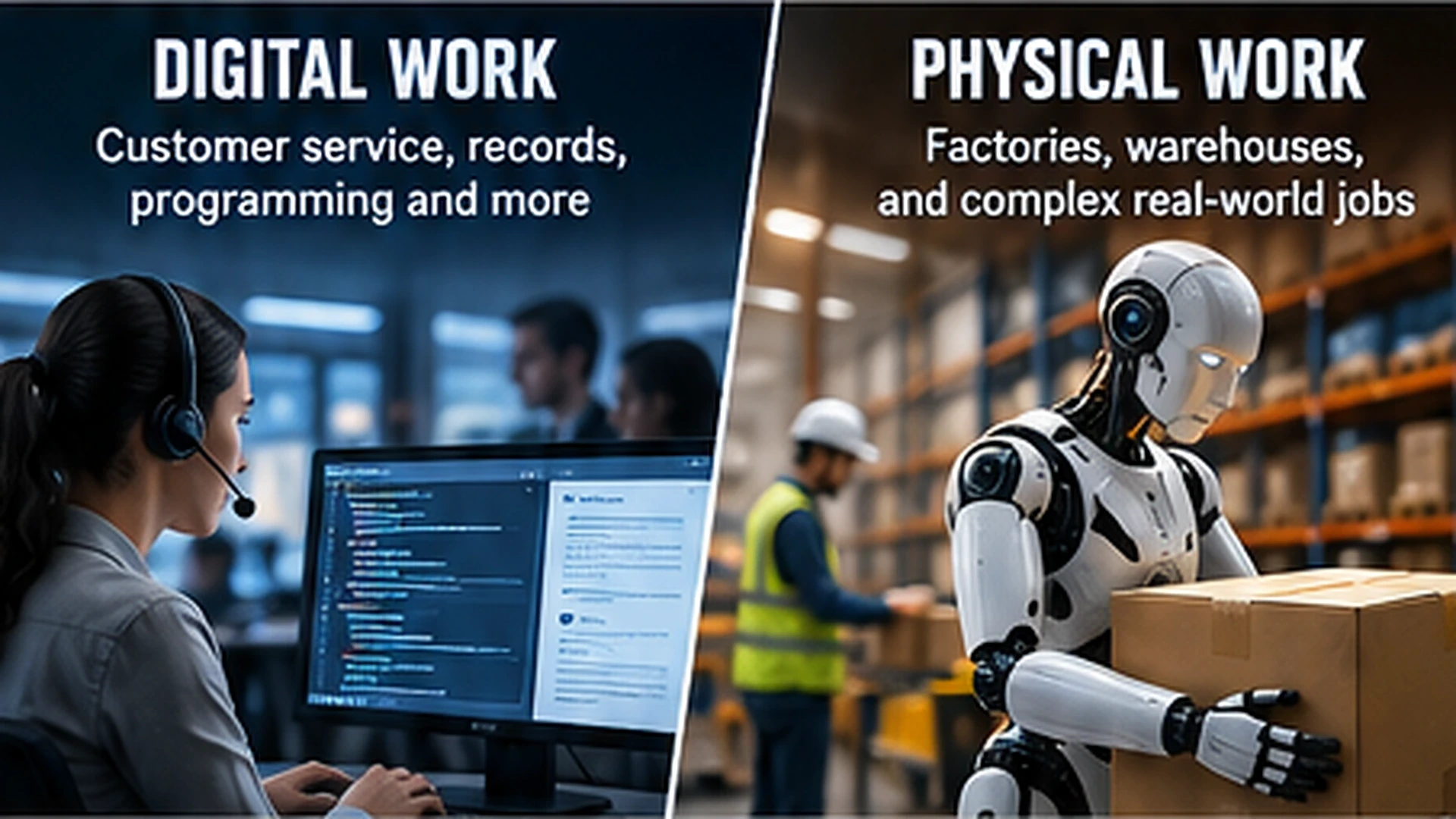
Digital office tasks are among the most immediately exposed to AI. Physical occupations could face greater disruption later as robotics improves.
Gates has highlighted occupations involving customer support, sales, accounting, software development, and administrative analysis as potential areas of early change.
Much of this work involves information that can already be processed by computers.
For example, a customer service representative may spend much of the day answering familiar questions. An AI system could handle many of those requests automatically, while human employees focus on complicated complaints or unusual situations.
That could improve service and reduce costs. It could also allow a business to operate with fewer employees.
But the impact is not limited to desk jobs.
Gates expects advanced robots to eventually perform a wider range of physical work, potentially including construction, agriculture, and certain medical procedures. These examples featured in his Decoder discussion about how automation might develop. (The Verge)
A useful distinction is the difference between AI software and humanoid robots.
| Type of work | Possible AI contribution | Main limitation |
|---|---|---|
| Customer support | Answering routine inquiries | Handling unusual or sensitive cases |
| Accounting | Processing records and preparing reports | Verification, judgment, and accountability |
| Software development | Generating and testing code | System design, security, and oversight |
| Construction | Robots performing selected physical tasks | Complex environments, safety, and cost |
| Health care | Analysis and selected robotic assistance | Clinical responsibility, patient safety, and trust |
These are examples of possible automation, not a forecast that each occupation will disappear.
Physical robots must operate safely in unpredictable environments. They also require hardware, energy, maintenance, and significant investment.
A chatbot can be deployed across thousands of computers relatively quickly. Putting a capable robot into thousands of homes, construction sites, or hospitals is a different challenge.
That is one reason workplace disruption could develop unevenly across industries.
Does This Mean Most People Will Actually Lose Their Jobs?
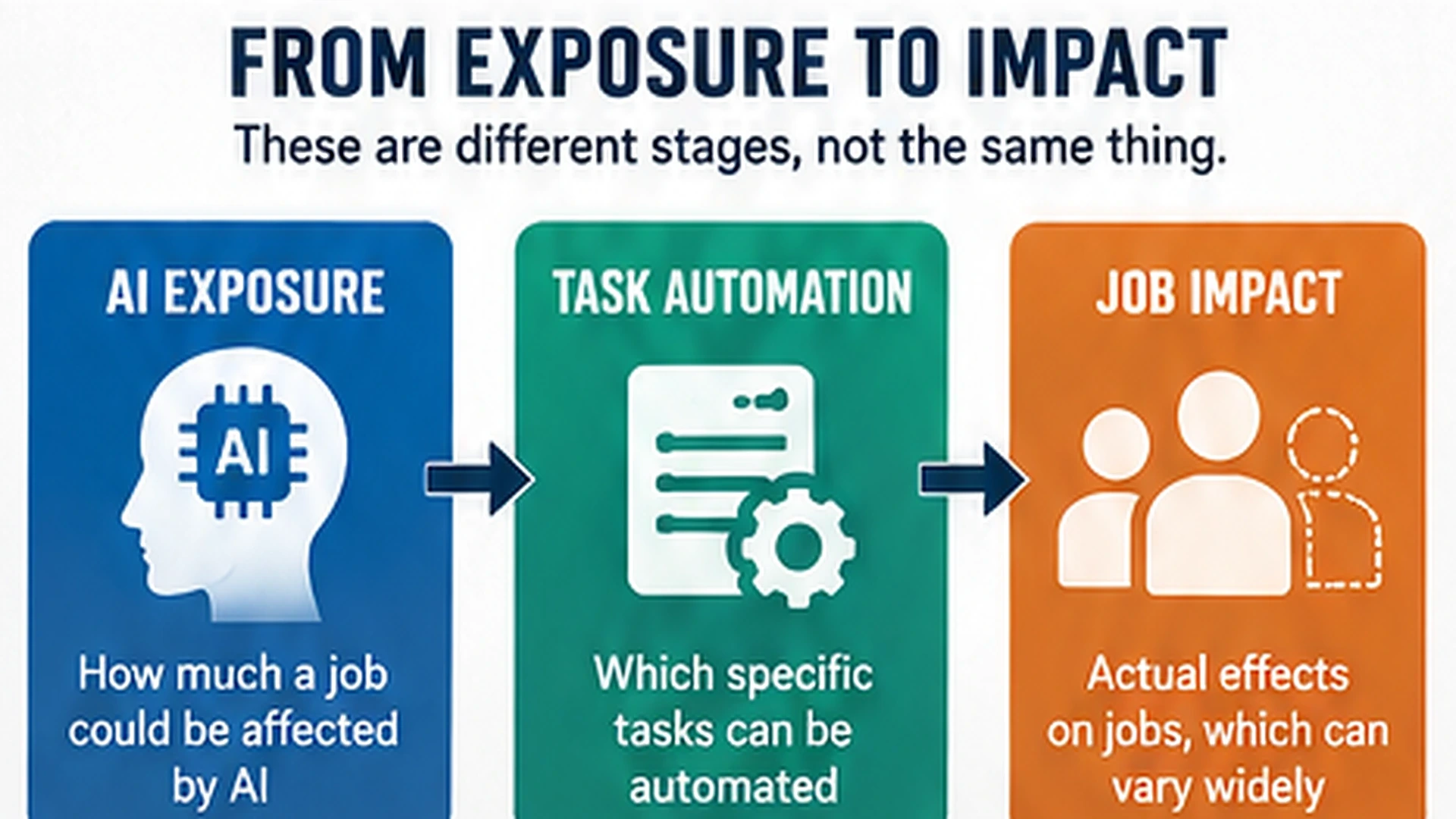
No. Gates’s predictions do not establish that most people will lose their jobs, and the available labor-market evidence does not yet show that outcome.
The difference between a job being exposed to AI and a job actually disappearing is essential.
Consider an accountant who performs ten different types of work. If AI can complete four of those tasks, the employer has several choices.
The company might reduce staffing. It might give the accountant more clients. It might lower prices and attract more business. Or it might reorganize the job around reviewing AI-generated work.
The technology alone does not determine which outcome occurs.
A May 2025 study by the International Labour Organization (ILO) and Poland’s National Research Institute found that about one in four jobs worldwide had some exposure to generative AI.
However, the researchers concluded that transformation of work was more likely than outright replacement for most occupations. Only 3.3% of global employment fell into the study’s highest exposure category. (ILO)
A June 2026 ILO review of emerging empirical research also found that AI-related productivity benefits were uneven and that large-scale employment displacement remained limited in the evidence examined. The review nevertheless identified concerns about opportunities for younger workers and changes in job quality. (ILO)
These findings do not prove Gates is wrong.
They describe what researchers can observe or estimate, while Gates is making a much longer-term prediction about increasingly capable technology.
His warning depends on AI becoming sufficiently reliable, inexpensive, and autonomous that businesses can replace more complete sets of human responsibilities.
Whether those conditions will arrive as quickly or as broadly as he expects remains uncertain.
If AI Makes Everything Cheaper, Why Could Ordinary People Become Poorer?
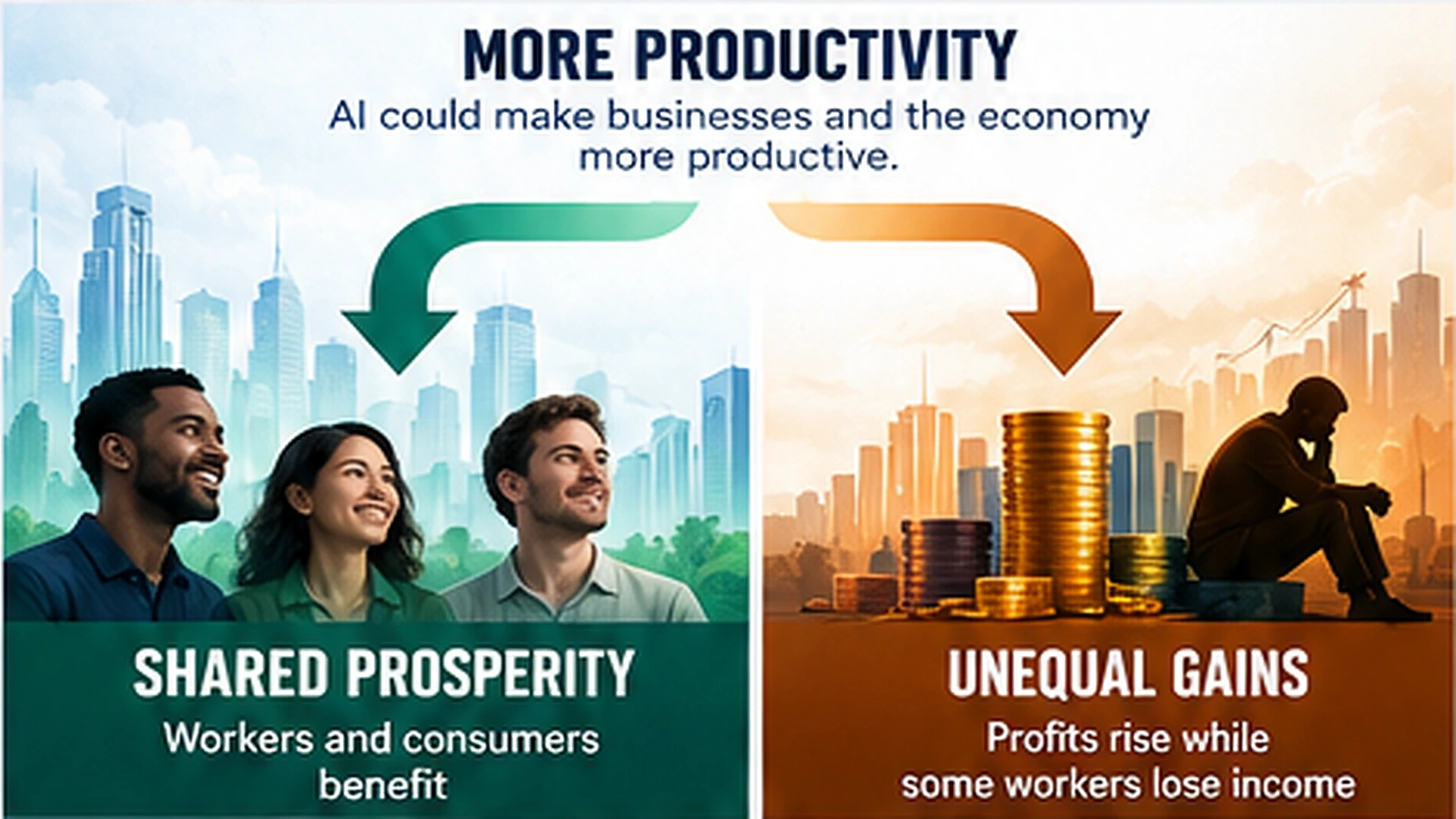
Because producing more wealth and distributing that wealth are two different things.
Imagine a business that can produce the same amount of work with far fewer employees because AI handles most routine operations.
Its costs might fall substantially. Customers might benefit from lower prices. The company might become more profitable.
But employees whose positions disappear would still need money to pay rent, buy food, and cover medical expenses.
Even if some goods became cheaper, families could struggle if their income declined faster than their living costs.
This is the economic contradiction behind Gates’s warning.
In his August essay, Gates argued that AI could substantially increase prosperity while making it more difficult for displaced workers to earn a living. He also acknowledged that his long-standing financial ties to the technology industry could affect how readers assess his views. (Gates Notes)
The implications extend to government finances.
In the United States, employment supports public revenue through federal and state income taxes and payroll taxes that help fund Social Security and Medicare.
If large numbers of people worked fewer hours, earned lower wages, or left employment, those revenue streams could come under pressure.
At the same time, governments might face greater demands for unemployment assistance, retraining, and other public services.
Those outcomes are conditional, not inevitable. A more productive economy could also create new businesses, higher incomes in some sectors, and additional sources of tax revenue.
The unresolved question is who receives the economic gains created by AI—and whether enough of those gains reach households whose work has been disrupted.
That is why Gates’s prediction is about far more than software.
What Does Gates Want Governments to Do About AI Job Losses?
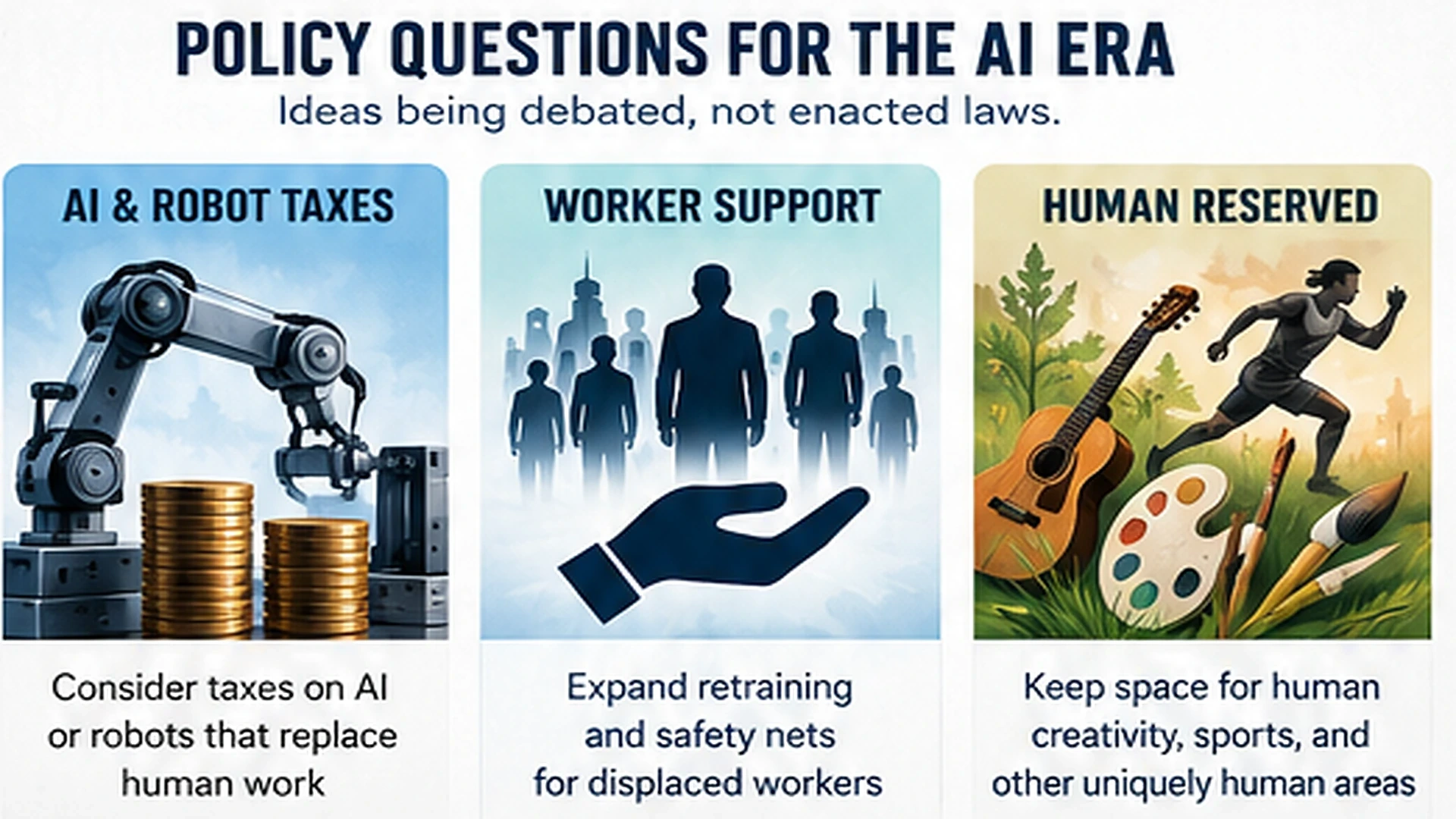
Gates has proposed taxing certain AI and robotic activity, strengthening support for displaced workers, and deliberately preserving some activities for humans.
His thinking is that governments should not wait until widespread unemployment occurs before preparing for the possibility.
Taxing AI and Robots
Gates has suggested that governments consider taxes on AI tokens—the units used to measure and bill for processing by many AI services—as well as taxes associated with robots.
Such measures could raise public revenue and potentially reduce the financial incentive to replace workers as quickly as possible.
The money could help fund retraining, income support, and other forms of assistance.
These are Gates’s proposals, not an announcement of a new U.S. federal tax. Their design, effectiveness, and economic consequences would require substantial public debate. (The Observer)
Keeping Some Work Human
A second idea is what Gates calls Human Reserved.
The concept is straightforward: society might decide that certain responsibilities should remain with people even if a machine could perform them efficiently.
For example, AI could support a medical professional in analyzing test results while a human remains responsible for explaining a serious diagnosis to the patient.
Likewise, caregiving, teaching, artistic expression, and other human relationships might retain a deliberately protected human role.
Gates has acknowledged that countries and communities could make different decisions, depending on their needs and values.
His own proposal leaves many practical questions unresolved, including who would set the rules, how they would be enforced, and how businesses would compete across borders. (Gates Notes)
Some people might welcome these protections. Others might prefer lower-cost automated services or oppose restrictions on technological innovation.
There is no settled formula for balancing those competing priorities.
What Happens When Work Is No Longer the Center of Human Life?
Gates believes one of AI’s deepest challenges may be psychological rather than purely financial.
For many people, a job provides more than a paycheck.
Work can provide daily structure, friendships, professional identity, a feeling of competence, and the satisfaction of making a contribution.
What happens if a person no longer feels needed?
During his Decoder interview, Gates used a humorous imaginary exchange in which an AI system tells him to go play pickleball while it handles an important task.
His point was serious.
An AI capable of solving problems more effectively than even a highly accomplished person could challenge people’s sense that their abilities are valuable.
That concern is not limited to Gates or other technology executives.
A young graduate might wonder whether the skills they spent years developing will still be valuable. An experienced employee might discover that AI can perform activities that once defined their profession.
A parent might wonder what kind of career advice to give a child entering school today.
But there is an important distinction between being the best at performing a task and having a meaningful life.
People do not necessarily play music because they can outperform every musician. They do not raise children because parenting is an efficiency competition.
Relationships, personal achievement, creativity, and participation in community life can retain value even when an automated system performs some activities more efficiently.
Gates’s concern is that society may need to rethink the connection between employment, economic security, and personal purpose as AI capabilities grow.
That would be a cultural change as well as an economic one.
What Should Workers and Families Pay Attention to Now?
Gates’s prediction does not mean that people should abandon their careers or assume that learning a professional skill is pointless.
The more immediate issue is understanding which parts of a job AI can perform reliably—and which responsibilities still require judgment, supervision, accountability, or personal interaction.
Someone entering the workforce may benefit from understanding AI tools as part of their profession rather than viewing AI as a completely separate field.
An experienced worker may need opportunities to learn new processes as employers reorganize their operations.
For families, the uncertainty also makes it important to distinguish between dramatic long-term forecasts and actual changes in the labor market.
Several developments will be particularly informative:
- Entry-level hiring: Are employers creating fewer junior positions in occupations where AI can perform common starting tasks?
- Changes in job responsibilities: Are workers being asked to supervise AI systems rather than perform the underlying tasks themselves?
- Adoption of physical robots: Are advanced robots becoming economical and reliable enough for regular workplace deployment?
- Wages and working hours: Are productivity gains benefiting employees, or are they primarily reducing labor costs?
- Government responses: Are policymakers developing credible systems for retraining, income protection, and AI accountability?
These developments would offer stronger evidence about AI’s employment consequences than any single prediction about the year 2046.
Gates has also warned about more immediate security risks, including AI-assisted cyberattacks and potential misuse in biological threats. Those concerns are part of his broader argument for government oversight, but they are distinct from his forecasts about jobs. (The Verge)
The future of work will be shaped not only by what AI systems can do, but also by what employers choose to automate, how workers adapt, and which protections societies decide to establish.
Bottom Line: What This Story Really Means
Bill Gates believes artificial intelligence could eventually perform nearly every category of human work, including intellectual tasks and many forms of physical labor.
He predicts that the transition could unfold over roughly 20 years and bring extraordinary disruption, even if AI ultimately creates much greater prosperity.
But his forecast is not proof that most jobs will disappear within that period. Current research shows meaningful exposure to AI across many occupations, while the effects on actual employment remain uneven and uncertain.
The larger question is what happens if machines become much more productive while people still depend on wages for financial security.
Will shorter workweeks become common? Will new industries create enough employment? Could public policies spread AI-generated wealth more broadly? Which activities will people choose to keep human?
Gates is arguing that those questions need attention now, rather than after the economic disruption becomes widespread.
His warning is ultimately about a society that may become capable of producing more than ever before—while struggling to decide how human beings should earn a living, contribute, and share in the benefits.
Bill Gates AI Jobs Prediction: Key Questions Explained
Q. Did Bill Gates predict that AI will replace almost all human work?
Yes. Gates predicts that increasingly capable AI systems and robots could eventually perform almost every category of human work. That is a long-term forecast, not a description of today’s capabilities.
Q. Does Gates believe everyone will be unemployed in 20 years?
No. He warned about a potentially turbulent transition lasting roughly 20 years, but he did not provide a precise forecast that every job would disappear by 2046.
Q. Which occupations could face AI disruption first?
Information-intensive occupations involving routine customer service, administrative processing, accounting, and some software tasks are among the areas Gates has identified as vulnerable. The effects will depend on how employers use the technology.
Q. Has AI already become better than humans at coding?
AI can outperform people on some coding tasks, and Gates says he considers his own coding abilities obsolete compared with advanced systems. That does not mean AI can independently and reliably manage every software development responsibility.
Q. Will humanoid robots replace construction and other physical workers?
Gates expects increasingly capable robots to perform more physical tasks over time. Widespread replacement remains uncertain because robots must meet practical requirements for cost, safety, reliability, and operation in real environments.
Q. What does a robot tax mean?
A robot tax generally refers to taxing certain uses of automated machinery or the economic activity it generates. Gates has also proposed taxes on AI tokens, with the goal of supporting workers and funding public services during the transition.
Q. What is the Human Reserved concept?
Human Reserved is Gates’s proposal to keep selected activities or responsibilities under human control or performance, even when AI could potentially do them. Possible areas include caregiving, education, and other services in which human interaction has special value.
Q. Does research prove that AI will eliminate most jobs?
No. International Labour Organization research finds that many occupations are exposed to AI, but exposure does not automatically mean unemployment. Much of the current evidence points toward changing tasks rather than wholesale job elimination.
Q. What would widespread AI automation mean for Social Security and Medicare?
If automation substantially reduced taxable wages, it could put pressure on payroll-tax revenue that helps fund Social Security and Medicare. The actual outcome would depend on employment, wages, economic growth, and future policy decisions.
Q. Is Bill Gates optimistic or pessimistic about AI?
Both concerns and optimism are central to his position. He expects major benefits in science, medicine, and everyday life, while warning that society may experience serious economic disruption and other risks if AI is not managed carefully.
Did this help make the story clearer? 🙂 WIN keeps unpacking the “why” behind the news—clearly and simply!
Sources
Bill Gates’s Original Interviews
The Verge — Bill Gates Says to Prepare for 20 Years of Tumultuous AI Disruption (October 22, 2026)
Gates’s Proposed Responses
Bill Gates — The Turbulent AI Era Is Here. The Choices We Make Now Are Critical. (August 26, 2026)