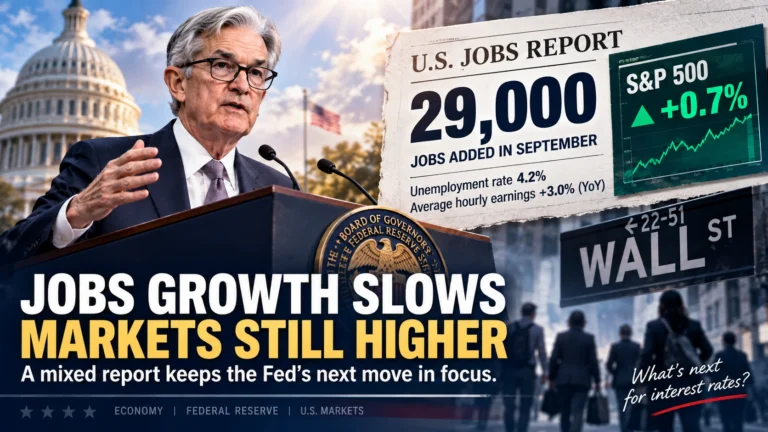
Why Did Stocks Rise After a Weak Jobs Report—and What Does 29,000 New Jobs Really Mean?

The U.S. added only 29,000 jobs in September.
That sounds like bad news. So why did stocks go up?
And there is another question hiding behind that one: if hiring really has weakened this much, should Americans be worried about a recession—or should they be thinking about lower interest rates instead?
That apparent contradiction is what made the September jobs report so important to Wall Street.
Investors were not celebrating weak hiring itself. They were reacting to what weaker hiring could mean for the Federal Reserve’s next move.
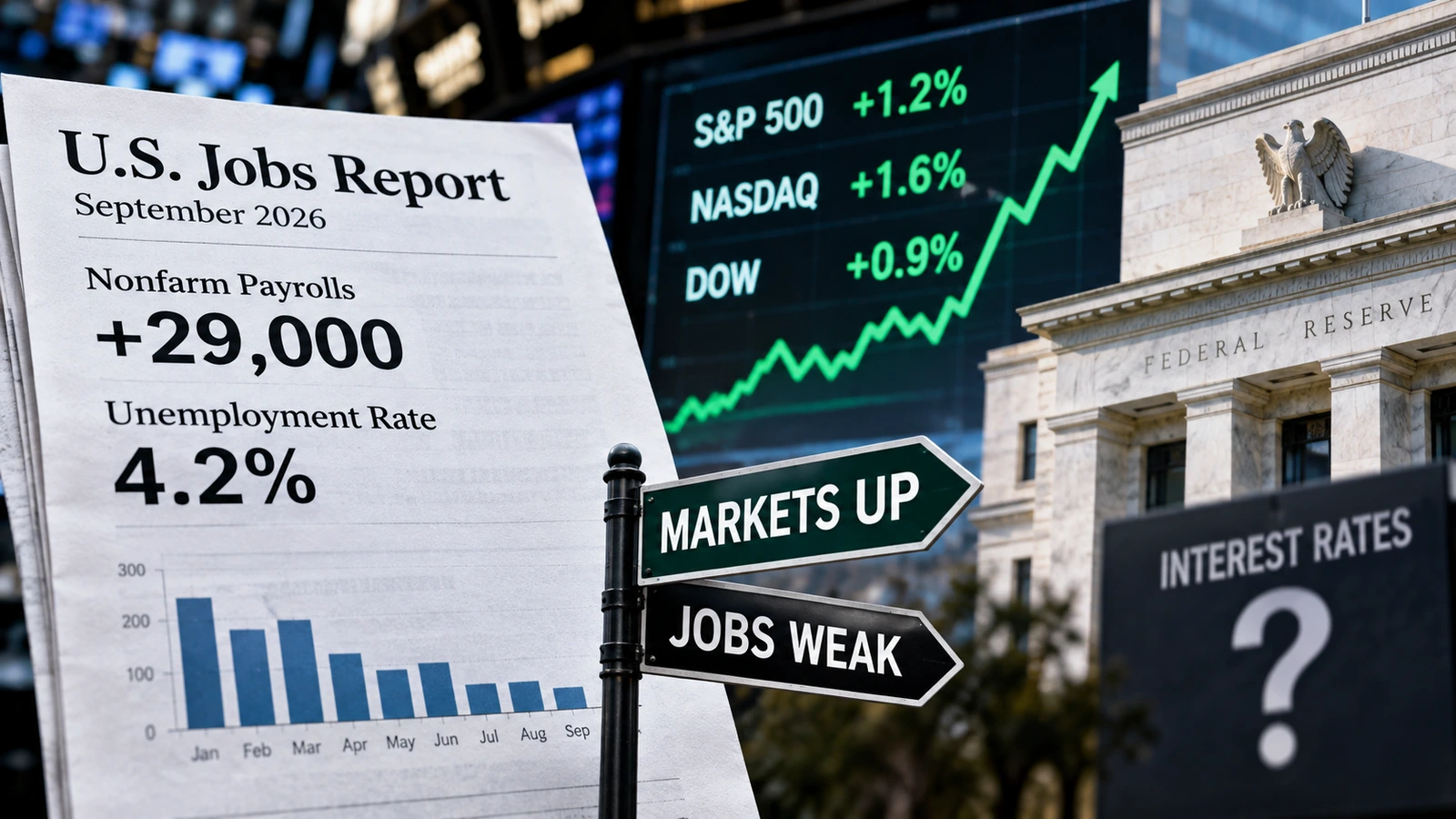
※ Images in this article are AI-generated illustrations created to help explain the story. They are not actual photographs, and depictions of people, places, or events may differ slightly from reality.
The distinction matters.
A weak jobs report can be bad for workers and the economy while still being welcomed by investors if markets believe it reduces the chance of another interest-rate increase.
That is what happened on October 2.
What Did the September Jobs Report Actually Say?
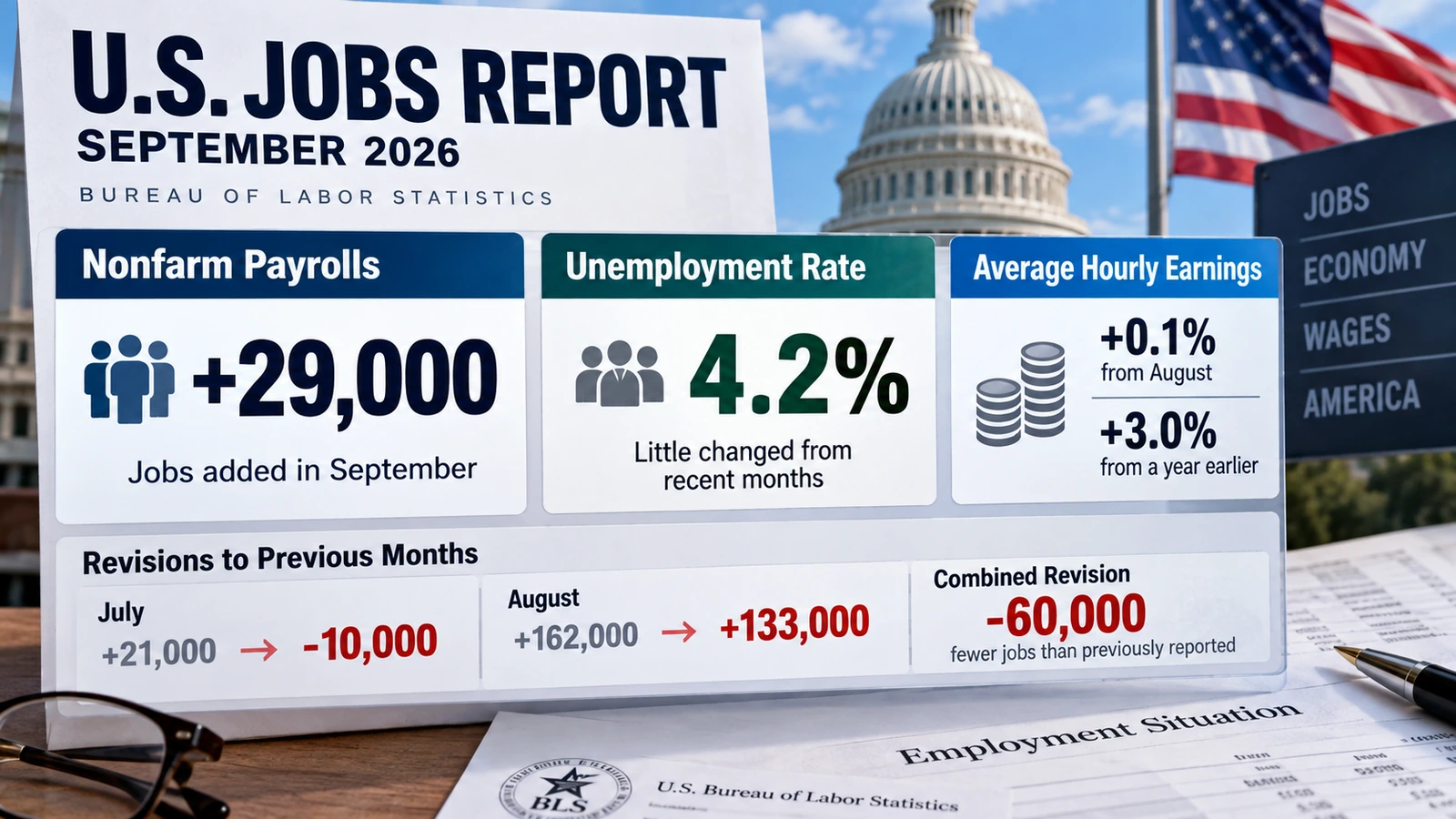
The Bureau of Labor Statistics reported on October 2 that U.S. nonfarm payroll employment increased by 29,000 in September, while the unemployment rate was 4.2%. Economists surveyed by Reuters had expected roughly 90,000 new payroll jobs. (Bureau of Labor Statistics · Reuters)
The report also made the previous two months look weaker.
July payroll growth was revised from +21,000 to -10,000, while August was revised from +162,000 to +133,000. Together, those revisions removed 60,000 jobs from the previously reported totals. (Bureau of Labor Statistics)
Average hourly earnings increased just 0.1% from August and 3.0% from a year earlier. Employment in all major industries changed little over the month. (Bureau of Labor Statistics)
Here is the report in one view:
| September labor-market signal | Result | Why it matters |
|---|---|---|
| Nonfarm payrolls | +29,000 | Hiring was much weaker than economists expected |
| Unemployment rate | 4.2% | Still within the narrow 4.1%–4.3% range seen since March |
| July revision | +21,000 → -10,000 | Earlier hiring was weaker than first reported |
| August revision | +162,000 → +133,000 | Another downward revision |
| July + August revisions | -60,000 combined | Weakness was not limited to September |
| Average hourly earnings | +3.0% year over year | Wage growth continued, but at a slower pace |
One detail is easy to misunderstand.
“29,000 jobs” does not mean only 29,000 Americans got jobs during September.
It is the estimated net change in nonfarm payroll employment—jobs added minus jobs lost across the surveyed economy.
The unemployment rate comes from a different survey of households. That is why payroll growth and the unemployment rate do not always move together in the way people expect.
Why Did Stocks Rise If the Jobs Report Was Weak?
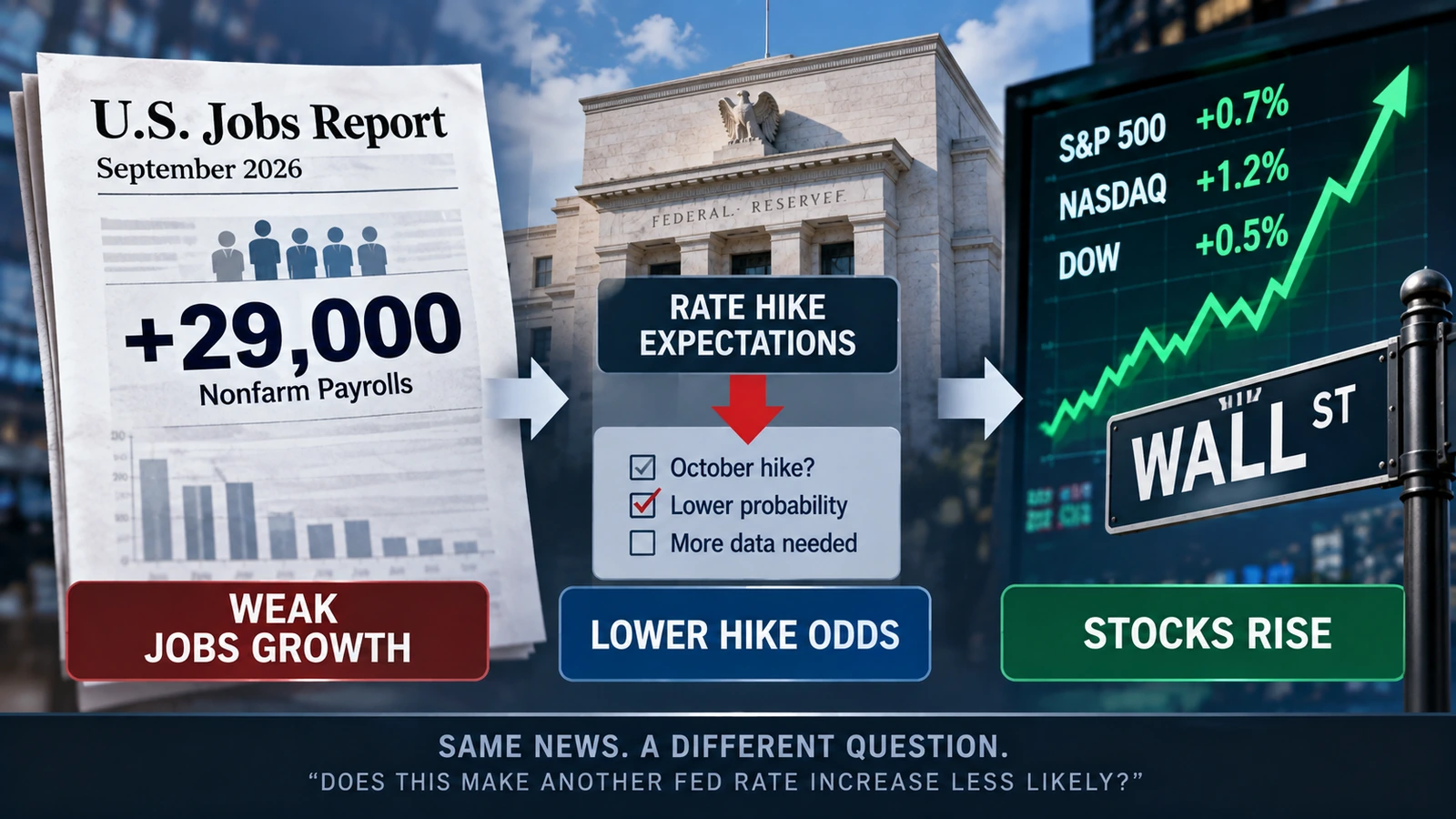
Because Wall Street was asking a different question.
Investors were not simply asking, “Is 29,000 a good employment number?”
They were asking, “Does this make another Fed rate increase less likely?”
The answer from financial markets was yes.
The S&P 500 finished October 2 up about 0.7%, the Nasdaq gained roughly 1.2%, and the Dow rose about 0.5%. Reuters and AP reported that the weak jobs data reduced expectations of another Federal Reserve rate increase in October. (Reuters · AP)
The sequence looked roughly like this:
Slower hiring
↓
Less evidence that the economy needs even tighter monetary policy
↓
Lower market expectations for another immediate Fed rate hike
↓
Potentially less pressure from high interest rates on businesses and financial assets
↓
Stocks—especially rate-sensitive shares—become more attractive
That is the logic behind the phrase investors sometimes use: “Bad news can be good news for stocks.”
But that phrase needs an important qualification.
Bad economic news is only potentially good for stocks when it is weak enough to reduce interest-rate pressure without being so weak that investors begin fearing a serious recession and falling corporate profits.
There is a big difference between those two situations.
So Why Do Interest-Rate Expectations Matter So Much to Stocks?
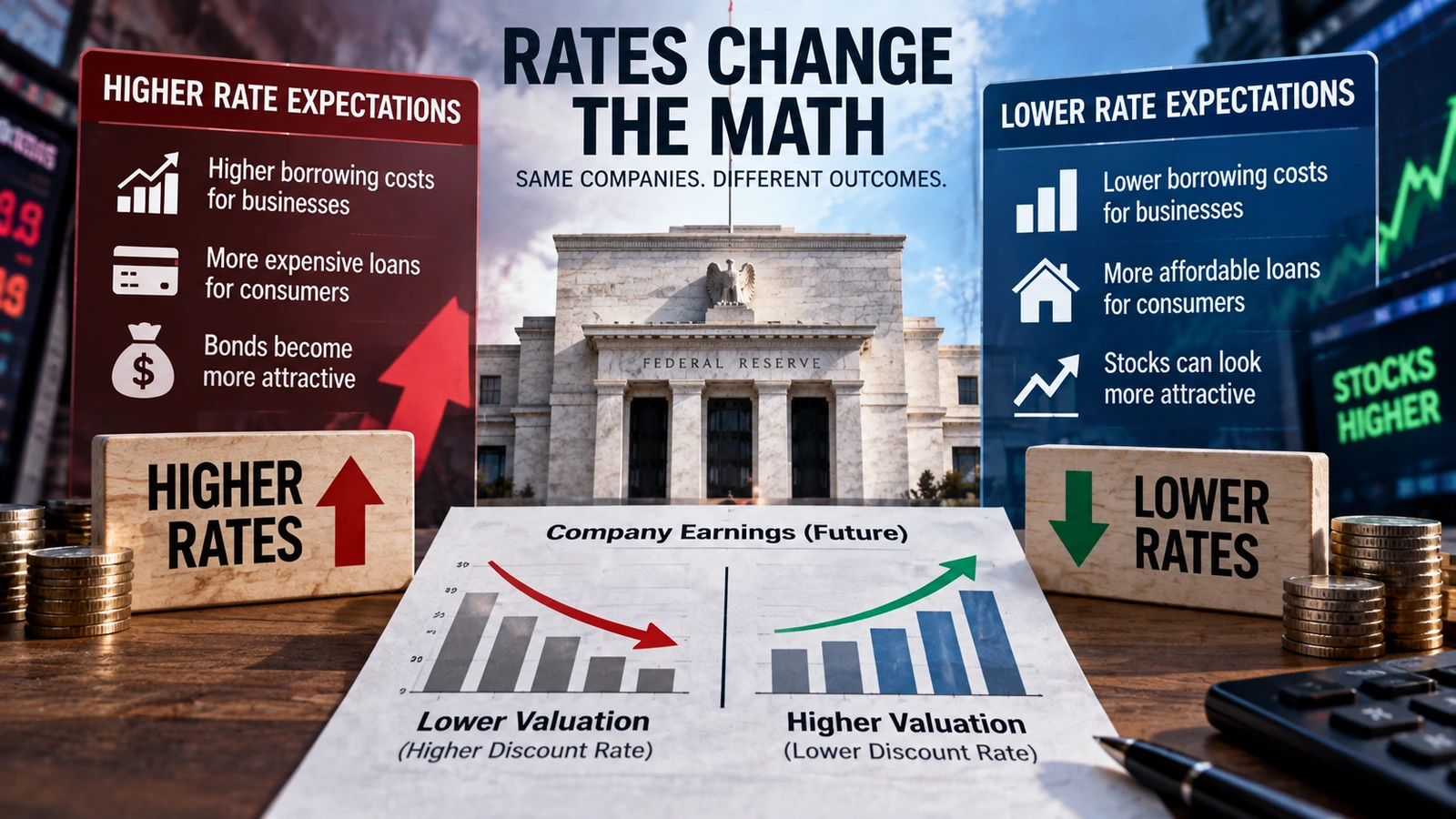
Interest rates change the financial calculation behind stock prices.
When rates rise, businesses can face higher borrowing costs. Consumers may also spend less when credit cards, auto loans and other financing become more expensive.
At the same time, safer investments such as Treasury securities can offer more attractive yields. That gives investors more alternatives to stocks.
There is also a valuation effect.
A stock represents a claim on profits that may arrive many years in the future. When investors use a higher interest rate to value those future earnings, their present value can fall.
That is one reason technology and other growth-oriented stocks can be especially sensitive to changing rate expectations.
On October 2, the Nasdaq’s stronger gain relative to the Dow fit that pattern. (Reuters)
The jobs report therefore affected stocks through a chain that looked less like:
Jobs weak → economy good → stocks rise
and more like:
Jobs weak → Fed may not need to tighten as quickly → rate outlook improves → stocks rise
That is a much more accurate description of what investors were reacting to.
Does 29,000 New Jobs Mean the U.S. Is Heading Into a Recession?
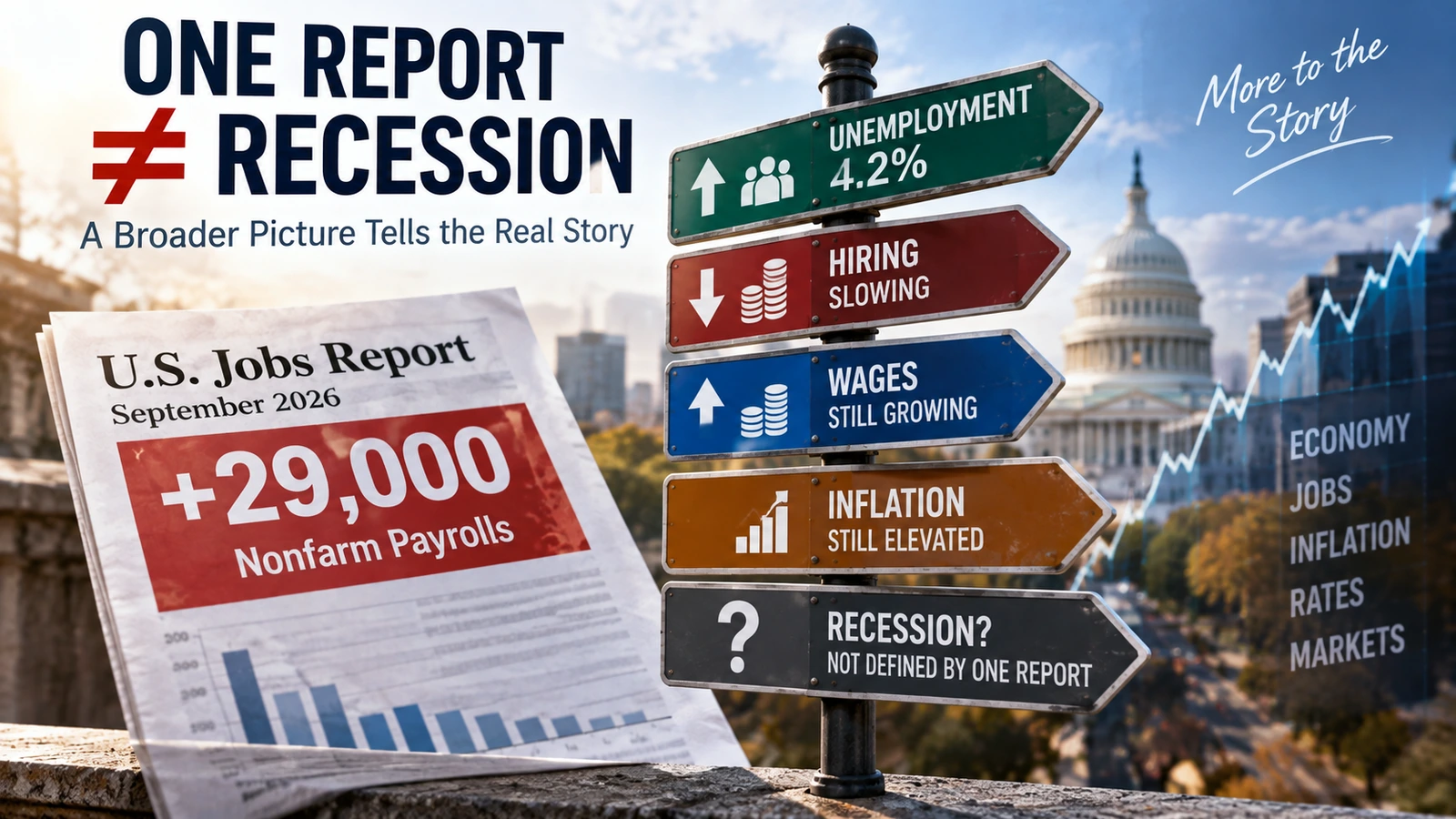
No. One weak payroll report does not establish that the U.S. economy is in a recession.
But September’s report is harder to dismiss because earlier employment numbers were also revised lower.
That makes the pattern more important than the 29,000 headline alone.
The unemployment rate was 4.2%. The BLS said it had remained within a relatively narrow 4.1%–4.3% range since March. (Bureau of Labor Statistics)
That does not look like a dramatic labor-market collapse.
At the same time, a slowdown in hiring can be painful even when layoffs are not surging.
A labor market can enter a “low-hire, low-fire” phase: employers may not be cutting huge numbers of existing workers, but they may also become reluctant to add new ones. That makes life particularly difficult for people who are unemployed, graduating, changing careers or trying to move to a better-paying job. (AP)
This distinction helps explain why an unemployment rate that appears relatively stable can coexist with widespread anxiety about finding work.
For an employee who already has a stable job, the labor market may still feel normal.
For someone sending out résumés, it can feel very different.
Why Does This Report Put the Fed in an Awkward Position?
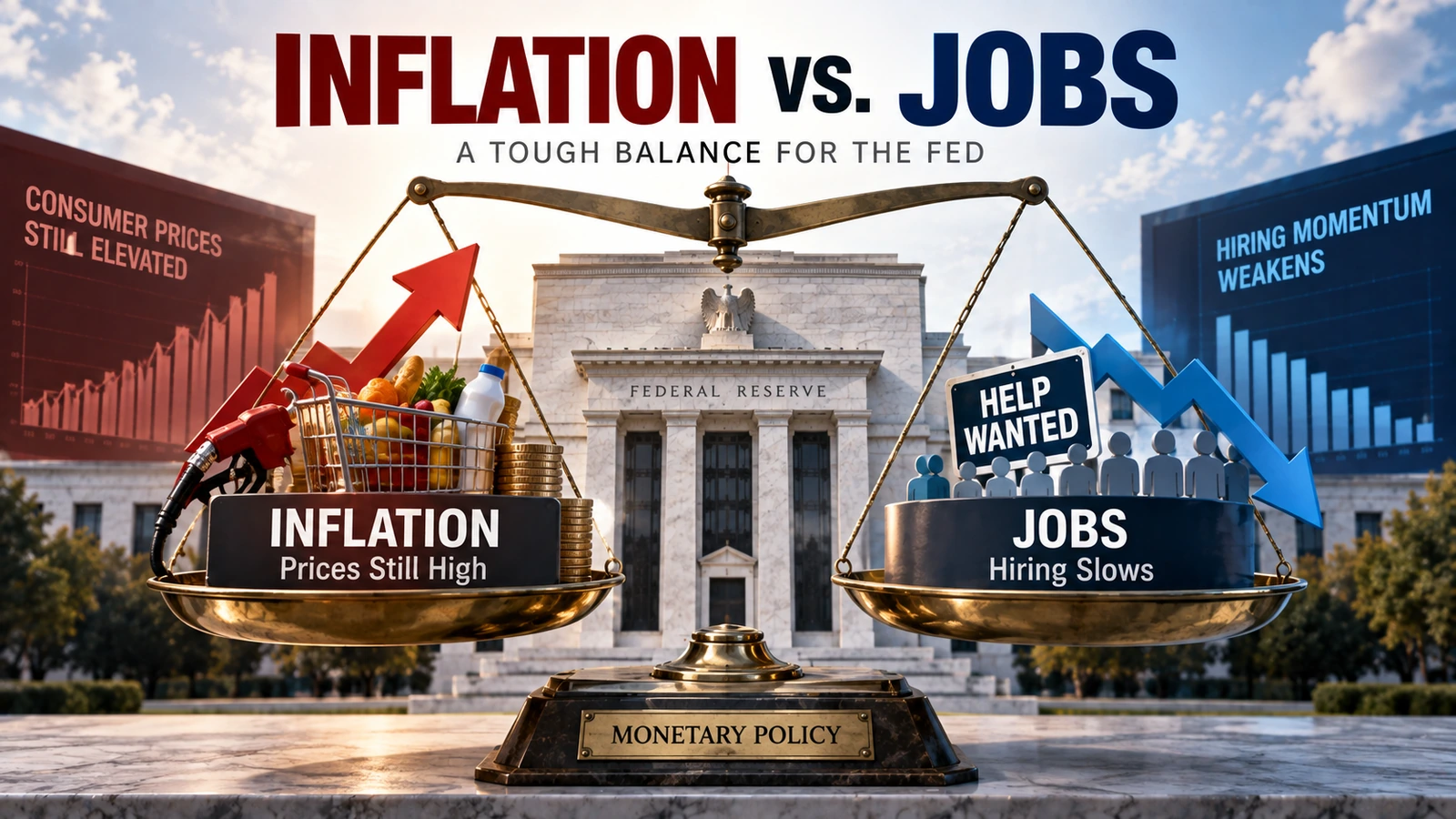
Because the Fed had just raised rates.
On September 16, the Federal Reserve raised its target range for the federal funds rate by a quarter percentage point to 3.75%–4.00%. The Fed said inflation remained elevated even as economic activity continued to expand at a solid pace. (Federal Reserve)
Its September projections showed why policymakers were still worried about prices.
The median Fed projection put 2026 PCE inflation at 3.7%, well above the central bank’s longer-run 2% objective. The same projections put the median year-end federal funds rate at 4.1%, which at the time was consistent with the possibility of additional tightening. (Federal Reserve)
Then came the jobs report.
That leaves the Fed facing two risks that point in different directions:
| If the Fed focuses on… | Concern | Policy pressure |
|---|---|---|
| Inflation that remains too high | Prices could stay elevated | Keep rates high or raise them |
| Slower hiring | Tight policy could weaken employment further | Pause or avoid additional tightening |
| Both at once | Fighting one problem could worsen the other | Wait for more data |
This is the part of monetary policy that often disappears from simple headlines.
The Fed does not have the luxury of responding to the jobs number alone.
It has a dual mandate involving maximum employment and price stability. When inflation and employment are both sending clear signals in the same direction, policy is easier.
When inflation remains elevated but hiring weakens, the decision becomes much more complicated.
After the September jobs data, Reuters reported that market-implied odds of a quarter-point rate increase at the Fed’s October meeting fell to 22.7%. That was a snapshot of investor pricing—not a Fed commitment. (Reuters)
Does This Mean Mortgage and Credit-Card Rates Are About to Fall?
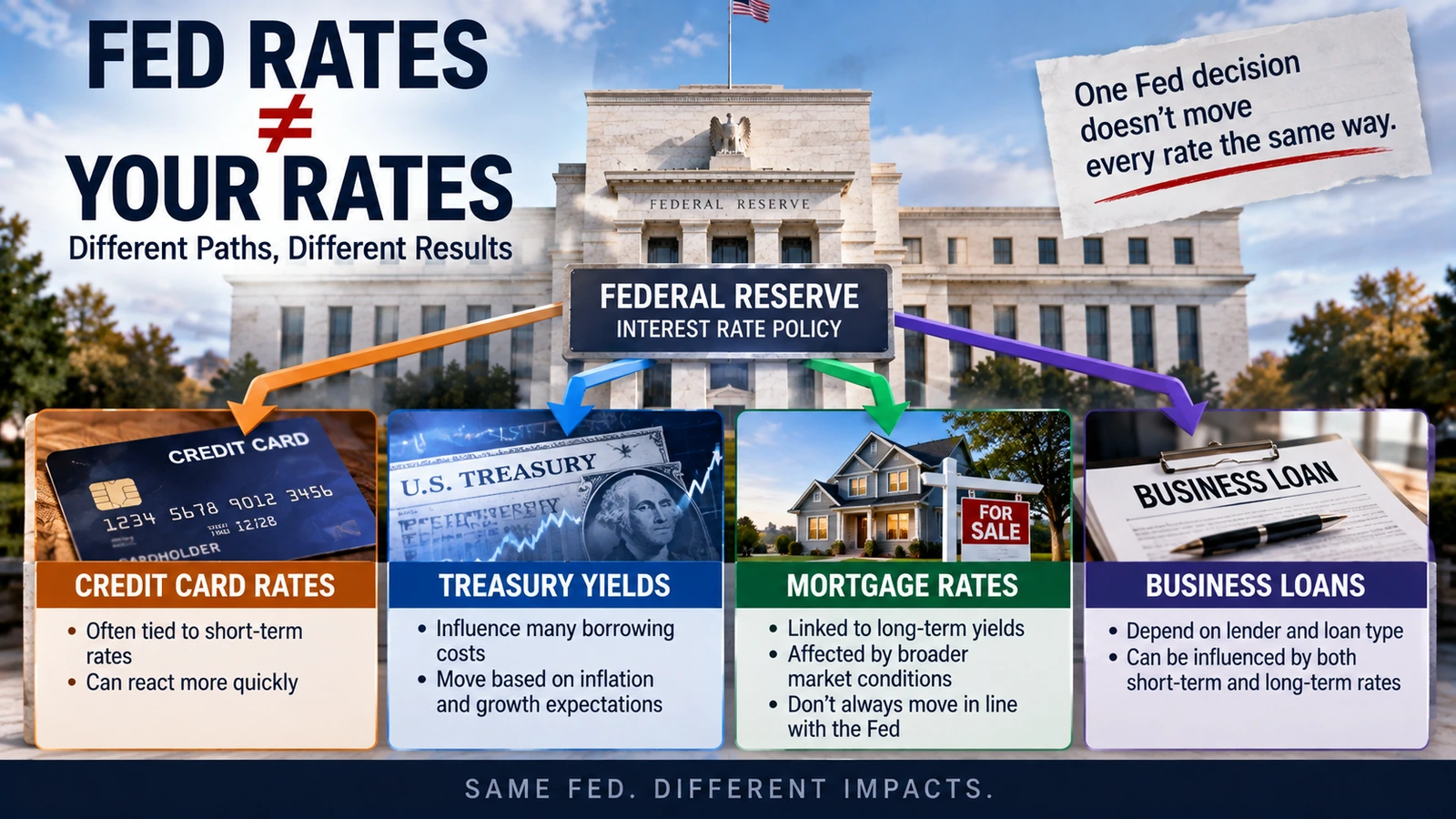
Not automatically.
A softer jobs report can reduce expectations for future Fed rate increases, but that does not mean every household borrowing rate immediately falls.
Credit-card rates and other variable borrowing costs are relatively sensitive to short-term benchmark rates.
Thirty-year fixed mortgage rates work differently. They are influenced heavily by longer-term Treasury yields, inflation expectations, the mortgage-bond market and investors’ view of the economy over many years.
October 2 provided a good example.
Treasury yields initially fell after the jobs report as investors reduced Fed-hike expectations. But longer-term yields later moved back up as markets also reacted to oil prices and a broader global bond selloff. (AP)
So two statements can be true at the same time:
The jobs report reduced expectations for another immediate Fed rate hike.
And:
Long-term borrowing costs do not have to fall simply because those expectations changed.
That is why a homeowner should not read “weak jobs report” and automatically expect a cheaper 30-year mortgage the next morning.
Financial markets contain several moving parts at once.
What Should Investors and Households Watch Next?

The next question is whether the September jobs report is the beginning of a broader slowdown or just one particularly weak month.
The next major U.S. inflation report is scheduled for October 14, when the Bureau of Labor Statistics releases September Consumer Price Index data. (Bureau of Labor Statistics)
That matters because weak employment data alone may push the Fed toward patience, while another hot inflation report could push in the other direction.
The Federal Reserve’s next scheduled policy meeting is October 27–28. (Federal Reserve)
Then, on November 6, the next employment report is scheduled to show what happened in October. (Bureau of Labor Statistics)
Those three events create a simple sequence to watch:
October 14 — Inflation
Can price pressures give the Fed room to wait?
October 27–28 — Federal Reserve
How will policymakers balance inflation against slower hiring?
November 6 — Jobs
Was September’s 29,000 gain an outlier, or part of a continuing labor-market slowdown?
The answer will matter well beyond Wall Street.
It can influence expectations for borrowing costs, bond yields, mortgages, savings rates, business investment and eventually hiring itself.
Bottom Line: What This Story Really Means
The stock market did not rise because investors suddenly decided that weak job growth was good for America.
Stocks rose because September’s surprisingly weak hiring report changed expectations about what the Federal Reserve may do next.
Only 29,000 payroll jobs were added, earlier months were revised lower, and wage growth was modest. Those numbers suggested that the labor market may be losing momentum.
But unemployment remained 4.2%, and one report by itself does not prove the economy is entering a recession.
For markets, that created a temporary sweet spot: the jobs data were weak enough to make another immediate Fed rate hike look less likely, but not so catastrophic that investors immediately concluded the economy was collapsing.
That balance can change quickly.
If inflation stays high, the Fed still has a reason to keep policy tight. If hiring deteriorates further, employment risks become harder to ignore.
That is why the next inflation report, the October Fed meeting and the next jobs report matter more than the stock market’s one-day reaction.
Jobs Report: Key Questions Explained
Q. How many jobs did the U.S. add in September 2026?
U.S. nonfarm payroll employment increased by 29,000 jobs in September 2026, according to the Bureau of Labor Statistics. That was well below the roughly 90,000 increase economists surveyed by Reuters had expected.
Q. What was the U.S. unemployment rate in September 2026?
The unemployment rate was 4.2%. The BLS said it had remained between 4.1% and 4.3% since March.
Q. Why did stocks rise after such a weak jobs report?
Investors interpreted weaker hiring as reducing the likelihood of another near-term Federal Reserve rate increase. Lower expected interest rates can support stock valuations and reduce pressure on rate-sensitive companies.
Q. Does 29,000 jobs mean only 29,000 Americans found work?
No. The payroll figure measures the net monthly change in nonfarm payroll employment. Many people may be hired while others leave or lose jobs during the same month.
Q. Does the September jobs report mean the U.S. is in a recession?
No. A single weak employment report does not establish a recession. September is more noteworthy because payroll growth was weak and the BLS also revised July and August employment downward by a combined 60,000 jobs.
Q. Will the Federal Reserve cut rates because job growth was weak?
The September report does not determine the Fed’s next decision. As of October 2, markets had sharply reduced expectations for another October rate increase, but policymakers must also consider inflation and other economic data.
Q. Will weaker employment automatically push mortgage rates lower?
No. Mortgage rates are influenced heavily by longer-term Treasury yields, inflation expectations and mortgage-bond markets. Changes in Fed expectations matter, but there is no automatic one-for-one relationship.
Q. When is the next Federal Reserve meeting?
The next scheduled Federal Open Market Committee meeting is October 27–28, 2026.
Q. What economic report matters most before that Fed meeting?
The September Consumer Price Index is scheduled for October 14. It will give policymakers and markets another important reading on inflation before the October meeting.
Did this help make the story clearer? 🙂 WIN keeps unpacking the “why” behind the news—clearly and simply!
Sources
September Jobs Report and Labor-Market Data
Bureau of Labor Statistics — Employment Situation, September 2026
AP — U.S. Hiring Slows and Unemployment Ticks Higher
Stock-Market Reaction and Rate Expectations
Reuters — Equities Close Higher as Softer Jobs Data Quiets Rate-Hike Expectations
AP — U.S. Stocks Rise After the Latest Jobs Report
Federal Reserve Policy and What Comes Next
Federal Reserve — September 16, 2026 FOMC Statement
Federal Reserve — September 2026 Economic Projections
Federal Reserve — 2026 FOMC Meeting Calendar
Bureau of Labor Statistics — October 2026 Release Schedule
Bureau of Labor Statistics — 2026 Release Schedule
Keep Reading
Why did the Fed raise rates just weeks before this weak jobs report?
The September jobs data make more sense when viewed against the Fed’s September 16 decision to raise rates because inflation was still elevated. That earlier move explains why Wall Street was so focused on whether the new labor data would change the path from here.
Why Did the Fed Raise Rates Again—and What Does It Mean for Mortgages, Credit Cards, and Savings?
Why can mortgage rates stay high even when markets expect less Fed tightening?
The jobs report lowered expectations for another immediate Fed hike, but 30-year mortgage rates depend heavily on long-term bond yields and mortgage-market pricing. This explainer shows why the Fed’s overnight rate and the mortgage rate shown to homebuyers can move differently.
Why Are Mortgage Rates Back Above 7%—and Why Does Every Website Show a Different Number?