Why Did Brazil Pause Its Presidential Vote Count in the Lula–Bolsonaro Runoff?

Imagine watching a closely contested presidential election when the vote totals suddenly stop moving.
Was there a problem with the voting machines? Had a court discovered something wrong with the election? Or were the votes already counted somehow no longer valid?
That was the confusion surrounding Brazil’s presidential runoff on October 25, 2026, between incumbent President Luiz Inácio Lula da Silva and challenger Flávio Bolsonaro.
But the counting pause was not initially caused by a malfunction in Brazil’s electronic voting system.
It happened because a Supreme Court justice ordered voting hours extended just as polling stations were closing. Some locations had already completed their voting procedures, while others were still able to receive voters.
That created an unusual problem: How could the country provide additional voting time without disrupting votes that had already been recorded?
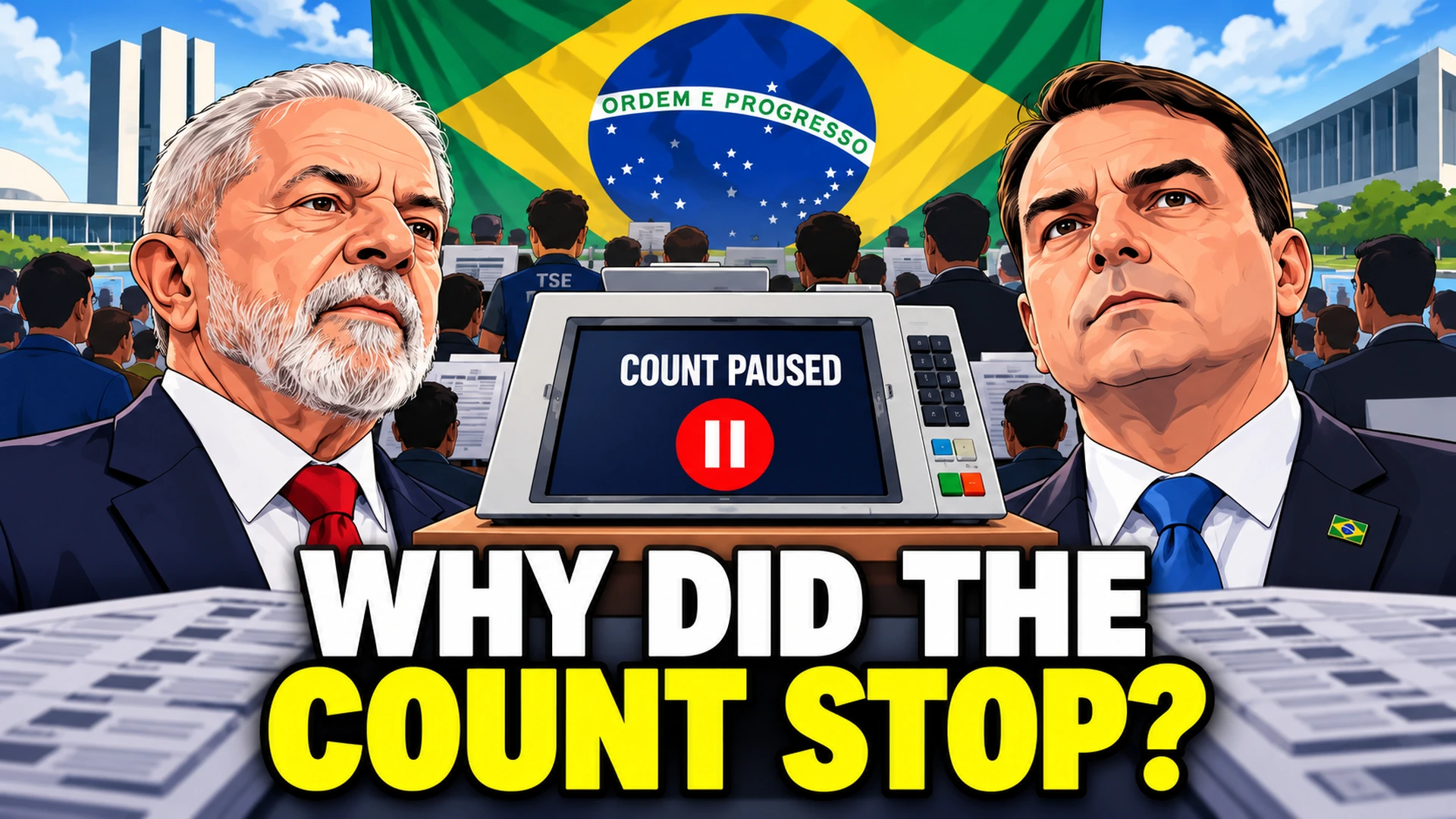
※ Images in this article are AI-generated illustrations created to help explain the story. They are not actual photographs, and depictions of people, places, or events may differ slightly from reality.
The resulting dispute involved far more than a two-hour delay.
It raised questions about voting access, the practical limits of emergency court orders, and whether difficulties reaching polling stations could become grounds for challenges after the election.
What Happened in the Final Minutes of Brazil’s Presidential Runoff?
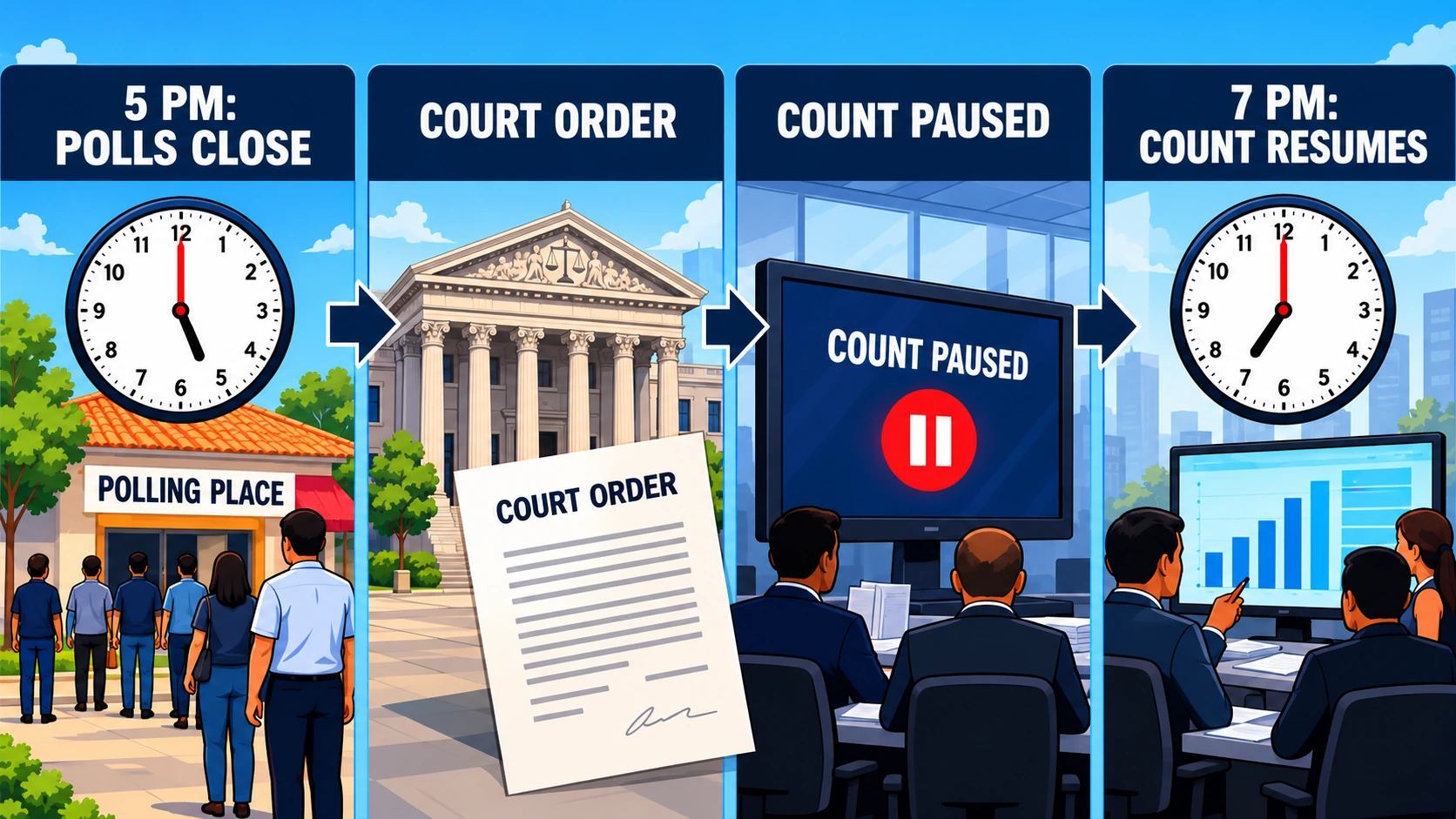
Brazil’s presidential runoff was originally scheduled to end at 5 p.m. Brasília time on October 25.
Under normal procedures, polling stations finish voting, produce electronic records of their results, and begin transmitting those records for nationwide tabulation.
But near closing time, Supreme Court Justice Cristiano Zanin issued an emergency order extending voting until 7 p.m. after receiving complaints that transportation problems had prevented some voters from reaching polling stations.
The decision came at an exceptionally difficult moment. Some locations were still operating, but others had already closed and produced their results.
Brazil’s Superior Electoral Court, known as the TSE, temporarily suspended the nationwide tabulation and public reporting process. (Agência Brasil)
How the Election-Day Disruption Unfolded
| Time in Brasília | What happened |
|---|---|
| Before 5 p.m. | The campaigns raised concerns about transportation problems affecting voters. |
| Around 5 p.m. | Justice Cristiano Zanin ordered voting hours extended until 7 p.m. |
| 5:06 p.m. | The initial tally showed results from 1,225 polling sections before reporting was halted. |
| By 6:44 p.m. | The TSE clarified that only polling locations still open at 5 p.m. could continue voting. |
| After 7 p.m. | Nationwide tabulation and public reporting resumed. |
The TSE’s official clarification explained how the extension would operate. Brazilian broadcaster Band subsequently reported that counting resumed after the extended voting period ended.
The important distinction is that the suspension concerned the processing and public reporting of results, not the cancellation of ballots already cast.
Why Did Both Lula and Flávio Bolsonaro Want Voting Hours Extended?
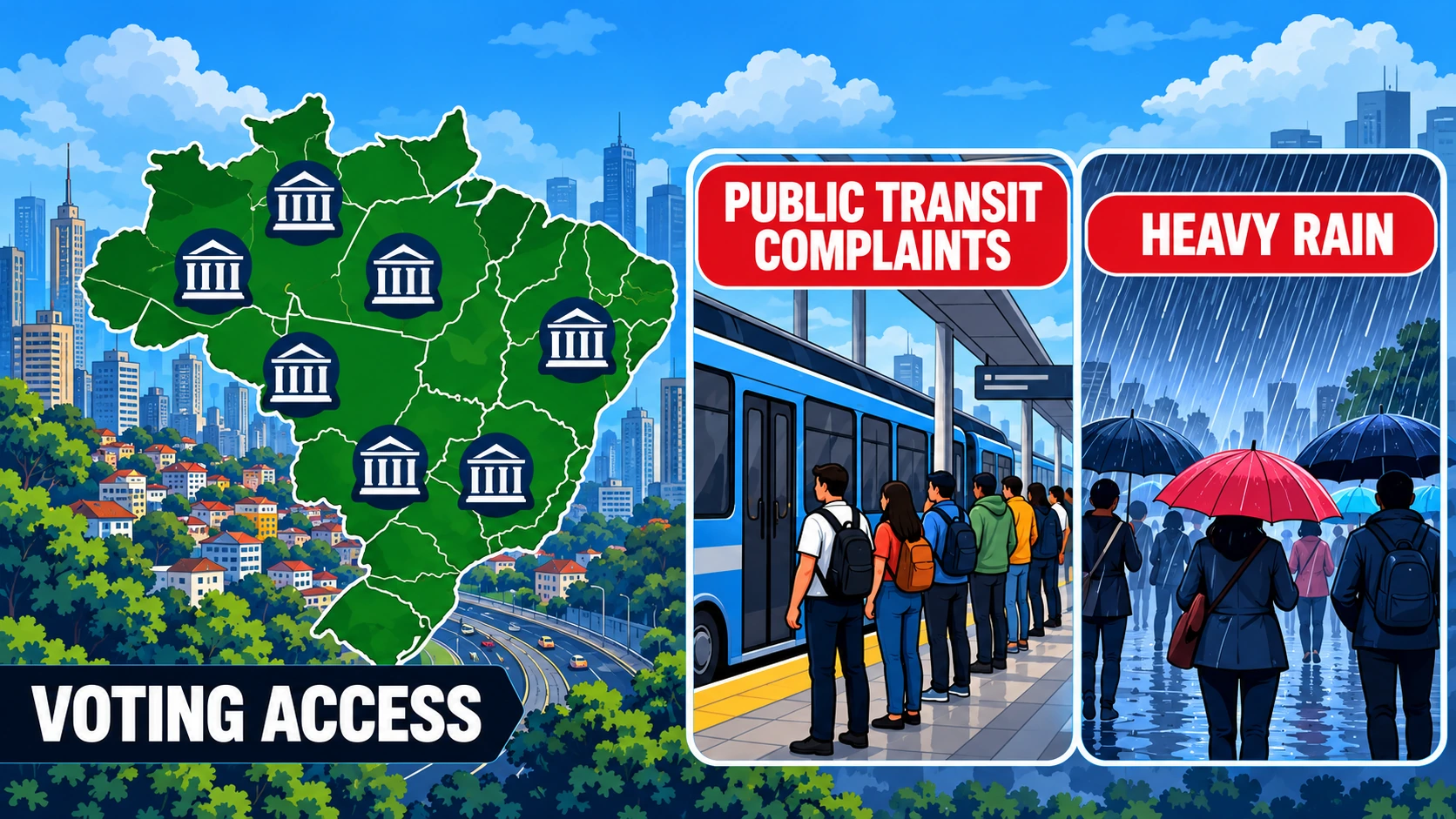
Both presidential campaigns sought additional voting time, but their requests focused on different problems.
Lula’s campaign reported insufficient public transportation in several cities. It argued that reduced bus services had made it difficult for residents to reach polling stations before the scheduled closing time.
Lula accused local officials of obstructing voting access. Those accusations were political claims, however, and should not be confused with a completed judicial finding that officials intentionally interfered with the election. (Agência Brasil)
Flávio Bolsonaro’s campaign also requested additional time, citing heavy rainfall and transportation difficulties in areas including São Paulo, Minas Gerais, Paraná, Santa Catarina, and Rio Grande do Sul.
His campaign asked that voting remain open until 7 p.m. in affected municipalities. (Agência Brasil)
Why Is Public Transportation an Election Issue in Brazil?
Brazil’s election rules make transportation access a public responsibility.
Under Article 88 of TSE Resolution No. 23.759, public authorities must take measures to ensure free urban and intercity public transportation on election days, with service frequency comparable to that of regular weekdays.
The rules also prohibit discriminatory access and electioneering through the service. A reduction in normally available public transportation may constitute an electoral offense under specified circumstances. (TSE)
That provision helps explain why reports about buses became so significant.
For someone who owns a car, a missing bus may seem like a minor inconvenience. For someone who depends entirely on public transportation, it can determine whether they reach their assigned polling station in time.
Brazil also generally requires voting for eligible literate citizens between ages 18 and 70, although the law provides exceptions.
The controversy therefore concerned a basic issue of democratic participation: having the legal right to vote does not help if a person cannot practically get to the polling station.
What Happened to Votes From Polling Stations That Had Already Closed?
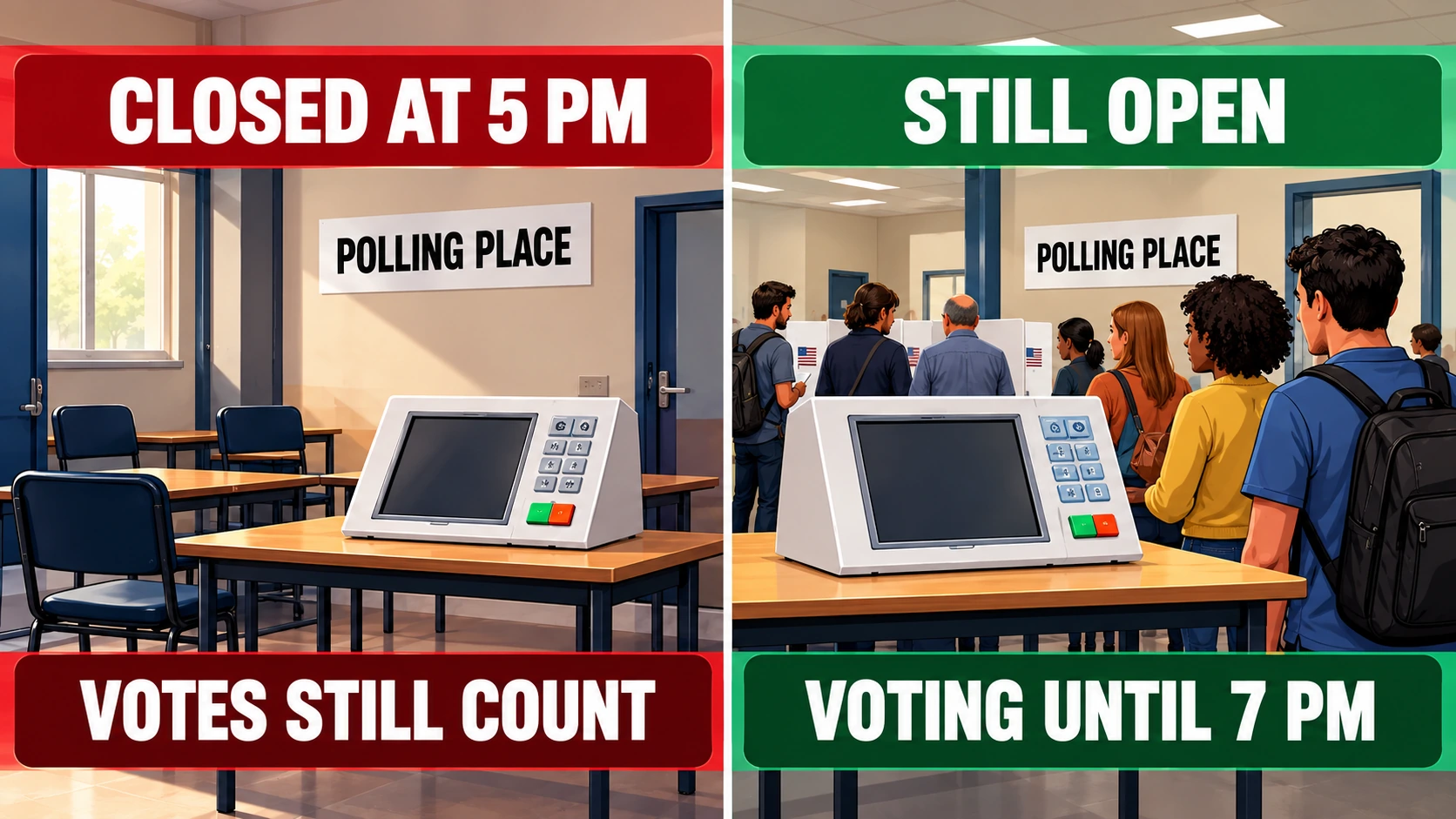
Votes already cast at properly closed polling stations remained valid.
That was one of the most important clarifications following the emergency court decision.
Initially, the order to extend voting nationwide appeared difficult to implement because some polling stations had already shut down their voting machines.
Once an electronic voting machine completes its closing procedures, officials cannot simply treat it as if voting never ended.
Justice Zanin later clarified that the extension would apply to polling stations that had not already closed at 5 p.m.
The votes from stations that had completed their closing procedures would still be counted and included in the nationwide total. (Folha de S.Paulo · TSE)
What Was Different Between Open and Closed Polling Stations?
| Polling station status | What the clarification meant |
|---|---|
| Already closed at 5 p.m. | Existing votes remained valid and were included in tabulation. |
| Still open at 5 p.m. | Voting could continue until 7 p.m. under the court order. |
| Voter unable to vote at a closed station | The extension did not automatically reopen the station; the access problem could be examined separately. |
This distinction solved the immediate counting question but did not necessarily resolve every complaint about access.
Someone who reached a station at 6 p.m. might have found it open in one location and already closed in another.
That uneven outcome helps explain why the extension itself could become part of a subsequent legal dispute.
A court could still examine whether election procedures or voters’ rights were violated. But a potential legal challenge is different from a ruling invalidating votes or overturning an election.
How Does Brazil’s Electronic Vote Counting Actually Work?
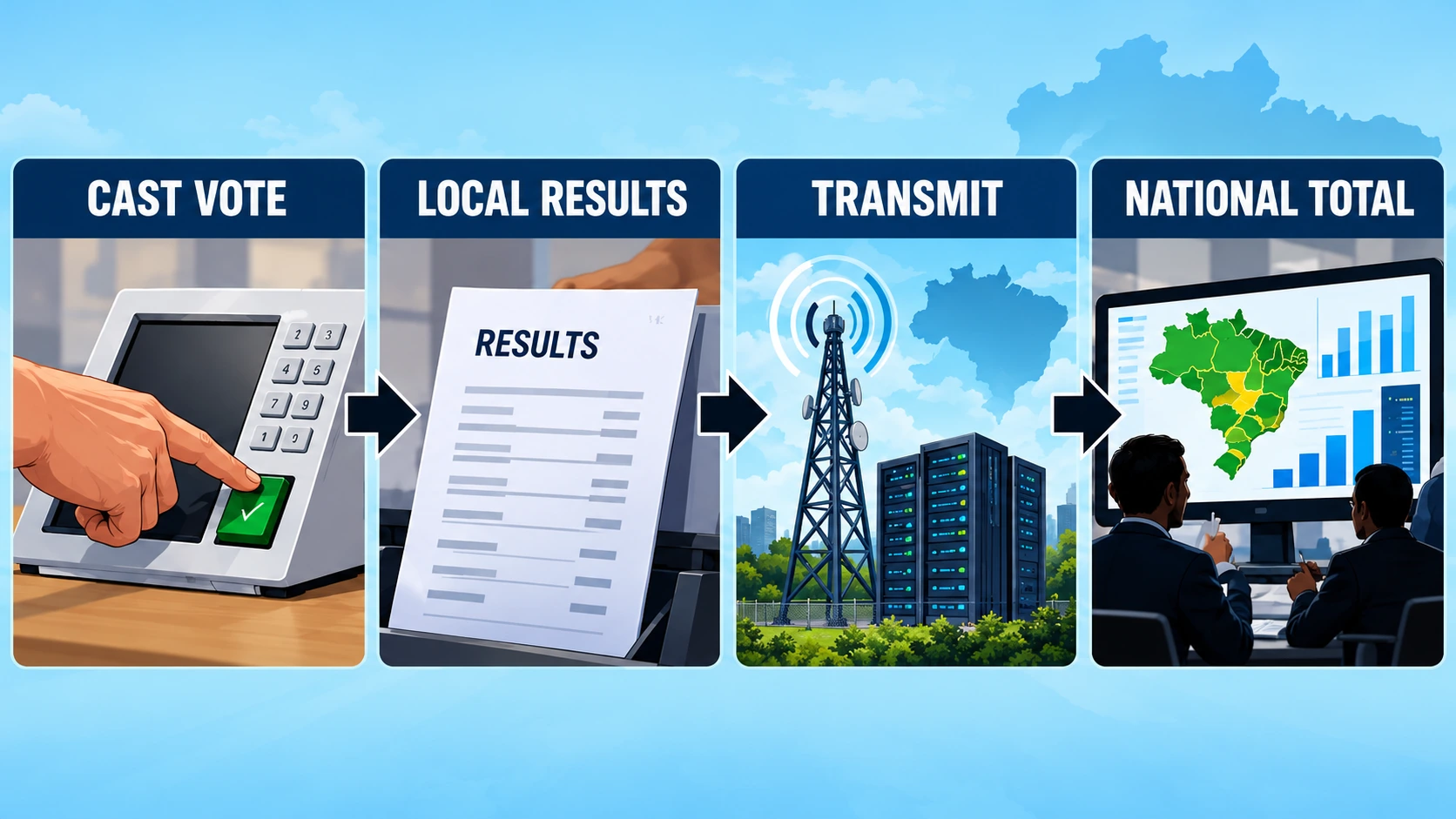
Brazil uses electronic voting machines that record votes locally and produce a polling-station results bulletin when voting ends.
That bulletin is called a Boletim de Urna, often shortened to BU.
The bulletin records the local result, which is then transmitted to the electoral authorities for nationwide tabulation.
The TSE publishes results as those bulletins are received and processed. The electoral authority also provides tools that allow people to examine polling-station records and follow national totals. (TSE)
Four Separate Steps in the Counting Process
| Stage | What happens |
|---|---|
| Vote recording | The voter casts a ballot on an electronic machine. |
| Local results | The polling station closes and produces its results bulletin. |
| Transmission and tabulation | Election authorities receive and combine local results. |
| Public reporting | The TSE publishes the accumulated totals. |
Understanding those stages explains the October 25 interruption.
Pausing the national tabulation and publication process is not the same as deleting or reversing votes stored at polling stations.
In the initial release at 5:06 p.m., results had been tabulated from 1,225 of 499,248 polling sections—approximately 0.25% of the nationwide total.
That initial sample represented only 335,743 valid votes. It was far too small to establish a national winner, even though it briefly showed Lula ahead. (Agência Brasil)
A partial election result can also be misleading because different regions report at different speeds.
If one candidate’s strongest areas finish reporting before the other’s, an early lead may not reflect the eventual national result.
Brazil’s president is elected through a nationwide popular vote, not an Electoral College system like the one used in the United States.
The winner of the runoff must receive a majority of the valid votes.
Why Was the Lula–Bolsonaro Presidential Race So Competitive?
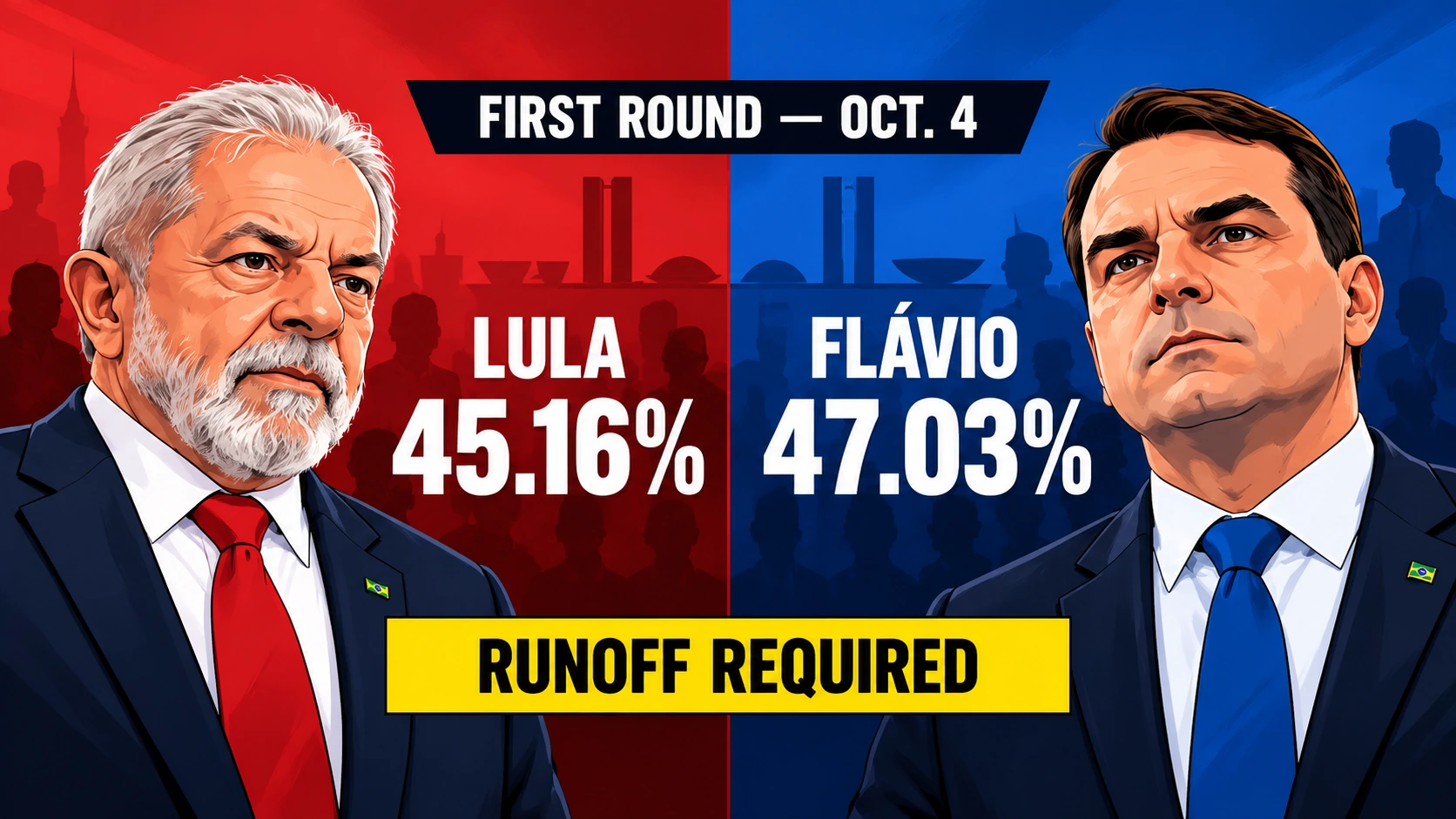
The October 25 election was already unusually close before the emergency voting decision complicated the process.
In the first round on October 4, Flávio Bolsonaro finished ahead of Lula, but neither candidate received a majority of the valid votes.
The official first-round figures showed:
| Candidate | Party | First-round valid votes |
|---|---|---|
| Flávio Bolsonaro | Liberal Party (PL) | 47.03% — 56,103,033 votes |
| Luiz Inácio Lula da Silva | Workers’ Party (PT) | 45.16% — 53,870,724 votes |
Flávio led Lula by roughly 2.23 million votes, a margin of 1.87 percentage points.
Because neither candidate crossed the 50% threshold, the election moved to a runoff on October 25. (Agência Brasil)
Who Is Flávio Bolsonaro?
Flávio Bolsonaro is a Brazilian senator and the son of former President Jair Bolsonaro.
His campaign represents the continuation of the right-wing political movement associated with his father, who lost the 2022 presidential election to Lula.
Flávio emphasized public security, economic dissatisfaction, and the cost of living during the campaign.
Lula, meanwhile, defended his record on poverty reduction and social programs while seeking another presidential term.
The two candidates also represented sharply different approaches to Brazil’s relationship with Washington. (AP)
Why Did First-Round Voters Matter So Much?
The first round left both candidates short of a majority.
That meant the outcome could depend on voters who had supported eliminated candidates, people who had abstained earlier, and changes in turnout across different regions.
This is why the transportation controversy was politically sensitive.
In a close election, even a relatively small number of voters who are unable to reach polling stations can become the subject of serious scrutiny.
But the political importance of those voters does not, by itself, establish that transportation problems changed the election result.
Could the Supreme Court’s Decision Lead to Legal Challenges?
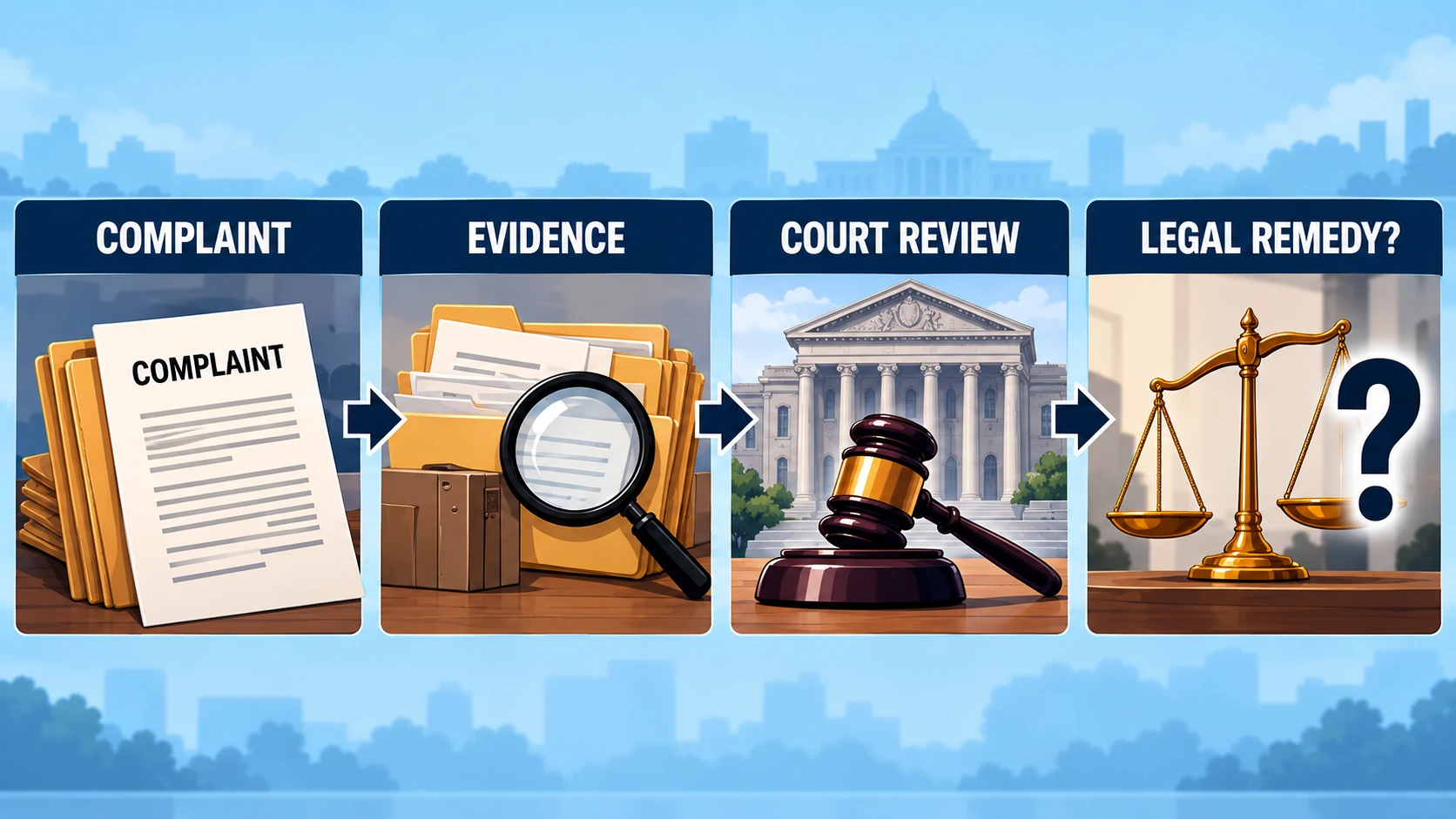
Yes. The circumstances surrounding the extension could provide grounds for further legal complaints.
But that does not mean the election results are automatically invalid.
There are several distinct questions that election authorities or courts could be asked to examine.
Were Voters Improperly Prevented From Voting?
A complaint would need to establish what actually happened in particular locations.
For example, investigators could examine whether public transportation was provided as required, whether service reductions occurred, and whether those reductions violated electoral rules.
Evidence might include transit schedules, official instructions, operating records, witness accounts, and polling-station documentation.
Was the Extension Applied Fairly?
This is a separate issue.
If some locations remained open until 7 p.m. while others closed at 5 p.m., the relevant question would be whether that difference was consistent with the applicable court order and election procedures.
The TSE’s clarification established a practical distinction between stations that were already closed and those still operating.
It did not automatically settle every possible dispute about the opportunity to vote.
Could Those Problems Change the Election Outcome?
Not automatically.
An allegation must be assessed under the applicable electoral law and supported by evidence.
The existence of a procedural irregularity does not itself prove that a candidate gained an unlawful advantage, nor does it establish what legal remedy, if any, is justified.
The Associated Press reported that the last-minute extension created uncertainty and the possibility of legal challenges.
That uncertainty should not be mistaken for a completed finding of election fraud or a decision to annul the vote.
Why Does Brazil’s Presidential Election Matter to the United States?
Brazil is Latin America’s largest country by population and one of the world’s major economies.
Its relationship with Washington involves trade, agriculture, energy, climate policy, critical minerals, and regional diplomacy.
A change in Brazil’s presidency could therefore affect issues that extend beyond South America.
The two presidential candidates offered different political approaches.
Flávio Bolsonaro positioned himself as more closely aligned with President Donald Trump’s administration and emphasized opportunities to strengthen trade and cooperation on critical minerals.
Lula has taken a more confrontational stance toward certain U.S. tariff policies and defended Brazil’s independence in dealing with Washington. (AP)
That does not mean the election result would immediately rewrite trade agreements or automatically change prices in American stores.
Actual policy changes would depend on subsequent decisions, negotiations, and existing legal arrangements.
Still, the election could influence several important questions:
- Would Brazil seek a closer political relationship with the Trump administration?
- How would the next government approach U.S. tariffs and trade negotiations?
- Would the two countries deepen cooperation on critical minerals and investment?
- How would Brazil balance commercial relations with the United States and China?
The election’s international significance explains why developments in Brazil’s voting process are being followed outside the country.
What Happens After the Vote Count Resumes?
The immediate task for Brazil’s electoral authorities is to complete the national tabulation and establish the official result.
Once results are available, attention can turn to any documented complaints about transportation, polling-station closures, or implementation of the emergency extension.
The temporary interruption does not erase the distinction between an unofficial partial tally, an election result announced by the electoral authority, and any subsequent judicial proceedings.
These are different stages.
A legal challenge can be filed without automatically suspending or reversing an election result.
The facts, applicable law, and decisions of the competent authorities determine what happens next.
For anyone following the race, the most useful place to check the actual vote totals is the TSE’s official election results portal.
The next important development is not simply who leads at any particular moment.
It is whether the national count is completed and whether the reported voting-access problems produce substantive findings or further court orders.
Bottom Line: What This Story Really Means
Brazil’s presidential vote count was temporarily paused on October 25 because the Supreme Court ordered additional voting time at the very moment polling stations were closing.
Both Lula and Flávio Bolsonaro had requested extensions based on reported barriers to voting, although their complaints involved different circumstances and regions.
The timing created confusion because some electronic voting machines had already completed their closing procedures.
Brazil’s electoral authorities clarified that previously recorded votes would still count, while the extension would apply to polling stations that remained open.
The central controversy was about voting access and the implementation of an emergency court order—not an established failure of electronic vote recording.
That distinction matters because the election was closely contested, making complaints about access especially politically consequential.
The vote-count disruption, the validity of ballots already cast, and any future legal challenges are three separate issues.
Understanding those differences is essential to making sense of what happened in Brazil’s election.
Brazil Election 2026: Key Questions Explained
Q. Why was Brazil’s presidential vote count paused?
The Superior Electoral Court temporarily suspended national tabulation and reporting after a Supreme Court justice ordered voting extended from 5 p.m. to 7 p.m. on October 25, 2026.
Q. Were votes already cast in Brazil’s election canceled?
No. Votes recorded at polling stations that had already completed their closing procedures remained valid and were to be included in the nationwide total.
Q. Did both Lula and Flávio Bolsonaro ask for longer voting hours?
Yes. Lula’s campaign raised complaints about public transportation, while Flávio Bolsonaro’s campaign sought additional time in locations affected by heavy rain and travel difficulties.
Q. Who ordered the voting extension?
Supreme Court Justice Cristiano Zanin issued the emergency decision. Brazil’s Superior Electoral Court was responsible for implementing the ruling through the election administration.
Q. Were polling stations that closed at 5 p.m. reopened?
Not under the subsequent clarification. The extension applied to polling stations that had not already completed their closing procedures at 5 p.m.
Q. Did a failure of electronic voting machines cause the count to stop?
The reported reason for the national counting pause was the emergency voting extension and the resulting procedural uncertainty, not an established nationwide failure of electronic vote recording.
Q. Who won the first round of Brazil’s 2026 presidential election?
Flávio Bolsonaro finished first on October 4 with 47.03% of valid votes. Lula received 45.16%, requiring a runoff because neither candidate had a majority.
Q. Could the voting-extension controversy invalidate the election?
Not automatically. Any challenge would require examination of the relevant facts and law. A complaint or possible irregularity is not itself a court ruling annulling an election.
Q. Why does the Brazil election matter to Americans?
Brazil is an important U.S. trade and diplomatic partner. The candidates differ in their approaches to Washington, tariffs, critical minerals, and foreign policy, although any actual policy changes would require subsequent decisions.
Did this help make the story clearer? 🙂
WIN keeps unpacking the “why” behind the news—clearly and simply!
Sources
Supreme Court Decision and Election Administration
Brazil’s Superior Electoral Court — Official Clarification on Extended Voting Hours
Superior Electoral Court — How Election Results Are Tabulated and Published
TSE Resolution No. 23.759 — Voter Rights, Voting Hours, and Election-Day Transportation
Voting Extension, Campaign Requests, and Counting Suspension
Agência Brasil — Justice Zanin Extends Voting Hours Until 7 p.m.
Agência Brasil — Lula Requests Extended Voting Following Transportation Complaints
Agência Brasil — Flávio Bolsonaro Campaign Requests More Voting Time Because of Rain
Band — Superior Electoral Court Resumes Vote Tabulation After Voting Extension
Runoff Results, Political Context, and International Implications
Agência Brasil — Brazil’s 2026 Presidential Runoff Set for October 25
Keep Reading
Why Was Lula Already Warning About U.S. Influence in Brazil?
The election’s outcome could shape Brazil’s relationship with Washington. Lula’s earlier U.N. remarks show how questions of sovereignty and U.S. trade pressure became part of the political backdrop.
Did Trump Threaten Macron and Lula? What Their U.N. Speeches Actually Said