Why Did Netanyahu Share an AI Nuclear Blast Image Before Israel’s Election?

A giant mushroom cloud rising over Tel Aviv is the kind of image that makes people stop scrolling. But no nuclear bomb had struck the Israeli city. The image was generated with artificial intelligence—and Israel’s prime minister shared it just before an election.
Why would Benjamin Netanyahu put such a frightening scene in front of voters? His message was about Iran. The controversy was also about something closer to home: whether Israelis should judge his leadership mainly by the threats their country faces or by his government’s record in confronting them.
The distinction matters as Israel approaches its October 27, 2026, parliamentary election. The winner will not be chosen by a direct vote for prime minister, and the question of who can assemble a governing majority may remain open even after the ballots are counted.
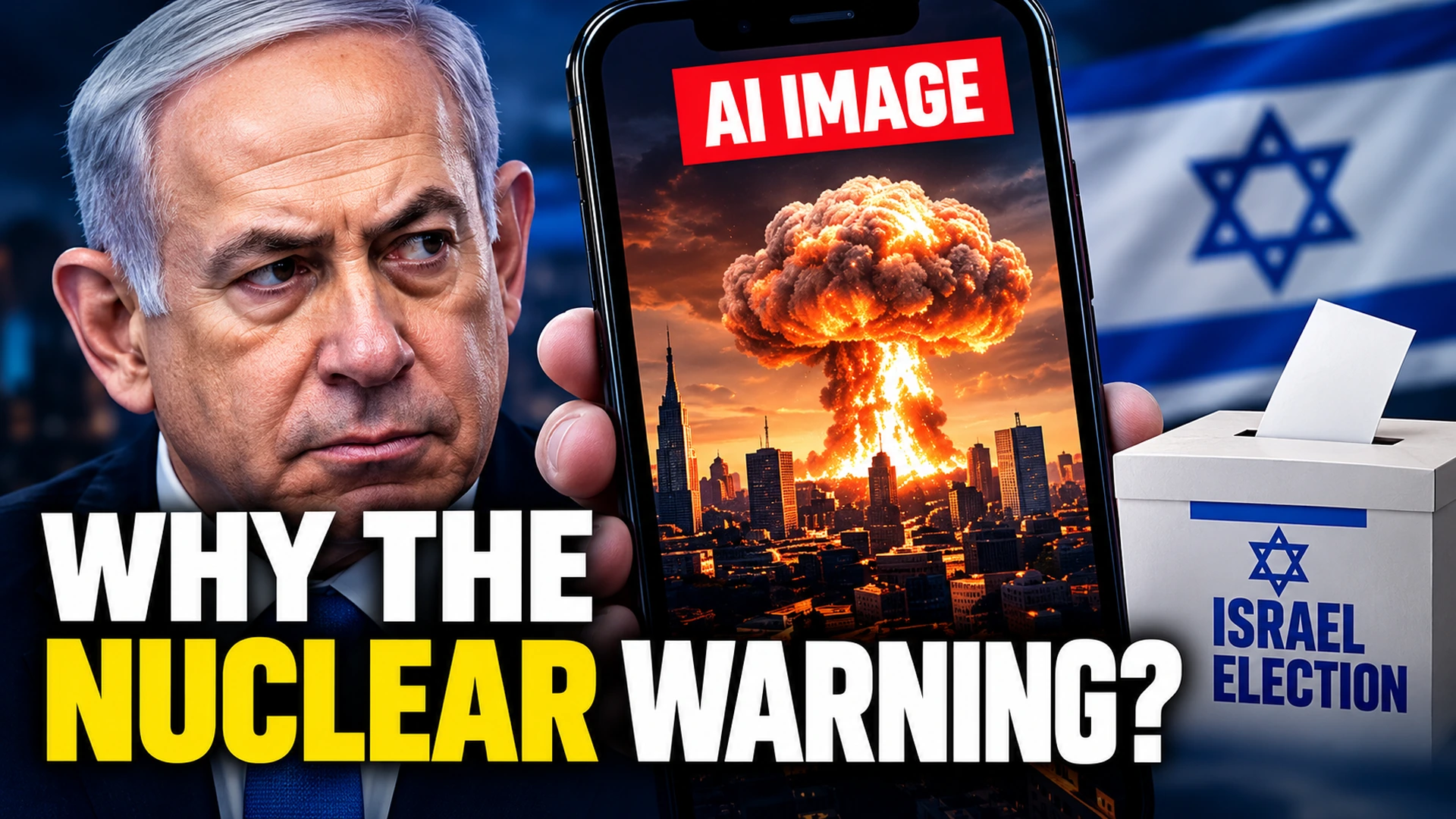
※ Images in this article are AI-generated illustrations created to help explain the story. They are not actual photographs, and depictions of people, places, or events may differ slightly from reality.
What Did Netanyahu Actually Post?
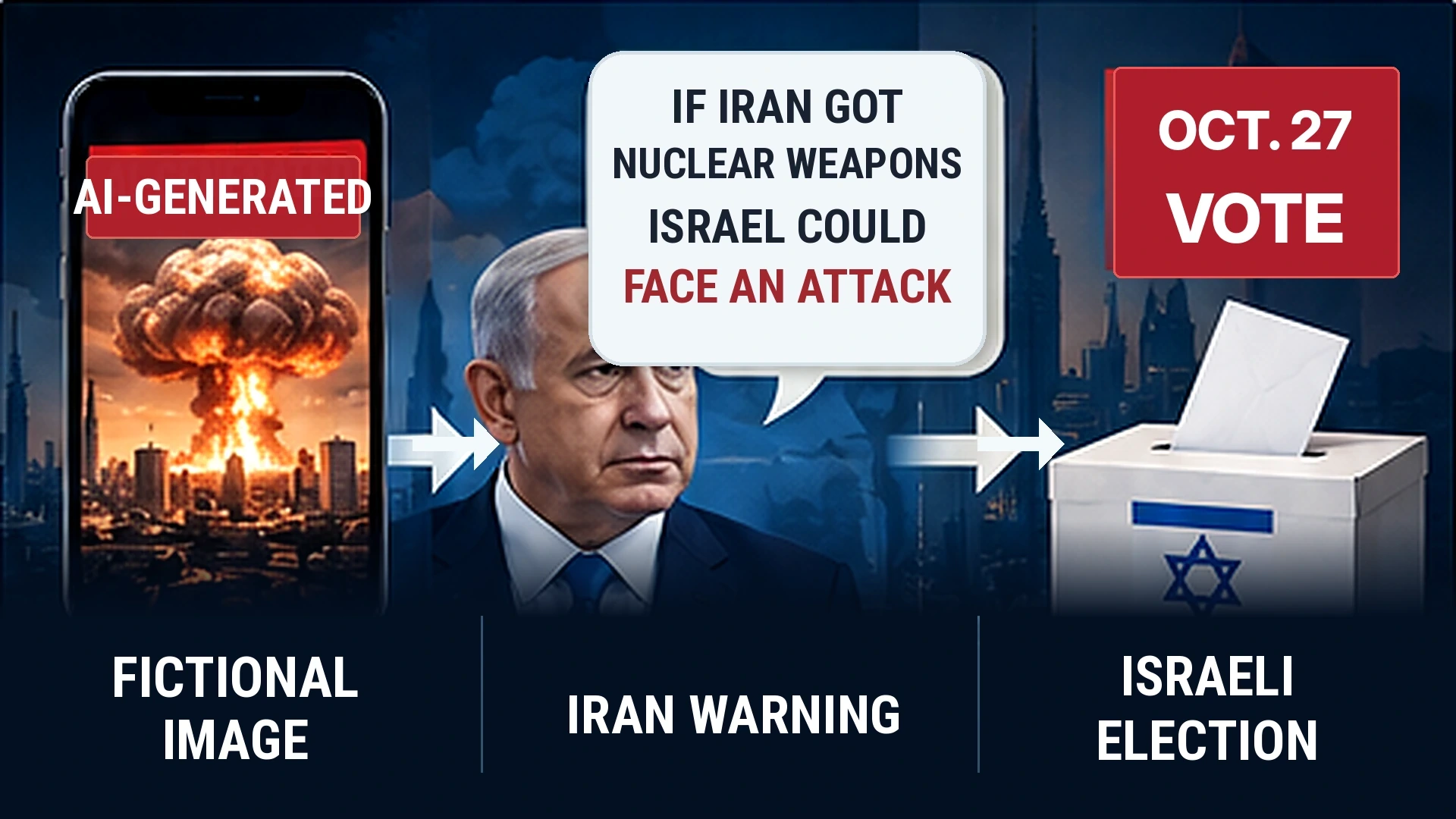
On October 25, two days before the vote, Netanyahu shared an AI-generated illustration of a nuclear explosion over Tel Aviv. The accompanying message warned about what could happen if Iran acquired nuclear weapons and Israel had leadership unable to stop it. (The Times of Israel · The Jerusalem Post)
There is an important detail in the original post: Netanyahu was amplifying a message by Israeli commentator Yuval Bloomberg, not presenting a verified photograph or newly discovered intelligence. The image illustrated a hypothetical catastrophe, not an attack that had occurred.
The post also argued that other controversies surrounding Netanyahu’s government should not overshadow the danger from Iran. Opponents, including centrist challenger Gadi Eisenkot and Democrats leader Yair Golan, condemned the message as a political attempt to frighten voters. That is their assessment of the campaign tactic, not proof of Netanyahu’s private motives. (The Times of Israel)
Why Did He Invoke a “Second Holocaust”?
The phrase carries exceptional weight in Israel because the Holocaust was the Nazi genocide of six million Jews during World War II. Using it in an election warning connects a modern security argument to a defining historical trauma.
The message Netanyahu shared warned that choosing leaders unable to confront Iran could expose Israelis to a “second Holocaust.” The warning was conditional: it described a feared future if Iran obtained nuclear weapons. It did not establish that Iran currently possesses a nuclear bomb or that an attack on Tel Aviv was imminent. (The Times of Israel)
Netanyahu’s position is that Iranian nuclear capabilities could pose an existential danger and that his experience, including cooperation with Washington, is essential to addressing it. His critics argue that invoking a catastrophe of this magnitude during a campaign shifts attention away from questions about his administration’s performance.
Those are different questions. A country can face a genuine security concern while voters still disagree about how its leaders have handled that concern. The AI image brought both arguments into a single, emotionally charged campaign moment.
Why Emphasize Iran After Earlier Claims of Military Success?
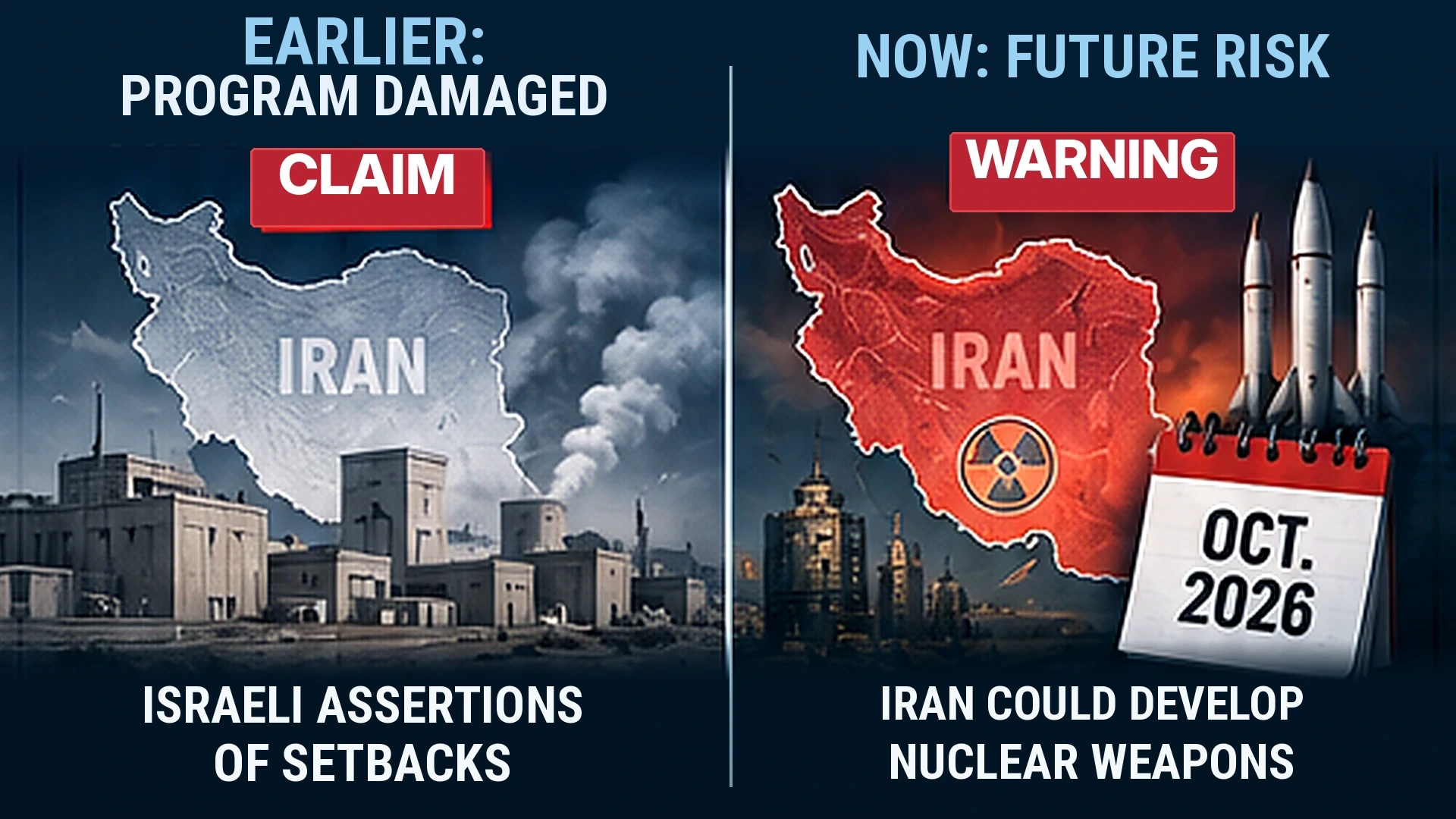
Iran sits at the center of Netanyahu’s argument because his government regards its nuclear ambitions as a major national-security threat. Israel and the United States carried out military campaigns against Iran in 2025 and 2026, and Netanyahu previously spoke of having devastated Iran’s nuclear program. (The Times of Israel)
That makes the latest warning especially notable. If earlier strikes were described as such a major success, why is the risk again being presented as urgent? The distinction is between claims about damage already inflicted and warnings about what Iran might be able to develop or rebuild in the future. Neither claim should be mistaken for a complete, independently verified assessment of Iran’s current capabilities.
Netanyahu has also linked the issue to Trump’s presidency. In a televised appearance ahead of the vote, he presented close cooperation with Trump as an opportunity to take further action against Iran. Reuters reported that Netanyahu raised the possibility of renewed military operations, while U.S. officials drew their own lines around the timing of further action. (Reuters)
The election argument, then, is not simply about whether Iran is dangerous. It is also about who should make Israel’s next decisions on military force, diplomacy, and relations with the United States.
What Else Are Israelis Weighing?
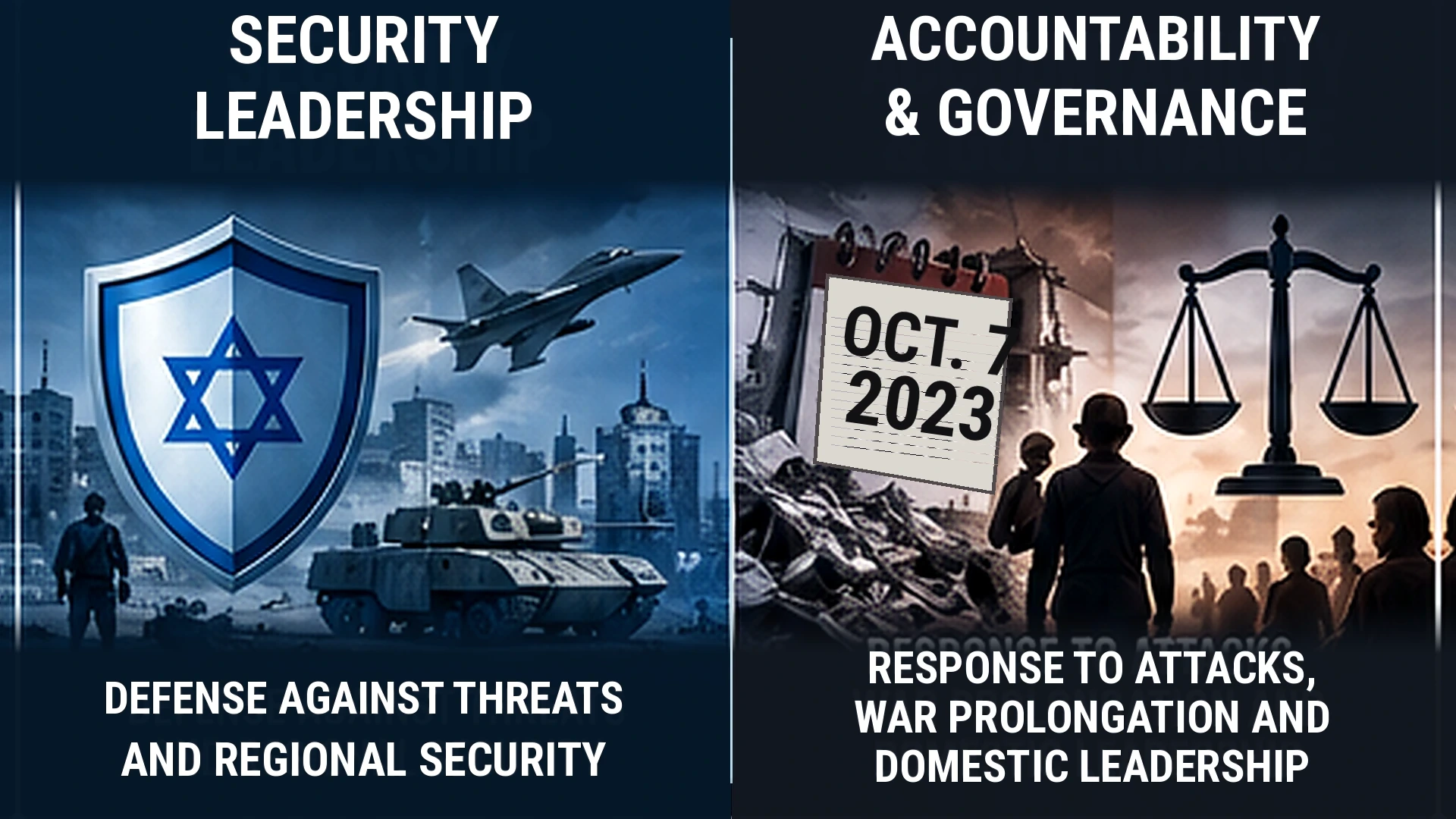
For many Israelis, the election is also a judgment on the October 7, 2023, Hamas-led attack and the wars that followed. Critics say the government should bear responsibility for the security failures surrounding the attack and question how the conflicts in Gaza and elsewhere were managed. Netanyahu emphasizes Israel’s military campaigns and his role in confronting regional threats. (AP)
Other disputes include military-service exemptions for ultra-Orthodox Jewish men, the balance of power between elected officials and the judiciary, and the cost of prolonged conflict. These issues affect Israelis who may agree that Iran is a serious threat but differ sharply over domestic policy and leadership. (AP)
| Campaign question | Argument emphasized by Netanyahu and allies | Concern raised by opponents |
|---|---|---|
| National security | Experience confronting Iran and regional armed groups | Whether past security failures have been adequately examined |
| October 7 and subsequent wars | Military response and subsequent operations | Accountability, strategy, and the consequences of prolonged conflict |
| Domestic governance | The government’s preferred approach to military service and state institutions | Unequal military obligations and checks on executive power |
The table summarizes competing campaign arguments, not settled judgments about which account is correct. Israel’s voters do not necessarily fit into two uniform camps, and different opposition parties also disagree among themselves.
Why Did Trump Enter Israel’s Election Campaign?
President Donald Trump publicly endorsed Netanyahu on October 18, then repeated his backing on October 25. Their relationship is a central feature of Netanyahu’s campaign message, particularly on Iran. The endorsement was notable because a sitting U.S. president was explicitly urging voters in another country’s election to support a named candidate. (Axios · Reuters)
Axios reported that Netanyahu had sought additional public backing from Trump and suggested possible language. That account was disputed. Netanyahu’s Likud party denied the report, and Trump said on October 26 that he had not discussed a request for another endorsement. (Axios · The Jerusalem Post)
There is a difference between the confirmed public endorsement and the disputed behind-the-scenes account of how it came about. Trump’s statements are on the record; the alleged request for suggested wording remains a reported claim contested by the people involved.
For U.S. readers, the bigger issue is what the Israeli election could mean for American policy. A new Israeli government would still need a working relationship with Washington. But its approach to Iran, the Gaza conflict, and regional diplomacy could affect the choices facing the Trump administration. An endorsement is not itself a binding U.S. policy commitment.
Why Doesn’t a Poll Lead Automatically Decide the Election?
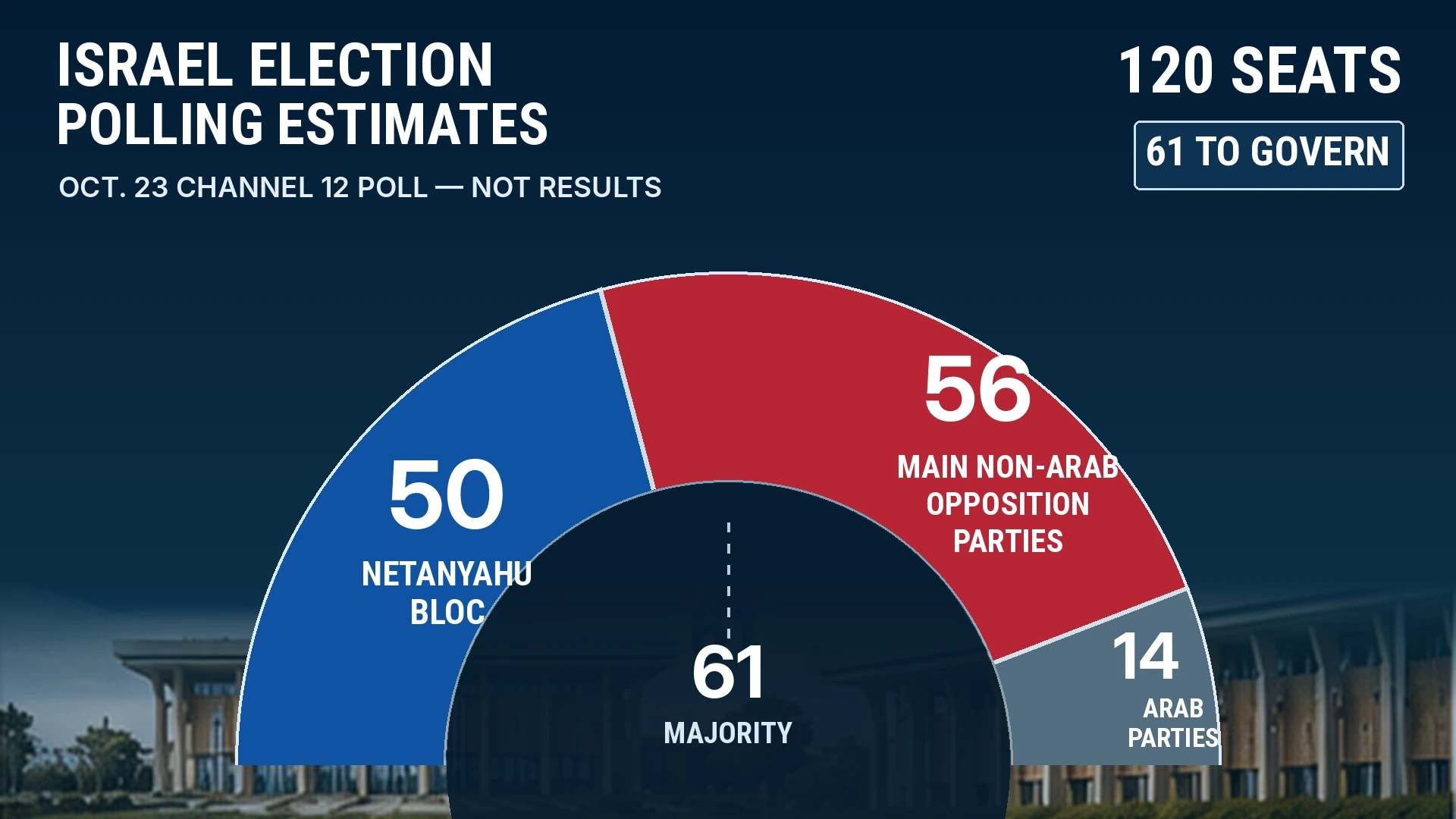
Israelis are voting for party lists, not directly for prime minister. The 120 seats in the Knesset, Israel’s parliament, are distributed by proportional representation. Parties need at least 3.25% of valid votes to qualify for seats; forming a government ordinarily requires the support of 61 lawmakers. (Knesset · Israel Democracy Institute)
One Channel 12 poll published on October 23 illustrated the problem for both sides:
| Group in Channel 12 poll | Projected seats | Governing significance |
|---|---|---|
| Netanyahu-aligned parties | 50 | Below 61 |
| Main non-Arab opposition parties | 56 | Below 61 |
| Arab parties, counted separately | 14 | Their position and potential support may matter in coalition talks |
| Total | 120 | 61 seats needed for a majority |
These figures are a survey’s seat estimates, not election results. Other polls have produced different numbers, and Arab parties cannot simply be treated as automatic members of a single anti-Netanyahu coalition. (Ynetnews)
The largest party also does not automatically get the premiership. After the election, Israel’s president consults parliamentary parties and assigns someone to try to form a government. Whether that person succeeds depends on political agreements—not only the ranking of individual parties on election night. (Israel Democracy Institute)
Why Are Israelis Abroad Flying Home to Vote?
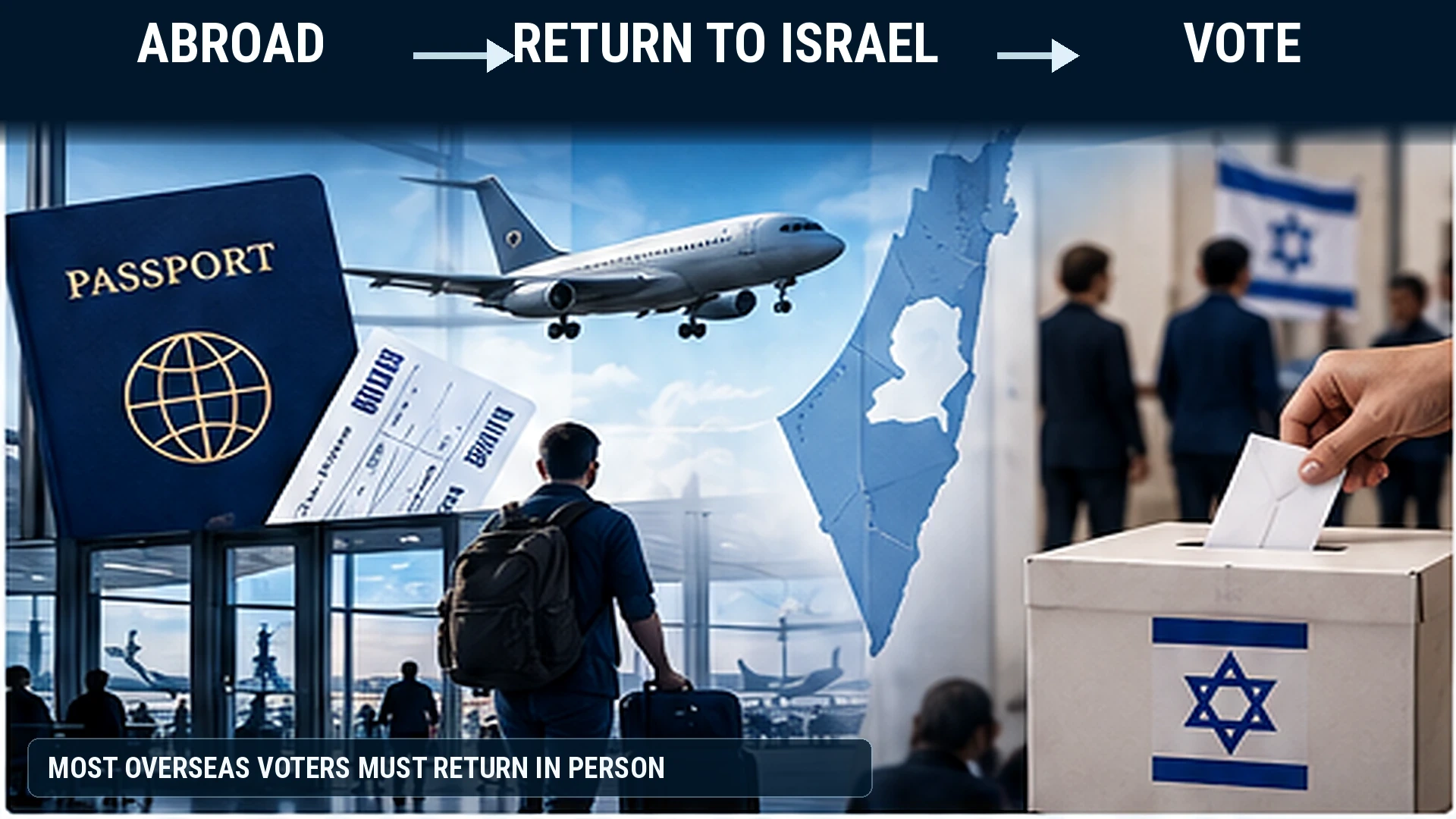
Unlike Americans who may be able to vote absentee from overseas, most eligible Israeli voters abroad must return to Israel to cast a ballot. Exceptions exist for certain diplomats, state representatives, and other qualifying personnel. (Israel Democracy Institute)
That rule explains the election-week scenes at Israeli airports. Some Israelis living in the United States, Europe, and elsewhere have organized flights home. An overseas-voter mobilization group estimated that as many as 67,000 expatriates might travel back, but that was an estimate of participation, not a verified count of votes cast. (AP)
Some returning voters are vocal Netanyahu critics who want a change in government. Others support him, and travel plans cannot establish how individuals will vote. The political significance of this movement depends on turnout, party choices, and ultimately the distribution of Knesset seats.
What Happens Once the Votes Are Counted?
Election night will show how many seats each party receives, but that is not always the same as knowing who will govern. Israel’s president must determine which lawmaker should attempt to assemble a coalition that can command the Knesset’s confidence. (Council on Foreign Relations)
Three developments deserve attention after October 27:
- Small-party thresholds: A party just above or below 3.25% can change how seats are distributed.
- Coalition negotiations: Parties may need to reach agreements with rivals or smaller factions whose support was not guaranteed before the vote.
- Policy commitments: Any new or returning government will have to translate campaign positions on Iran, Gaza, and domestic issues into actual decisions.
No pre-election poll determines those negotiations in advance. And whatever the result, Israel’s relations with Washington and its decisions about Iran will still involve institutions, allies, and constraints beyond one campaign statement.
Bottom Line: What This Story Really Means
Netanyahu’s AI nuclear image was a political illustration of a feared future, not evidence that Tel Aviv had been attacked. By sharing a warning about Iran and a “second Holocaust” two days before the October 27 election, he placed national survival at the center of the campaign. His opponents countered that voters should also examine the government’s record on security, war, and accountability.
Trump’s endorsements made the stakes more directly relevant to the United States. Yet Israel’s election is not a direct presidential-style contest between two leaders. The immediate result will be a 120-seat parliament, and the decisive next question will be who can assemble enough support to govern.
Israel Election 2026: Key Questions Explained
Q. Did a nuclear explosion actually occur in Tel Aviv?
No. The image shared by Netanyahu was AI-generated and depicted a hypothetical nuclear attack, not an actual event.
Q. Did Netanyahu create the image himself?
The reporting identifies the image and accompanying argument as part of a message originally posted by commentator Yuval Bloomberg. Netanyahu shared and amplified it.
Q. Was the “second Holocaust” warning a confirmed threat assessment?
No. It was a conditional political warning about what could happen if Iran obtained nuclear weapons; it did not establish an imminent nuclear attack.
Q. When is Israel’s 2026 election?
The Knesset election is scheduled for October 27, 2026.
Q. How many Knesset seats are needed to form a government?
A governing majority normally requires 61 of the Knesset’s 120 seats. Parties may have to negotiate a coalition after the vote.
Q. Do Israelis vote directly for Netanyahu or another prime minister?
No. They vote for party lists. A prime minister emerges through the parliamentary government-formation process.
Q. Did Trump publicly endorse Netanyahu?
Yes. Trump publicly endorsed Netanyahu on October 18 and reiterated his support on October 25. Claims that Netanyahu requested additional wording were disputed.
Q. Why would an Israeli living in the United States fly home to vote?
Most eligible Israelis cannot vote from overseas. Unless they qualify for a narrow exception, they must return to Israel to cast a ballot.
Did this help make the story clearer? 🙂 WIN keeps unpacking the “why” behind the news—clearly and simply!
Sources
Nuclear Image and Campaign Reactions
The Times of Israel — Netanyahu Shares AI Nuclear Blast Image and Election Warning
The Jerusalem Post — AI Image and Reactions From Israeli Opposition Leaders
Trump Endorsement and Iran Policy
Axios — Trump’s October 18 Endorsement of Netanyahu
Axios — Report on Netanyahu’s Request for Additional Trump Support
Reuters — Netanyahu’s Election-Eve Comments on Trump and Iran
The Jerusalem Post — Trump’s Denial Regarding Additional Endorsement
Election Rules, Polls, and Voter Mobilization
Knesset — How Israel’s Electoral System Works
Israel Democracy Institute — Knesset Elections and Overseas Voting
Ynetnews — Final Pre-Election Polls and Bloc Totals
AP — Main Issues in Israel’s 2026 Election
AP — Israelis Returning From Overseas to Vote
Keep Reading
Why Does U.S. Support for Israel Extend Beyond One Prime Minister?
Trump’s endorsement is a campaign statement, but the broader U.S.–Israel relationship rests on military assistance, strategic cooperation, and political ties that long predate this election.
Why Does the U.S. Support Israel So Strongly? 5 Reasons Behind the Money and Weapons
How Is Israel’s Election Affecting Palestinians Who Cannot Vote in It?
While Israelis decide who will govern, election-week security restrictions also affect movement and work for Palestinians in the West Bank. The distinction between election security measures and the military operation near Hebron explains the broader consequences.
Why Is Israel Restricting West Bank Travel Days Before Its Election?