Why Did Patrick Stewart Have Both Alzheimer’s and Lewy Body Dementia?

[실제 WordPress 본문]
Patrick Stewart was the kind of actor many people felt they knew. For decades, he was Captain Jean-Luc Picard in Star Trek and Professor Charles Xavier in X-Men—characters associated with wisdom, composure, and extraordinary intelligence.
So when his death at age 86 was announced on October 29, 2026, one detail in the family’s statement raised an especially difficult question.
Stewart had been living with both Alzheimer’s disease and Lewy body dementia.
Most people have heard of Alzheimer’s. Fewer are familiar with Lewy body dementia. And having both may sound like two separate diagnoses that should not occur together.
But they can. In fact, two different diseases can affect the brain at the same time, producing overlapping symptoms and making diagnosis more complicated.
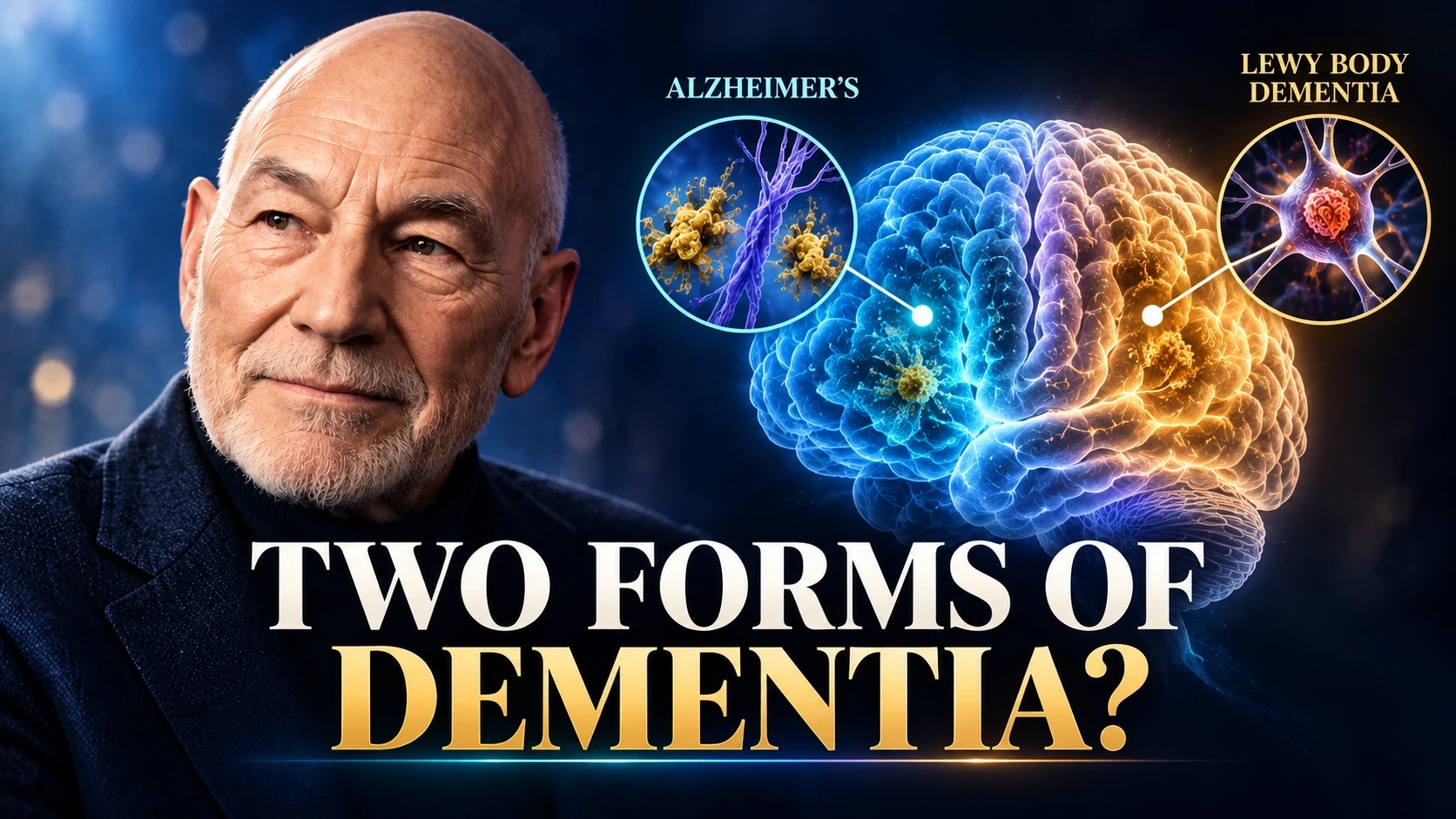
※ Images in this article are AI-generated illustrations created to help explain the story. They are not actual photographs, and depictions of people, places, or events may differ slightly from reality.
Stewart’s family did not publicly describe the specific symptoms he experienced or the details of his treatment. Still, the announcement has brought attention to an important medical reality: dementia is not always caused by a single disease.
Understanding that distinction helps explain what doctors mean by mixed dementia—and why recognizing different types of dementia can matter for patients and families.
What Did Patrick Stewart’s Family Actually Reveal?
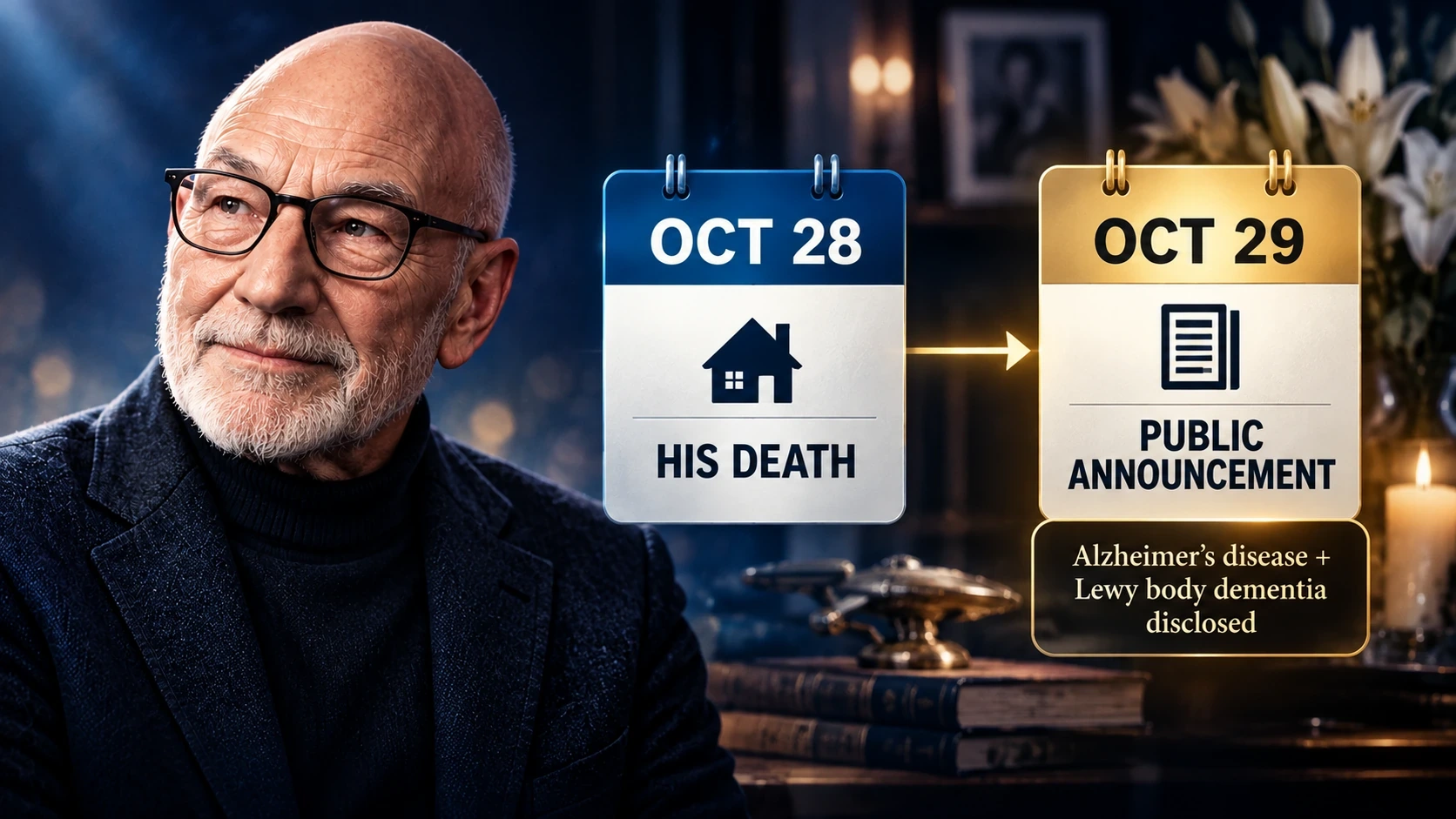
Patrick Stewart died at his Los Angeles home on October 28, 2026. His death was publicly announced the following day by longtime spokesperson Kelly Bush Novak.
The announcement said Stewart had experienced a “brief and poignant journey” with Alzheimer’s disease and Lewy body dementia. His wife, Sunny Ozell, was with him, and the family described his final days as being surrounded by loved ones, music, and personal moments. (AP · CBS News)
The diagnoses had not previously been disclosed publicly.
That makes an important distinction necessary. The announcement confirmed that Stewart lived with both conditions, but it did not establish exactly when each illness began, which symptoms appeared first, or what his medical care involved.
The description of a brief illness also should not be treated as a precise medical timeline. Alzheimer’s-related brain changes can develop long before symptoms become obvious.
What is confirmed is the coexistence of the two diagnoses—not the detailed course of Stewart’s illness.
That leaves the larger medical question: How can two different diseases produce dementia in the same person?
How Can Alzheimer’s and Lewy Body Dementia Exist Together?
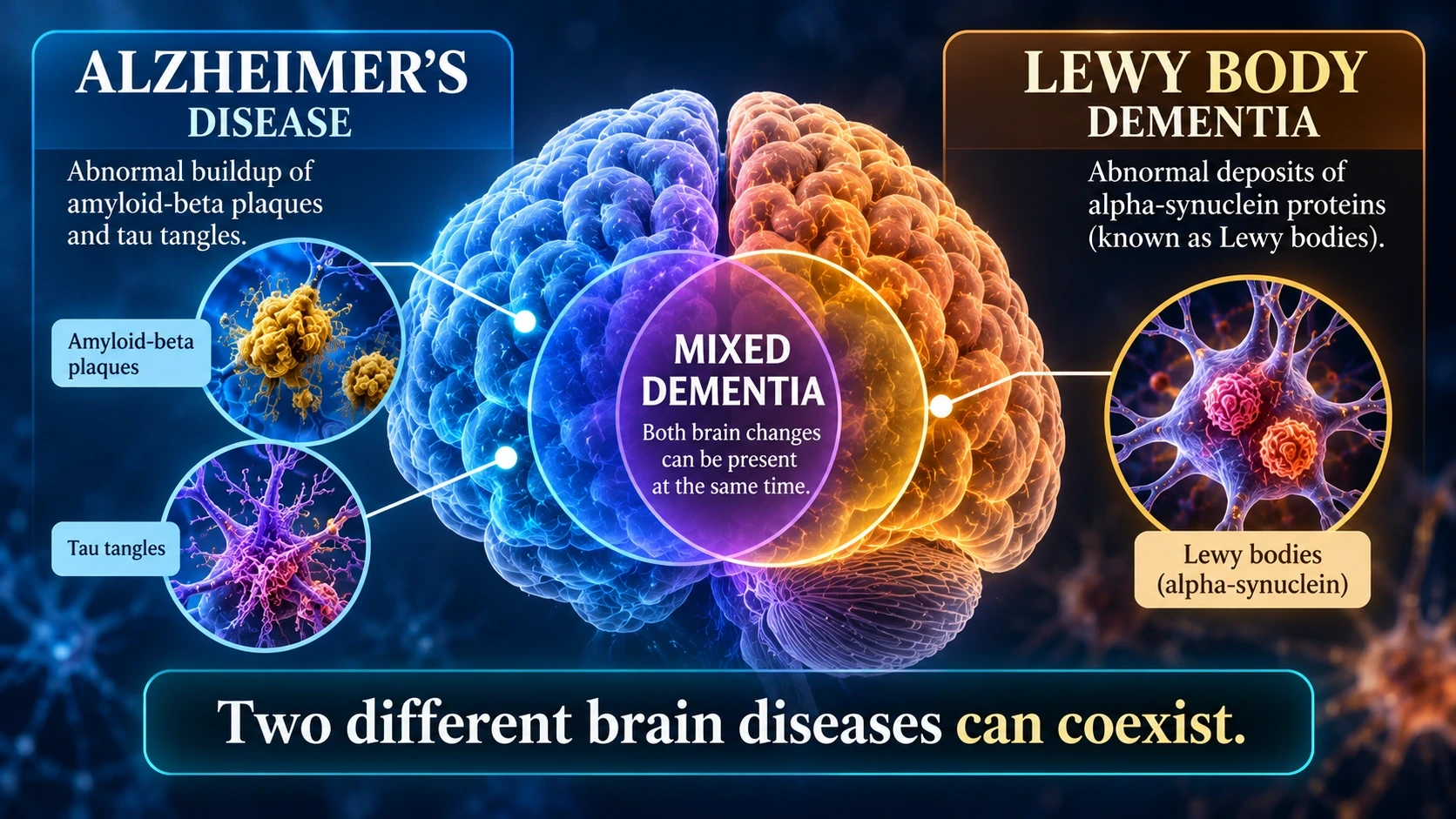
A person can have Alzheimer’s disease and Lewy body dementia together because the two conditions involve different biological changes that may coexist in the brain.
Alzheimer’s disease is associated with abnormal accumulations of amyloid-beta and tau proteins. These changes disrupt communication between nerve cells and contribute to progressive damage.
Lewy body dementia involves abnormal deposits of another protein, alpha-synuclein. Those deposits can interfere with brain systems responsible for thinking, movement, attention, sleep, and other functions. (Alzheimer’s Association · Alzheimer’s Research UK)
The presence of one type of brain disease does not prevent another from developing.
When brain changes associated with more than one cause of dementia occur together, doctors may use the term mixed dementia.
The Alzheimer’s Association explains that Alzheimer’s-related changes can coexist with Lewy bodies, sometimes alongside additional causes of cognitive impairment. (Alzheimer’s Association)
Why isn’t this simply one diagnosis?
Dementia describes a collection of symptoms serious enough to interfere with everyday life. Those symptoms may include problems with memory, reasoning, judgment, language, or other cognitive abilities.
Alzheimer’s disease is one cause of dementia. Lewy body disease is another.
Think of dementia as the visible result of damage to the brain, while the underlying diseases explain what is contributing to that damage.
In some people, only one major disease process is identified. In others, more than one is involved.
That does not mean every symptom can be neatly assigned to one disease or the other. Their effects may overlap, making a person’s condition more difficult to understand.
What’s the Difference Between Alzheimer’s and Lewy Body Dementia?
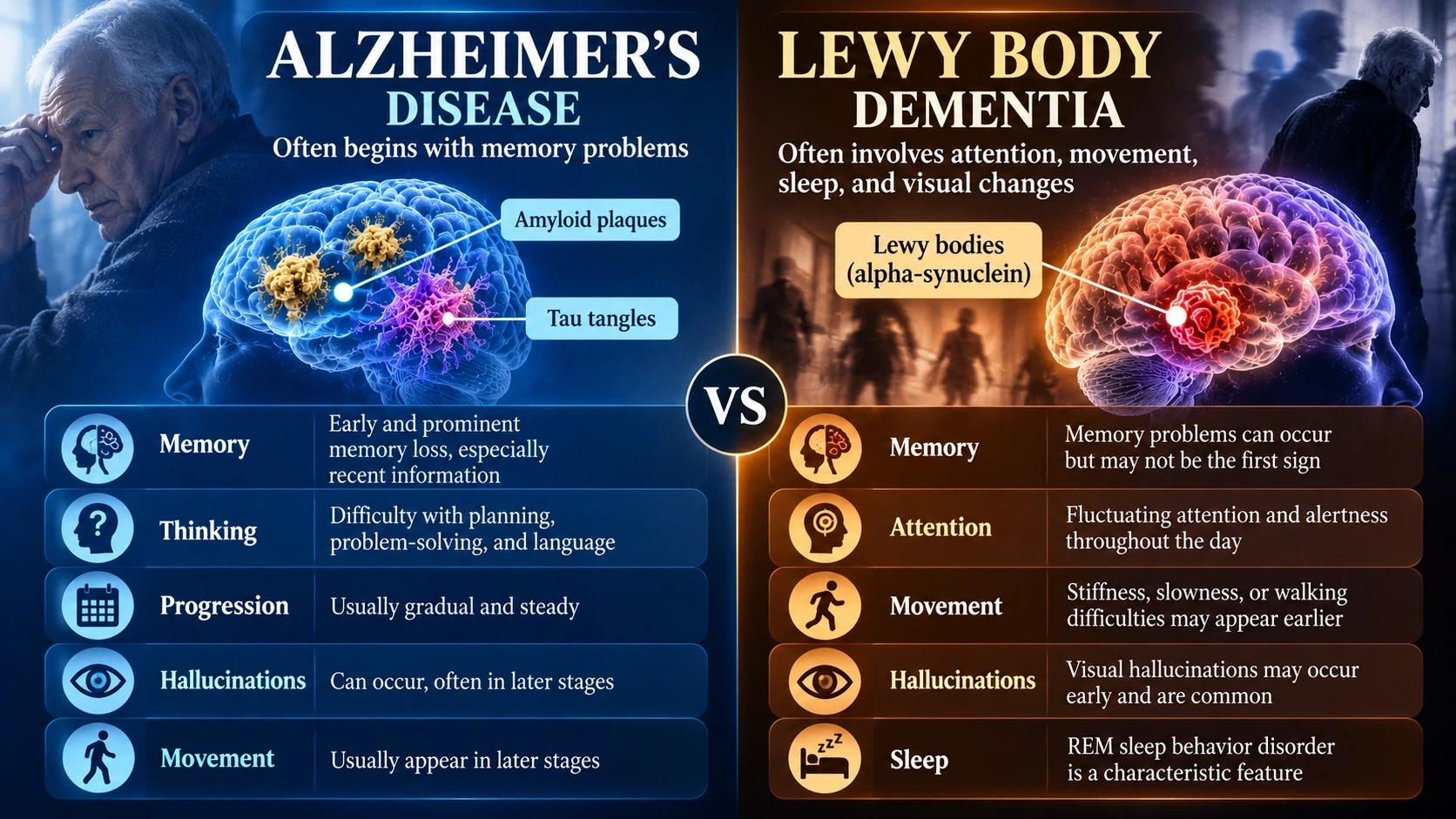
Both diseases can affect memory and thinking. The difference often lies in which symptoms become prominent and how they develop.
Alzheimer’s disease commonly begins with increasing difficulty remembering recent information. A person might repeatedly ask the same question, forget recent conversations, or struggle with familiar tasks.
Lewy body dementia can involve memory problems, but changes in alertness, visual perception, movement, and sleep may be especially noticeable.
Here is a practical comparison based on guidance from the Alzheimer’s Association.
| Feature | Alzheimer’s disease | Lewy body dementia |
|---|---|---|
| Common early difficulty | Recent memory problems | Attention, visual processing, or thinking fluctuations |
| Alertness | May decline as disease progresses | Can vary noticeably throughout the day |
| Movement | Problems may emerge later | Stiffness, slowness, or walking difficulties may appear earlier |
| Hallucinations | Possible, particularly as disease advances | Visual hallucinations may occur relatively early |
| Sleep | Sleep problems can occur | REM sleep behavior disorder is a characteristic feature |
These are typical patterns, not rules that apply to every patient.
What do fluctuations in alertness actually look like?
A person with Lewy body dementia may appear attentive and engaged at one moment, then unusually drowsy, confused, or disconnected later.
These changes may occur within the same day.
That can be confusing for relatives. Someone who has a relatively clear conversation in the morning may struggle considerably with attention that afternoon.
Such fluctuations do not automatically mean Lewy body dementia is present, but they are among the clinical features doctors consider.
What does REM sleep behavior disorder mean?
Normally, the body suppresses most muscle movement during the dreaming phase of sleep, known as REM sleep.
With REM sleep behavior disorder, that suppression may fail. A person might move, shout, or physically act out a dream.
It can appear before other recognizable symptoms of Lewy body disease.
However, neither unusual sleep behavior nor occasional forgetfulness is enough to diagnose dementia on its own. A clinical evaluation must consider the broader pattern and other possible causes.
Why Is Mixed Dementia Difficult to Diagnose?
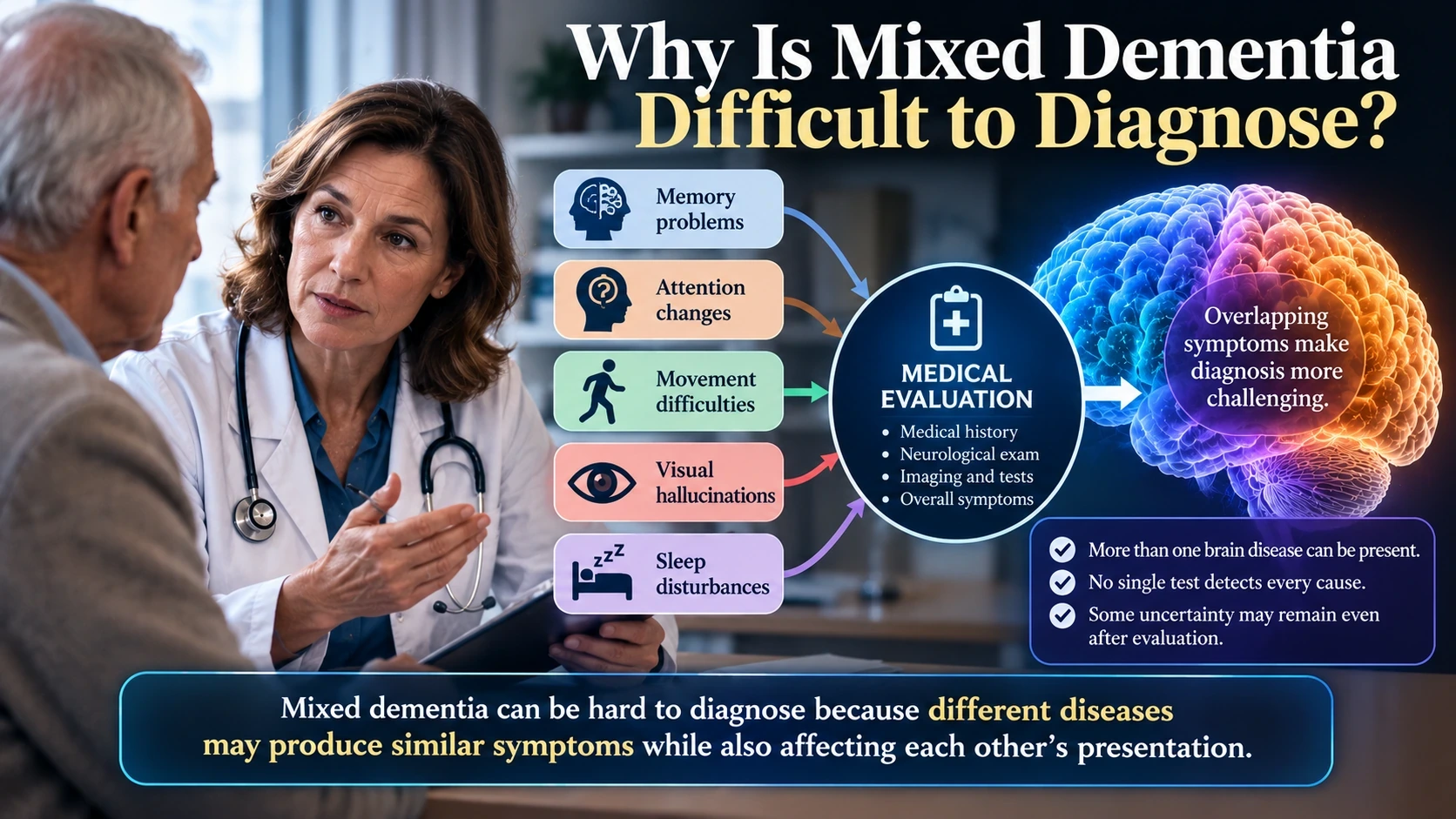
Mixed dementia can be difficult to recognize because different diseases may produce similar symptoms while also affecting one another’s clinical presentation.
For example, someone experiencing both Alzheimer’s-related changes and Lewy body disease might have significant memory loss alongside changes in attention or movement.
If the memory problems dominate, other features may initially receive less attention.
Doctors therefore consider more than whether a person is forgetful. They may review medical history, cognitive abilities, neurological symptoms, sleep changes, medications, and everyday functioning.
Depending on the situation, evaluation can include laboratory testing, brain imaging, and more specialized assessments. No single routine test identifies every possible cause of dementia. (Alzheimer’s Association)
Why can two diagnoses remain uncertain even after evaluation?
Scientists have learned a great deal from brain examinations performed after death. Those studies reveal that multiple disease-related changes are often present in the same brain.
During life, however, identifying every contributing disease can be more challenging. (Alzheimer’s Association)
Alzheimer’s-related biomarkers can help clinicians assess the presence of Alzheimer’s pathology in appropriate patients. Recognizing Lewy body disease often depends heavily on clinical features and specialized evaluation.
This does not mean doctors cannot make useful diagnoses during life. It means some uncertainty may remain about the exact combination of underlying brain changes.
In Stewart’s case, the family publicly identified two diagnoses, but no detailed diagnostic records have been released. It would be inappropriate to reconstruct his symptoms or test results from that announcement alone.
Does Having Both Conditions Change Treatment?
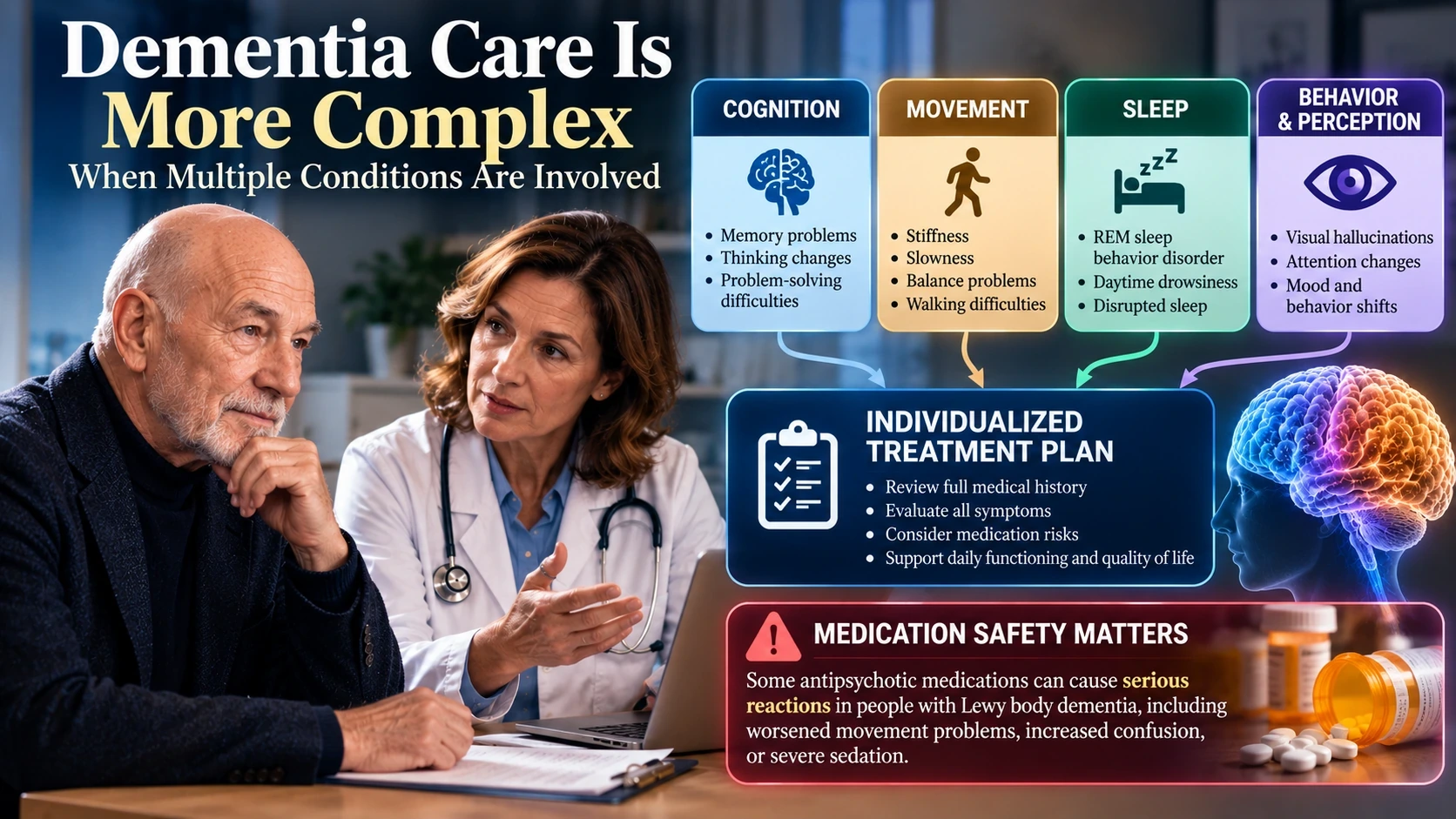
Yes. Recognizing Lewy body dementia alongside Alzheimer’s can affect how clinicians manage symptoms and select medications.
Neither disease currently has a cure, although treatments can help address certain symptoms. Some Alzheimer’s therapies may also be appropriate for selected patients, depending on their diagnosis and disease stage.
For people with Lewy body dementia, medication safety can be particularly important.
Certain antipsychotic medications, sometimes prescribed for severe hallucinations or agitation, can cause dangerous reactions in people with Lewy body dementia.
Those reactions can include worsened movement problems, increased confusion, or severe sedation.
The Alzheimer’s Association advises clinicians to use particular caution with these medications in Lewy body disorders. (Alzheimer’s Association)
This is not a reason for patients or caregivers to stop prescribed medications without medical advice. It is a reason to make sure the treating team understands the full diagnosis and reviews the risks and benefits carefully.
Other care may address sleep, mobility, fall prevention, cognitive symptoms, and the practical needs of family caregivers.
The appropriate treatment plan depends on the individual—not simply on how many diagnostic labels appear in a medical record.
What Should Families Take Away From Patrick Stewart’s Story?
Patrick Stewart’s diagnosis offers an opportunity to correct two common misunderstandings about dementia.
The first is that dementia always means Alzheimer’s disease.
Alzheimer’s is the most common cause, but it is not the only one. Different brain disorders can produce different combinations of memory, thinking, movement, sleep, and behavioral symptoms.
The second misunderstanding is that dementia is simply a normal part of getting older.
Aging can bring ordinary changes in memory, such as occasionally forgetting a name. But persistent cognitive changes that interfere with everyday responsibilities deserve medical attention.
Families may find it useful to record not only memory problems but also changes in sleep, alertness, walking, balance, or behavior.
That information can help a clinician recognize patterns that might otherwise be missed. It can also help identify other medical conditions or medication effects that may contribute to symptoms. (Alzheimer’s Association)
Stewart’s family chose to keep his illness private until announcing his death. That privacy deserves respect.
The wider lesson is medical rather than personal: a dementia diagnosis may involve more than one underlying disease, and recognizing the full picture can improve care planning.
Bottom Line: What This Story Really Means
Patrick Stewart died on October 28, 2026, at age 86. The announcement of his death revealed that he had been living with Alzheimer’s disease and Lewy body dementia.
Having both conditions is medically possible. Alzheimer’s involves characteristic amyloid and tau changes, while Lewy body disease involves abnormal deposits of alpha-synuclein. These changes can occur together, contributing to what is known as mixed dementia.
The two conditions may share symptoms, but their characteristic patterns can differ. Alzheimer’s commonly brings early memory problems, while Lewy body dementia may also involve marked fluctuations in attention, movement difficulties, visual hallucinations, and distinctive sleep disturbances.
Recognizing those differences can matter for diagnosis, treatment decisions, and medication safety.
The details of Stewart’s individual illness remain private. His family’s announcement does not tell us precisely how the diseases developed or how his symptoms changed.
What it does reveal is an important distinction often lost in discussions about dementia: a person can have more than one disease affecting the brain at the same time.
Patrick Stewart Dementia: Key Questions Explained
Q. When did Patrick Stewart die?
Patrick Stewart died on October 28, 2026, at his home in Los Angeles. His death was publicly announced on October 29. He was 86 years old.
Q. What diseases did Patrick Stewart have?
His spokesperson confirmed that he had Alzheimer’s disease and Lewy body dementia. The diagnoses had not previously been publicly disclosed.
Q. Can someone have Alzheimer’s and Lewy body dementia simultaneously?
Yes. Different dementia-related brain changes can coexist. When more than one disease contributes to dementia, the condition may be described as mixed dementia.
Q. Is Lewy body dementia the same as Alzheimer’s disease?
No. They involve different underlying brain changes, although some symptoms overlap. Alzheimer’s is commonly associated with early memory loss, while Lewy body dementia can prominently affect attention, movement, sleep, and visual perception.
Q. What proteins are associated with the two diseases?
Alzheimer’s disease is associated with amyloid-beta plaques and tau tangles. Lewy body dementia involves abnormal deposits of alpha-synuclein.
Q. Is Lewy body dementia related to Parkinson’s disease?
Yes. Lewy body dementia is an umbrella term that includes dementia with Lewy bodies and Parkinson’s disease dementia. Both involve abnormal alpha-synuclein deposits, but the timing and presentation of cognitive and movement symptoms can differ.
Q. Is mixed dementia harder to diagnose?
It can be. Symptoms from different disorders may overlap, and the underlying brain changes are not always fully identifiable during life. Clinicians consider multiple symptoms, tests, and medical history when making a diagnosis.
Q. Can Alzheimer’s or Lewy body dementia be cured?
Neither disease currently has a cure. Treatments may help manage symptoms, and certain Alzheimer’s treatments may be appropriate for eligible patients. Care needs to be individualized.
Q. Why does a Lewy body dementia diagnosis matter for medication safety?
Some antipsychotic medications can cause serious adverse reactions in people with Lewy body dementia. Clinicians need to consider that risk when evaluating treatment options.
Q. Do we know when Patrick Stewart developed dementia?
No precise diagnosis date or detailed medical timeline has been publicly established. His family confirmed the illnesses but did not release his complete medical history.
Did this help make the story clearer? 🙂
WIN keeps unpacking the “why” behind the news—clearly and simply!
Sources
Patrick Stewart’s Death and Official Announcement
Associated Press — Patrick Stewart, Star Trek and X-Men Actor, Dies at 86
CBS News — Patrick Stewart Dies at 86
ABC News — Patrick Stewart’s Alzheimer’s and Lewy Body Dementia Diagnoses
Alzheimer’s Disease and Mixed Dementia
Alzheimer’s Association — What Is Alzheimer’s Disease?
Alzheimer’s Association — Understanding Mixed Dementia
Alzheimer’s Research UK — Sir Patrick Stewart Dies With Alzheimer’s Disease and Lewy Body Dementia
Lewy Body Dementia Symptoms, Diagnosis, and Care
Alzheimer’s Association — Dementia With Lewy Bodies
Alzheimer’s Association — Medical Tests for Diagnosing Dementia